
How often should each care home area be cleaned?
In our view, every occupied care home needs daily routine cleaning in resident and shared areas, separate high-touch cleaning, immediate body-fluid spillage response, between-use cleaning for shared equipment and planned periodic tasks. The exact care home cleaning frequency changes with resident risk, room use, footfall and any suspected infection or outbreak.

Table of Contents
A risk-based frequency plan beats a copied rota
A care home cleaning schedule fails when it is copied from another setting without checking the risk in your own building. We start with a working pattern, then adjust it for the residents, the care being delivered and the way each room is used.
The Care Quality Commission, CQC, expects providers to operate a cleaning schedule that fits the care and treatment delivered, monitor cleanliness, act without delay when shortfalls are found and make sure staff responsible for cleaning have suitable training. NHS England’s National Standards of Healthcare Cleanliness 2025 also separate routine cleaning into full clean, spot clean, check clean, periodic clean and touch point clean, which is a useful way to stop everything being pushed into one vague daily task.
Here is a practical starting point for care settings. It is a working guide, not a universal legal rule.
| Area or item | Typical cleaning frequency | What lifts the frequency |
|---|---|---|
| Resident bedrooms | Daily routine cleaning, with touch points checked separately | Higher resident vulnerability, visible soiling, shared equipment, isolation needs |
| En-suite bathrooms and toilets | Daily cleaning, with extra cleaning when soiled | Higher use, continence needs, suspected infection, poor ventilation or visible contamination |
| Communal lounges | Daily routine cleaning, plus separate touch point cleaning | Heavy footfall, shared remotes, grab rails, visitors, group activities |
| Dining areas | Daily routine cleaning, with cleaning linked to mealtimes and use | Multiple sittings, spills, shared chairs, food service activity |
| Corridors and reception | Daily cleaning and check cleans during busy periods | Visitor traffic, deliveries, wet weather, mobility aid use |
| Laundry and sluice areas | Site-specific routine cleaning, with extra cleaning after contamination risk | Handling of soiled items, spillages, waste movement |
| Shared care equipment | After each use and between different people where it is multiple-use equipment | Shared aids, resident transfer equipment, suspected infection |
| Blood or body-fluid spillages | Immediately, with people kept away until the spill is removed | Any spillage of blood or body fluid |
| Periodic tasks | Planned in a documented programme | Floor care, carpet washing, external window cleaning and other less frequent work |
Care home cleaning requirements work best when the schedule says what happens in normal use and what changes when risk rises. A resident bedroom and a lounge may both appear on a daily rota, but the lounge can still need more frequent touch point cleaning because more hands use the same surfaces.
CQC responsibility stays with the provider
Outsourcing cleaning can deliver the work, but it does not remove the care provider’s accountability. CQC guidance on Regulation 15 of the Health and Social Care Act 2008 (Regulated Activities) Regulations 2014 makes the provider responsible for premises and equipment being clean, secure, suitable for purpose, properly used, properly maintained and suitably located.
That point matters because cleaning contracts sometimes read as though the contractor now owns the whole risk. In practice, your home still needs evidence that the agreed cleaning plan is being followed, checked and corrected when standards slip.
We avoid any language that suggests CQC endorses a cleaning company. The cleaner or contractor supports a CQC-regulated environment. The registered provider remains responsible for the condition of the premises and equipment.
A defensible arrangement shows the schedule, the people responsible, the training given, the checks completed and the action taken when something is missed. That is the difference between delegating tasks and losing sight of them.
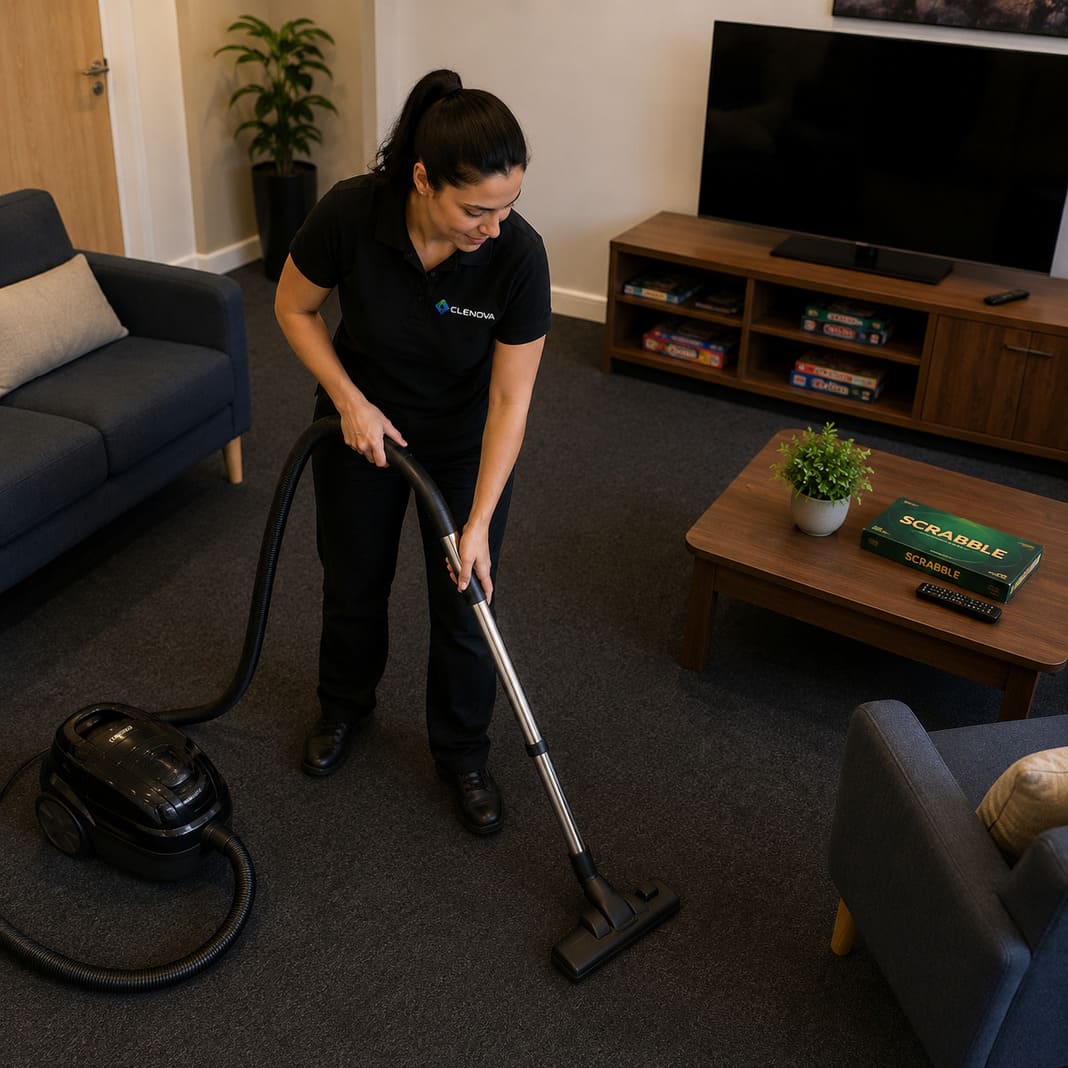
The schedule needs owners and evidence
“Clean bathrooms daily” looks clear until you ask who does it, which product is used, what happens after a body-fluid spillage and who records completion. A better schedule names the area, the method, the frequency, the responsible person and the check that proves the work happened.
The Department of Health and Social Care, DHSC, adult social care guidance says cleaning responsibilities should identify who cleans different areas, frequency, method and products, equipment responsibilities, training, monitoring, cleaning outside normal frequencies, cross-contamination prevention and safe disposal of cleaning items. That sounds like a lot on paper, but in a live care home it simply means each task has an owner.
A useful care home cleaning schedule should cover:
- Area ownership. Bedrooms, bathrooms, communal rooms, corridors, laundry areas and sluice areas need named responsibility rather than a general “team” label.
- Frequency and triggers. The schedule should show routine timing and the situations that require extra cleaning, such as visible soiling or suspected infection.
- Method and product. Staff need to know what to use and how to use it safely, especially where Control of Substances Hazardous to Health, known as COSHH, applies.
- Equipment cleaning. Shared items need clear between-use responsibility, because this is where vague rotas break down.
- Training and personal protective equipment. Personal protective equipment, PPE, must match the cleaning task and the site’s health and safety requirements.
- Monitoring and sign-off. Completion records, supervisor checks and issue logs give the rota weight beyond the printed page.
- Cover arrangements. Absence cover should be planned before the regular operative is off site.
At Clenova, we build care home cleaning plans across London and Greater London around this management layer: responsibilities, attendance verification, supervision and follow-up. The point is simple enough. If a task is important enough to put on the rota, it is important enough to assign and check.
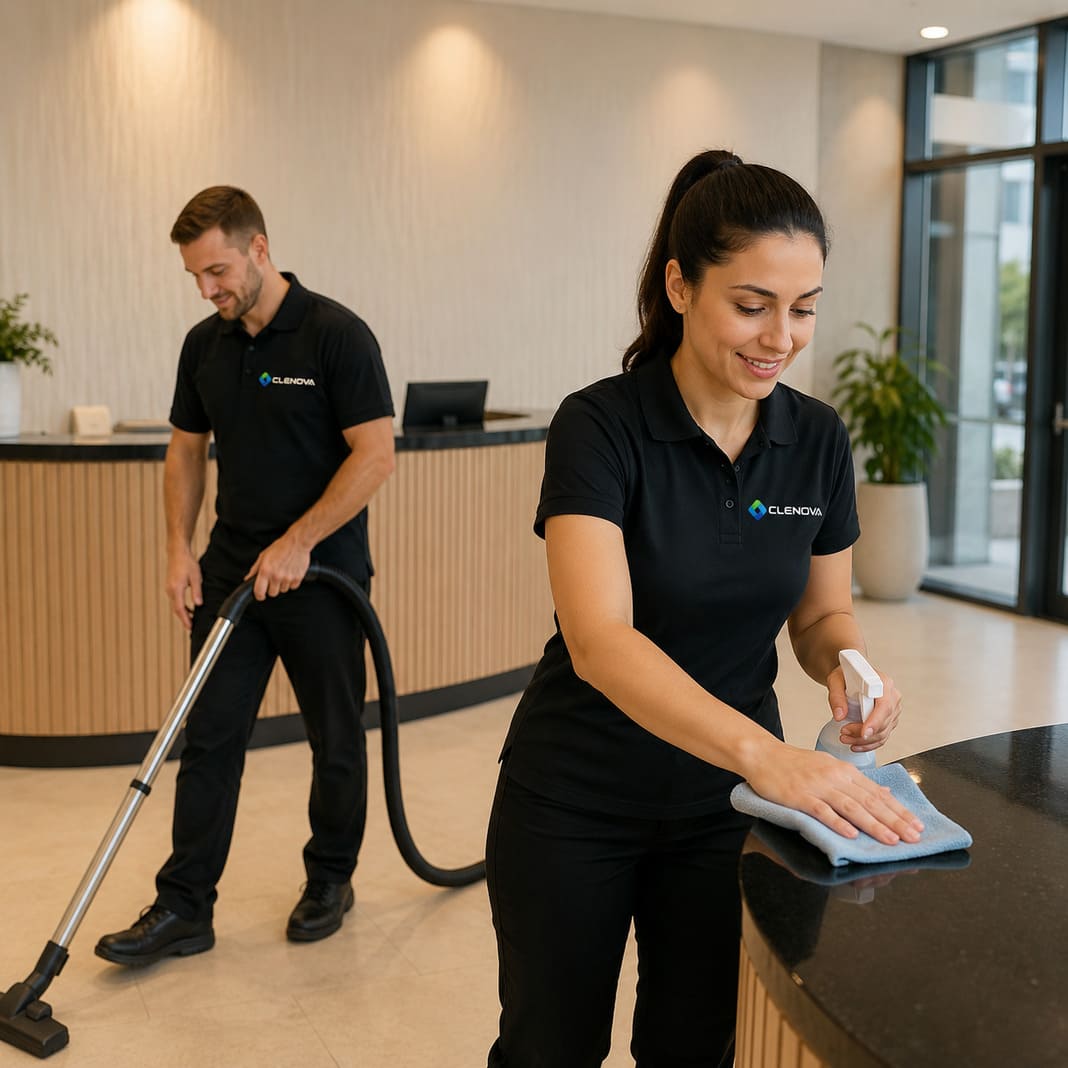
High-touch points change the rota
A bedroom or lounge can look covered by the rota while bed rails, remotes, grab rails or nurse call buttons sit inside no clear task line. We separate room cleaning from touch point cleaning because frequently touched surfaces carry a different infection prevention and control, IPC, risk.
High-touch surfaces need separate cleaning
NHS England’s 2025 standards say hand-mediated transmission is a major contributor to infection spread in healthcare environments, so cleaning plans must recognise frequently touched surfaces. In care homes, that means the schedule should name items such as light switches, taps, dispensers, toilet flush handles, door handles, push plates, bed rails, grab rails, nurse call buttons, TV remotes, fridge handles and lift buttons.
General room cleaning may deal with floors, bins and visible dirt. Touch point cleaning deals with the surfaces residents, staff and visitors repeatedly handle. We do not bury those points inside “clean room”, because nobody can audit a hidden task properly.
Shared equipment needs the same discipline. Multiple-use equipment must be cleaned or decontaminated after each use and between use by different people, so the rota needs to show who takes responsibility at that handover point.
Colour coding reduces cross-contamination
Colour-coded cleaning materials and equipment help stop a cloth or mop moving risk from one area to another. NHS England’s national scheme uses red for bathrooms, washrooms, showers, toilets, basins and bathroom floors; blue for general areas; green for catering departments, ward kitchen areas and food service at ward level; and yellow for isolation areas.
Chemicals and detergents do not need to be colour-coded in the same way. The practical point is that cloths, mops and other cleaning materials need to stay linked to the right type of area, and staff need training that makes the system routine rather than decorative.
Extra cleaning follows infection risk
Routine cleaning should change when suspected infection, isolation needs or outbreak risk appears. The DHSC defines an outbreak in residential services as two or more linked cases of the same confirmed or suspected infection occurring around the same time and associated with the service or location; during outbreaks, cleaning arrangements should be reviewed and amended as needed.
That review should look at frequency, products, touch points and shared equipment. Your local infection prevention team or UK Health Security Agency local health protection team may be involved where the situation calls for their advice, and the cleaning plan should be able to adapt without confusion over who does what.
A rota is not evidence
A rota is a plan. Evidence comes from delivery, attendance records, quality checks, issue logging and corrective action.
Missed cleaning usually starts quietly. A regular operative is absent, a cover cleaner does not know the site well, a shared item sits between users, or a supervisor check gets skipped because the day is already busy. None of those problems is solved by a laminated schedule on the wall.
Good management turns frequency into something you can rely on. Attendance monitoring shows whether contracted hours were delivered. Site inspections show whether the standard matched the scope. Shortfall records show what was found, who took ownership and whether the correction happened.
At Clenova, we use digital time and attendance monitoring, regular quality checks and management follow-up because care environments need more than a task list. We cannot make the provider’s legal responsibility disappear, and no contractor should claim that, but we can help make the cleaning arrangement clearer, better controlled and easier to evidence.
The common misconception is that a written rota proves the home is properly covered. It does not. The evidence is the work being done, checked and corrected when the day does not go to plan.
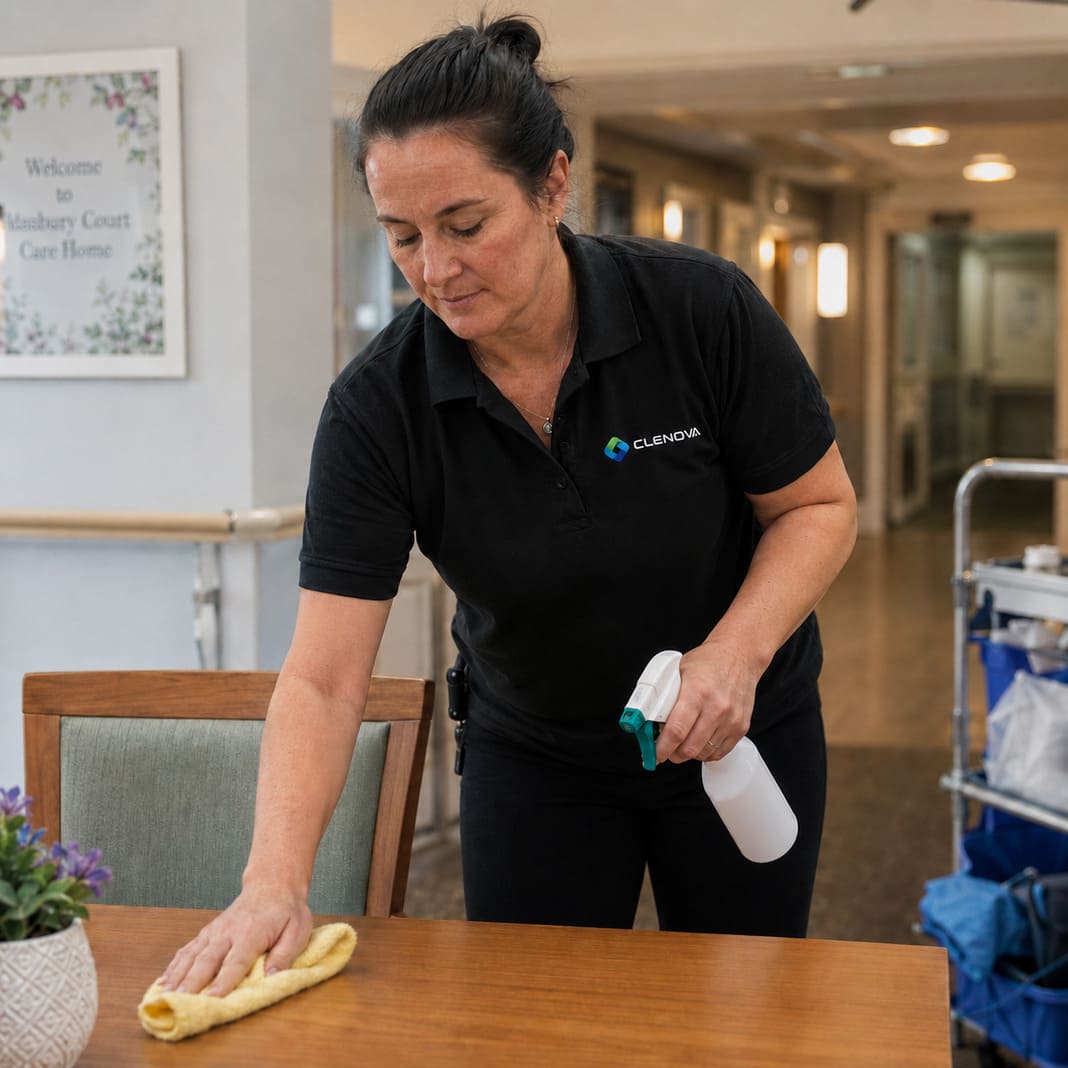
Questions we get asked about care home cleaning schedules
Who should sign off daily cleaning in a care home?
The sign-off route should match your staffing structure, but the person checking the work needs enough authority to record shortfalls and make sure they are corrected. A signature with no review behind it adds little value.
Should resident bedrooms and en-suite bathrooms have the same cleaning frequency?
They can both appear on a daily routine, but bathrooms often need extra cleaning when soiled or when infection risk changes. The schedule should separate the bedroom area, bathroom area and high-touch points.
What records help during a CQC inspection?
Useful records include cleaning schedules, completion logs, training records, quality checks, attendance records and notes showing what action was taken after a shortfall. The records need to match the work actually happening on site.
Are cleaning chemicals part of the colour-coded system?
The colour-coding system applies to cleaning materials and equipment, such as cloths and mops, rather than requiring detergents to be colour-coded. Staff still need to know which product is used for each task and how to use it safely.
How should a care home handle cleaner absence?
Cleaner absence should be covered through a planned cover process, with site information available for the replacement operative or supervisor. The frequency in the schedule only works if someone is assigned to deliver it when the usual person is away.
This is general information, not professional advice.