
How does cleaning work in embassies and secure sites?
Secure-site cleaning works by putting normal cleaning tasks inside strict access rules, staff checks, supervision and records. We still clean familiar spaces, such as offices and washrooms, but the service has to control who attends, where they go, what they can touch and how issues are followed up.

Table of Contents
Secure-site cleaning changes the operating model, not just the task list
Secure-site cleaning is not a special polish applied to ordinary office cleaning. The cleaning work may look familiar, but every task sits inside access control, permitted areas, confidentiality rules and management accountability.
A cleaner in an embassy, data centre or government-adjacent building may still empty bins, clean washrooms, maintain receptions and service meeting rooms. The difference is that the work is framed by site access protocols. Passes, restricted zones, sign-in records and supervision matter as much as the cleaning schedule.
One point gets missed in many discussions of embassy cleaning: the cleaning contractor does not set the site’s security rules. The organisation granting access owns the risk decision. The National Protective Security Authority, or NPSA, says organisations should use the same personnel security measures for contractors as for directly employed staff, and the organisation granting access must manage the risk of giving contractors access to its sites and assets.
From our side, that changes how we plan the contract. We look at who is allowed on site, which rooms are in scope, whether access is escorted or unescorted, and what happens if a cleaner arrives and something has changed. Secure commercial cleaning across London works best when those rules are clear enough for operatives to follow and for managers to check.
Vetting terms need precise wording
Embassy cleaners do not automatically need one single type of “security clearance”. The right check depends on the site, the role and the level of access, so we treat broad claims like “fully security cleared cleaners” with caution.
Here is the plain difference between the main terms you are likely to hear.
| Check | What it is | What to remember |
|---|---|---|
| Basic Disclosure and Barring Service check, known as a basic DBS check | A criminal record check available for any role | It is not the same as government vetting. |
| Standard or Enhanced Disclosure and Barring Service check, known as standard or enhanced DBS | Higher-level DBS checks for eligible roles | GOV.UK says employers are legally responsible for checking that a role is eligible before asking for one. |
| Baseline Personnel Security Standard, known as BPSS | Pre-employment screening for people with access to government assets | GOV.UK describes BPSS as the recognised screening standard, but not formal security clearance. |
| National Security Vetting, known as NSV | Government security vetting for roles that need it | Levels include Counter Terrorist Check, known as CTC, Level 1B, Security Check, known as SC, and Developed Vetting, known as DV. The responsible authority sets the requirement. |
At Clenova, we avoid blanket wording such as “all staff are DBS checked” because that is not how responsible vetting works. We match checks to site requirements, role eligibility and access level, then keep the wording clear enough for your facilities, security and procurement teams to assess.
A better procurement question is simple: what checks are required for this role, this site and this access? That answer is far more useful than a vague claim that everyone is “cleared”.
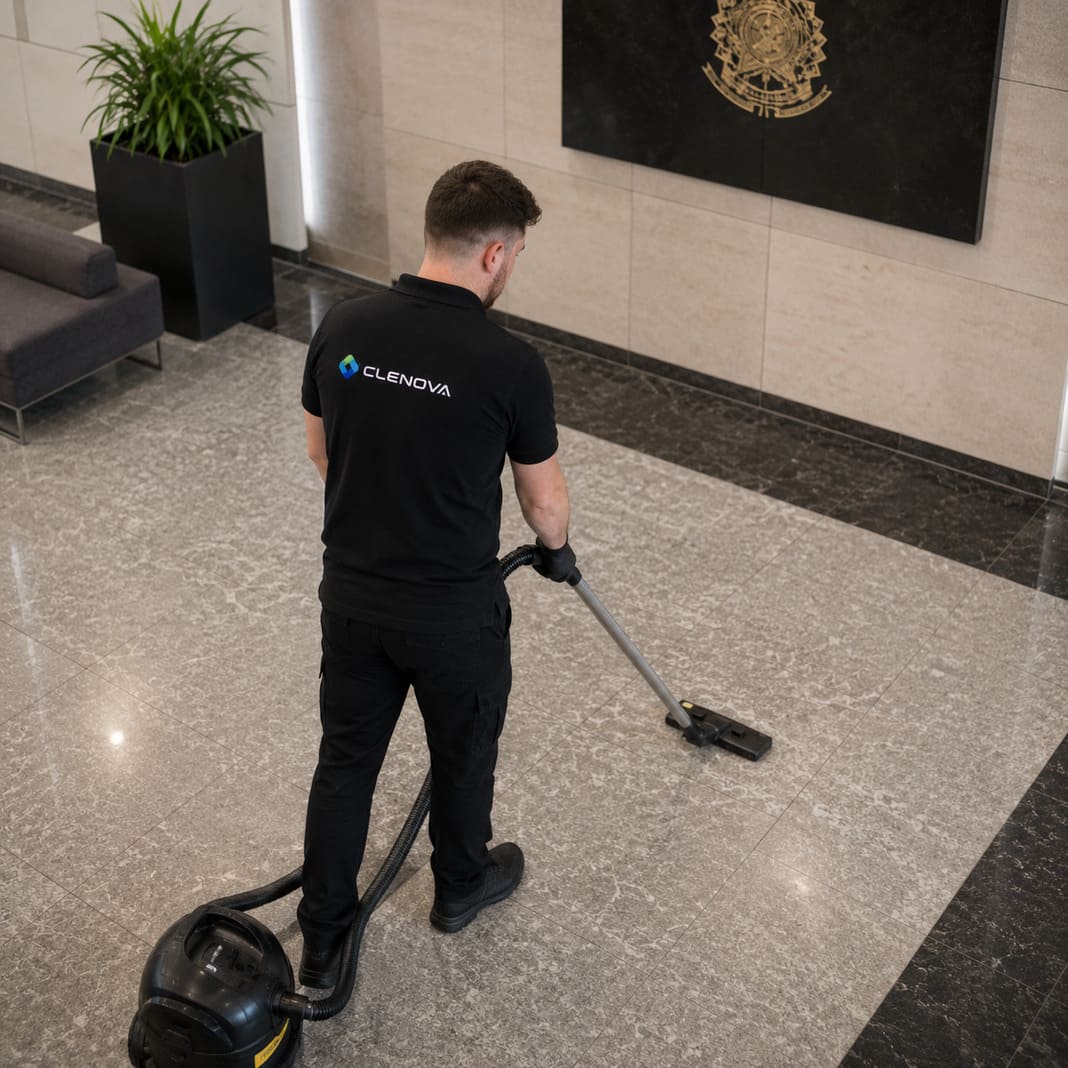
Restricted areas, keys and alarm codes are controlled by clear boundaries
A cleaner may be approved to clean washrooms and circulation areas but not enter a restricted office nearby. That is the practical reality of cleaning in secure buildings: access is granted by area and task, not by general trust.
Access is granted by area and task
Access-controlled cleaning depends on agreed boundaries. We want the cleaning scope to show which rooms, floors and shared spaces are included, and which areas are outside the cleaner’s route unless a specific instruction is approved by the site.
Escorted and unescorted access also need different planning. An escorted clean depends on site personnel being available at the right time. Unescorted access puts more weight on approved staff lists, passes, sign-in records and clear reporting if a room is unavailable.
Confidential document rules should be simple. Cleaners should not sort, move or organise papers unless the site has an approved instruction for that exact situation. A tidy desk can wait; a document-handling breach creates a much bigger problem.
Keys and codes need coded control
Keys, alarm codes and access details require controlled handling. Where required, Clenova can hold client keys and alarm details, with keys stored securely and identified by coded references instead of client names or addresses. Access is limited to authorised management personnel, and site-access information is shared only with authorised staff.
Good controls do not have to be theatrical. They need to be plain, repeatable and auditable. Your security manager should be able to see who is allowed to hold what, and your cleaning contractor should be able to explain how access information is kept within the approved group.
Consistency keeps secure cleaning under control
When the regular cleaner is off sick at a secure site, the risk is not just a missed clean. The weak point is an unfamiliar person arriving without the same knowledge of the building, the access rules or the agreed boundaries.
Planned cover, not improvised substitution, is the difference between a managed service and a scramble at the door. We look for four controls in any secure-site cleaning contract:
- Known teams wherever possible. Familiar operatives learn the permitted routes, the rooms in scope and the site expectations.
- Approved cover staff need to be ready before absence happens, with the right checks and instructions for the site.
- Attendance records. Digital time and attendance monitoring helps verify that contracted hours are delivered by the right people.
- Supervision and quality checks keep the facilities or security team from having to manage the cleaning team day to day.
At Clenova, we use digital time and attendance monitoring, regular site inspections and trained cover arrangements to support that control across London and Greater London. We do not treat absence cover as an afterthought because secure-site cleaning depends on continuity as much as cleaning quality.
Attendance evidence also protects the contract from drift. If a site is cleaned out of hours, you need more than a signed promise that someone attended. You need a management process that checks attendance, follows up missed issues and keeps standards aligned with the agreed scope.
Procurement questions expose weak service models quickly
The right questions reveal whether a cleaning contractor has an operating model for controlled-access cleaning or only a list of cleaning tasks. Use these questions before awarding an embassy cleaning, government building cleaning or secure commercial cleaning contract in London.
- Who sets the vetting requirement for each role? Ask how the contractor works with your site rules and access levels, instead of accepting a broad “security checked” statement.
- Which areas can cleaners enter, and which areas are excluded? The answer should map cleaning duties to permitted rooms, restricted zones and escorted or unescorted access.
- How are keys, passes and alarm details managed? You are looking for restricted access, coded references where keys are held and clear rules on who can use sensitive information.
- How is attendance proved? Sign-in records and digital attendance monitoring give your team a firmer basis for checking that approved people attended at agreed times.
- What happens when the regular cleaner is absent? Cover needs to be planned before sickness or annual leave occurs. Ask how replacement staff are approved, briefed and supervised.
- Who handles escalation if access, timing or standards change? A named management route matters because secure-site cleaning involves live operational decisions, not just routine task completion.
For sites across Greater London, local coverage also needs testing against your actual access hours. A contractor may be available in principle, but secure cleaning depends on whether they can provide supervised, approved cover within the building rules you already have.

The real test is accountable control
The real question is not whether cleaners can work quietly in a sensitive building. The sharper question is whether the contractor can account for people, access, standards and follow-up every time the service runs.
Discretion matters, but it is incomplete on its own. A sound secure-site cleaning model is clear about who may attend, where they may go, what they may handle and who checks the work afterwards. That is what turns cleaning from a loose arrangement into a controlled service.
We think the best secure-site cleaning feels uneventful to the client because the operating model carries the weight. Access is agreed, attendance is recorded, cover is planned and issues have somewhere to go. The cleaner’s task is visible, but the management behind it is what protects the site.
Questions we get asked about secure-site cleaning
Can cleaners work in a secure building outside normal office hours?
Yes, if the site grants the right access and the cleaning plan matches the building rules. Out-of-hours cleaning needs clear sign-in, alarm, pass and supervision arrangements.
Can a cleaner enter a restricted room if it needs cleaning?
A cleaner should enter only if that area is included in their approved access and cleaning scope. Restricted rooms need explicit permission from the site, even if the cleaner has passed checks for other areas.
Do cleaners need to sign confidentiality agreements?
Some secure sites require confidentiality agreements or specific document-handling instructions. The key point is that confidentiality expectations must be written into the contract and explained to the staff working on site.
Should the same cleaners attend every visit?
Using the same cleaner or team wherever possible supports continuity because they learn the site rules and routines. Cover still needs to be planned, since sickness and annual leave cannot be ignored.
Who decides whether BPSS or higher vetting is needed?
The site, department or responsible authority decides the required level based on the role and access. A cleaning contractor can support the process, but it cannot independently grant government security clearance.
This is general information, not professional advice.