
Do schools need different cleaning plans for term time and holidays?
Yes. We plan school cleaning as a connected annual programme: daily term-time routines keep occupied areas usable, and holiday periods give space for periodic work that would disrupt teaching. The academic calendar, access hours, room use and school events decide the schedule, and a generic rota misses too much.
A normal teaching week, a half-term break and the summer holiday all place different demands on the same building. Classrooms, toilets, corridors, dining spaces and staff areas need steady routines during term time, then holiday windows allow more detailed work where access is easier.
Here is the practical split we use when planning school cleaning around term time and holidays.
| Term time | Short holidays / inset days | Long holidays |
|---|---|---|
| Daily routines in occupied areas, with set access hours. | Periodic jobs that need clearer access, such as focused washroom work or room resets. | Larger planned work, including summer whole-school deep cleaning where required. |
| Standards rely on attendance, cover and quick issue reporting. | Timing has to account for clubs, exams or staff activity. | Access has to be coordinated around site works and locked rooms. |
Department for Education guidance asks schools to specify the number of weeks each year that cleaning is required and whether periodic or non-routine cleaning is needed. Current UK Health Security Agency guidance also treats daily, weekly and periodic cleaning schedules as part of a comprehensive cleaning contract.
Holiday deep cleaning supports term-time school cleaning. It does not replace the daily routines that keep the school running through ordinary teaching days.

Table of Contents
A strong annual school cleaning plan starts with the calendar and then tests it against site use
A school cleaning plan starts with the calendar, but the calendar alone will not run the service. We need to know how the building is used when pupils are in, when pupils are away and when the school is still active during breaks.
Across London and Greater London, dates can differ by borough, academy trust or independent school. The GOV.UK school term and holiday dates service points schools to local council dates, but we still treat your own confirmed calendar as the working document, because inset days, lettings, exams and summer works can change the cleaning window completely.
At Clenova, we start by confirming the academic calendar and actual site use before we build the annual school cleaning schedule. That matters because a school with holiday clubs and maintenance contractors needs a different plan from a site that has clear access for a full break.
A useful planning sequence looks like this:
- Confirm the real dates. Council term dates are only the start. We ask for your school’s term dates, inset days, closure periods and any trust-level changes that affect access.
- Map how the rooms are used. Breakfast clubs, after-school clubs, exams, lettings and staff training can keep areas occupied when a contractor might otherwise assume they are free.
- Separate daily routines from periodic work. Term-time cleaning protects the working school day. Holiday cleaning gives time for tasks that need longer access or less room movement.
- Agree access, keys and alarms. Final lock-up, alarm setting and authorised access need to be clear before work starts, especially when cleaning takes place outside normal site hours.
- Build in checks. Inspection points belong in the plan, so standards are checked during term time and before pupils return after a break.
Morning and evening duties can differ from each other and from day to day, so the plan has to be specific about access hours. A school cleaning contract planned only from headline term dates will always leave gaps.
Daily term-time cleaning depends on attendance, cover and visible management
A regular cleaner is absent during a wet school week. The difference between a stable service and a messy week is whether trained cover has already been planned and briefed.
A daily line in a specification tells you the intended frequency; it says little about who attends, how absence is handled or how standards are checked. We look at term-time cleaning standards as a managed service, because pupils and staff use the same areas again before there is much time to recover from a missed clean.
Department for Education guidance is clear that schools should consider how they measure and maintain daily cleaning quality, including timekeeping, absence management, stock levels and faulty equipment reporting. Those points can sound administrative, but they are the practical controls behind reliable daily school cleaning.
Safeguarding also needs precise handling. Schools should know who is on site, when they attend and how concerns are escalated. Disclosure and Barring Service checks, known as DBS checks, must be completed at the appropriate level for staff involved in the cleaning service, and the exact requirement depends on the site and role.
Provider changes add another layer, although they should not derail the cleaning plan. Staff-transfer matters can be handled as part of a controlled handover, so the school does not have to turn a cleaning review into a legal project before the operational basics are fixed.
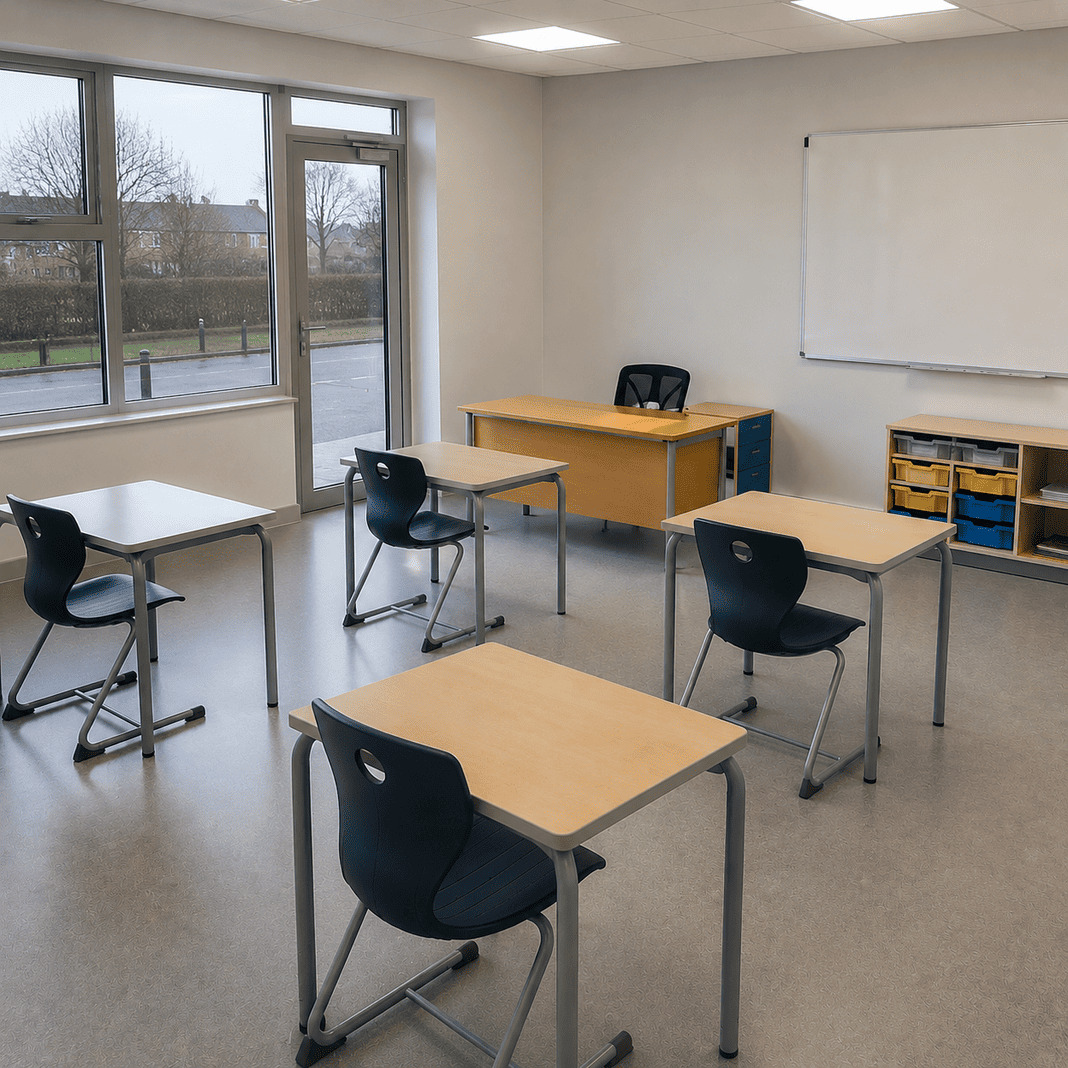
School holiday cleaning works when it is treated as planned project work
During a holiday, the school may be quieter, but it is rarely free of activity. Holiday clubs, lettings, exams, maintenance works and restricted areas can all shape what school holiday cleaning can achieve.
Detailed cleaning belongs in planned holiday windows
Short holidays and inset days give useful windows for periodic cleaning, room resets and targeted work. Longer breaks allow larger projects, including a school summer deep clean, floor care, carpet work, washroom attention and high-level cleaning where the site and contract require it.
We plan this work as a project because sequencing matters. A floor area cannot be finished properly if another contractor needs to cross it later. A room cannot be completed if furniture is due to be moved after cleaning. Holiday cleaning fails when everyone assumes the building is empty and nobody checks the actual access.
Additional cleaning also needs a plan before it is needed. UK Health Security Agency guidance says settings should develop plans for situations where extra cleaning is required, such as during an outbreak. In practice, that means your contract should already set out how additional work is agreed and managed, so the response is controlled.
Access planning decides what can actually happen
Products and chemicals must be labelled and stored under the Control of Substances Hazardous to Health regulations, known as COSHH. Cleaning staff also need suitable personal protective equipment, known as PPE, where the task requires it. Colour-coded cleaning equipment is good practice for separating areas such as toilets, kitchens and general spaces, although it is not a legal requirement.
Those details should sit inside the holiday plan without turning it into a paperwork exercise. The school needs confidence that cleaning materials, access arrangements, locked areas and alarm responsibilities are controlled.
Before pupils return, the site should have been checked against the agreed work, with any missed or blocked areas recorded and followed up.
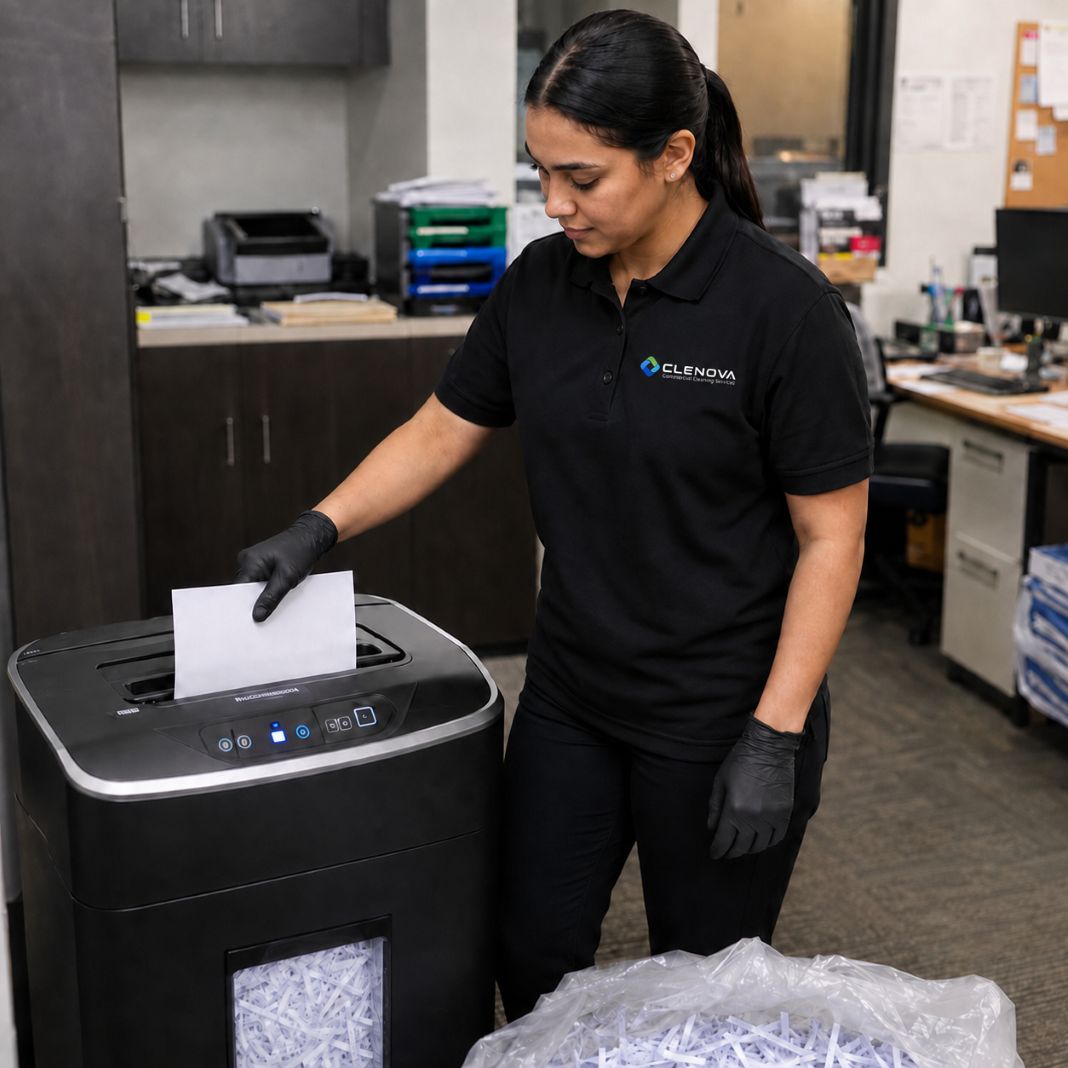
Readiness depends on named checks and recorded follow-up
A cleaning schedule has limited value unless someone checks whether the work happened properly. Readiness for pupils to return depends on inspection, issue reporting and corrective action, not on a line in a calendar.
Your school should have a nominated contact for cleaning standards and a clear way for staff to report concerns. That fits with UK Health Security Agency guidance, which says settings should nominate someone to monitor cleaning standards and have a system for reporting issues.
At Clenova, we link digital time and attendance monitoring with regular site inspections and quality checks, so contracted hours and cleaning standards are managed together. Trained cover operatives or supervisors also support continuity when absence would otherwise put the routine under pressure.
The better test is whether a contractor can clean during term time or during holidays. It is whether the cleaning plan holds together from the first teaching week to the day pupils return after the longest break. Your school is buying continuity across the academic year.
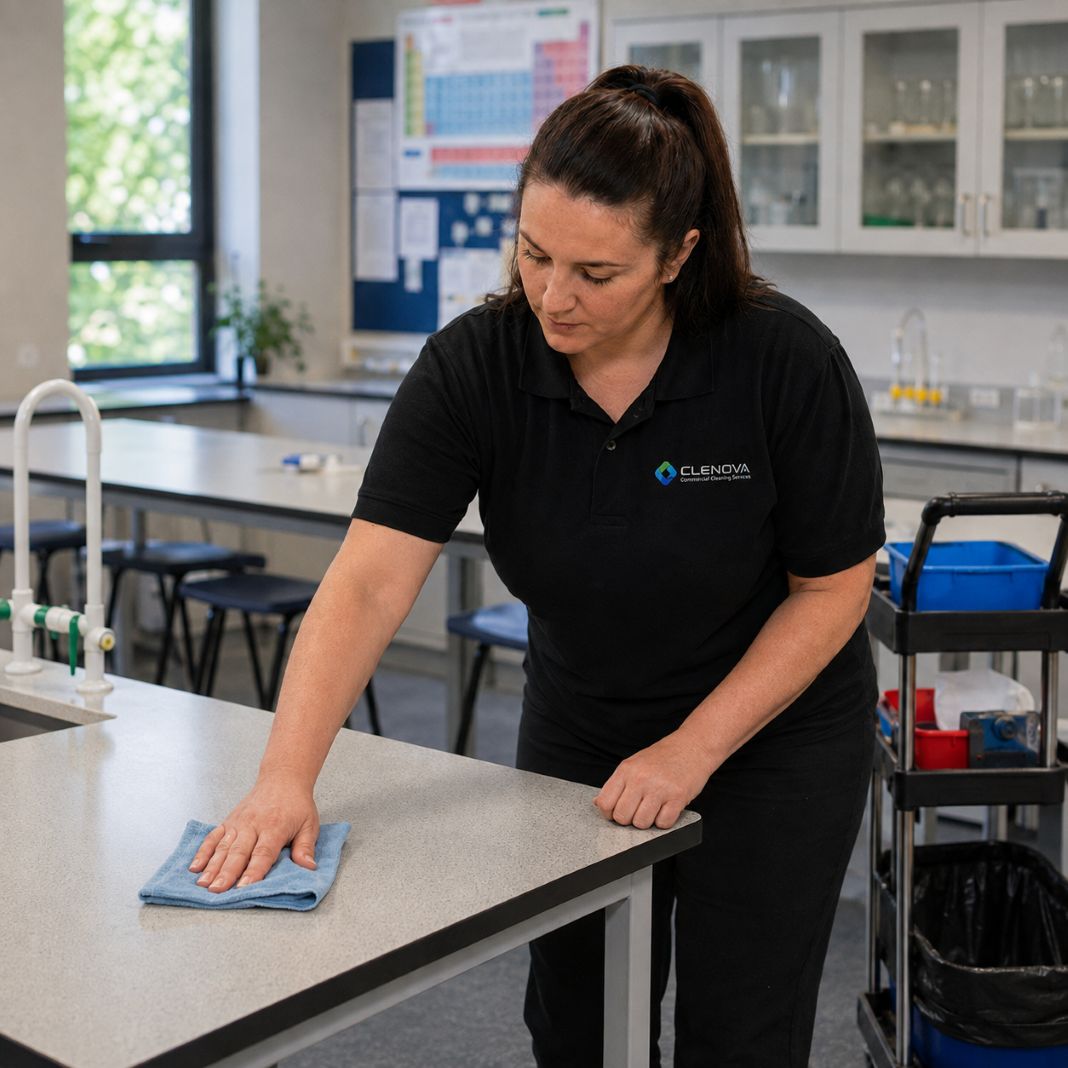
Questions we get asked about school cleaning plans
Can cleaning be planned around breakfast clubs and after-school clubs?
Yes, but those activities need to be included in the planning information. We treat clubs and lettings as room-use constraints, because occupied areas need different timing from closed rooms.
Should summer maintenance works be agreed before the deep clean is scheduled?
Yes. Maintenance works can block rooms, move furniture or affect floors, so the school summer deep clean should be sequenced around those works rather than placed on the calendar in isolation.
What should a school share before a cleaning plan is built?
Your contractor needs the academic calendar, inset days, access hours, room-use patterns, lettings, known site works and any restricted areas. Without those details, the plan relies on assumptions.
How are cleaning products kept safe in schools?
Cleaning products and chemicals must be labelled and stored correctly under COSHH rules. Access should be limited to authorised staff, and storage arrangements should match the site’s agreed procedures.
What happens if extra cleaning is needed during an outbreak?
Your cleaning contract should already include a process for additional cleaning when circumstances change. The useful plan sets out how extra work is agreed, carried out and checked, so the school is not starting from scratch under pressure.