
Which cleaning schedule is better for most offices?
For most offices, the strongest schedule is hybrid: daytime cleaning for washrooms, kitchens and visible upkeep, with out-of-hours cleaning for desks, floors and tasks that disrupt work. We choose the window by looking at occupancy, access, security, supervision and the cleaning specification, not the clock alone.

Table of Contents
Daytime and out-of-hours cleaning differ most in control, access and disruption
A daytime cleaner is visible, which makes small issues easier to raise and shared areas easier to maintain. Evening office cleaning gives better access to desks, meeting rooms and floors, but it puts more weight on keyholding, alarm access and proof that the work was actually completed.
Here is the practical comparison we use when reviewing a workplace cleaning schedule.
| Operational issue | Daytime office cleaning | Out-of-hours office cleaning |
|---|---|---|
| Disruption | Works well for washrooms, kitchens, bins and visible upkeep, but noisy or wet work needs careful timing. | Keeps vacuuming, mopping and floor work away from staff activity. |
| Access to desks and rooms | Desk cleaning can be limited by staff presence, calls, meetings and confidential papers. | Empty desks and meeting rooms are easier to clean properly, provided access is agreed. |
| Communication | Staff can raise small issues on the day, and cleaners can report blocked areas quickly. | Communication needs a clear route, because staff and cleaners are rarely on site together. |
| Supervision and quality | Managers can see the service in action, but standards still need inspection. | Inspection logs and follow-up matter more because the work happens out of sight. |
| Security | Fewer keyholding issues arise during open building hours. | Access cards, alarm codes, locked rooms and key control need tighter rules. |
| Staff experience | Good for visible hygiene, but poor task timing leads to complaints. | Less interruption for staff, although missed tasks may not be noticed until the next working day. |
| Energy use | Energy savings are possible where the building can reduce lighting and heating, ventilation and air conditioning after staff leave. | Extra building operating time can affect energy use where systems must stay on for cleaning. |
No timing model fixes a weak contract. After-hours office cleaning can look tidy on paper and still fail if nobody checks attendance. Office cleaning during working hours can look accountable and still frustrate staff if vacuuming starts beside occupied desks. The better model is the one your site can control every week.
Cleaners working alone without close supervision can count as lone workers. The Health and Safety Executive is clear that employers must manage those risks before lone work takes place, so out-of-hours cleaning needs proper contact arrangements and a response process if something goes wrong.
Cleaning tasks should be split by when the office is usable
Imagine a London office where the washrooms need attention by lunchtime, but the desks stay occupied until the end of the day. Forcing every task into one window means either staff get interrupted or the areas that need daytime attention wait too long.
At Clenova, we build the cleaning specification around the way your site is used across London and Greater London. Then we split the work into the right cleaning window. The task split usually matters more than whether the contract says daytime cleaning or evening cleaning.
- Best during the day: washroom checks, kitchen upkeep, consumables, visible bins, reception areas and quick response to spills or heavy use.
- Best after staff leave: desk cleaning, vacuuming, mopping, floor work and meeting rooms that are occupied for much of the day.
- Suitable for either window: touchpoint cleaning, internal glass, bins in low-use areas and some shared facilities, provided the building layout supports it.
- Worth separating out: wet floor work, noisy equipment and tasks in confidential spaces need agreed access and timing before the service starts.
Shared areas expose weak scheduling first. A kitchen that is spotless before staff arrive can be poor by mid-afternoon. A desk clean during the day can be limited by laptops, papers and meetings. Task-by-task scheduling prevents the contract from pretending one visit can solve every use pattern.

Cost, security and quality depend on contract management
Price is a weak guide on its own. The real question is whether the contract pays for delivered work, safe access, proper cover and checks that show standards are holding.
Cost is not just the cleaning window
Night cleaning is sometimes priced differently for commercial reasons, such as labour availability, supervision and access. UK law does not set a higher statutory minimum wage rate simply because work is done at night. GOV.UK states that the National Minimum Wage applies to night workers, with no higher night-working rate.
Energy claims need the same sceptical treatment. Daytime cleaning can reduce energy use where the building can genuinely reduce systems out of hours, but that depends on how your office is controlled. A multi-tenant London building with shared plant and security arrangements will not behave like a single-occupier site with full control over building systems.
Security depends on access control
After-hours office cleaning is not automatically more secure because fewer people are present. Empty buildings reduce staff disruption, but they also make access procedure, alarm setting and key control far more important.
A workable arrangement needs clear rules for who enters, which areas they can open, how alarms are handled and how access details are protected. Sensitive desks, locked rooms and restricted floors belong in the cleaning specification, not in a vague note added after the first complaint.
Quality depends on verification
A schedule becomes reliable when attendance, cover and inspection are managed. At Clenova, we use digital time and attendance monitoring, regular site inspections, quality checks and trained cover operatives or supervisors where required, because a planned cleaning window means little unless the service is delivered.
Daytime cleaning gives you visibility, but visibility is not the same as control. Evening cleaning gives better access, but access is not the same as quality. Contracted hours need attendance records, and standards need inspection followed by action when something slips.
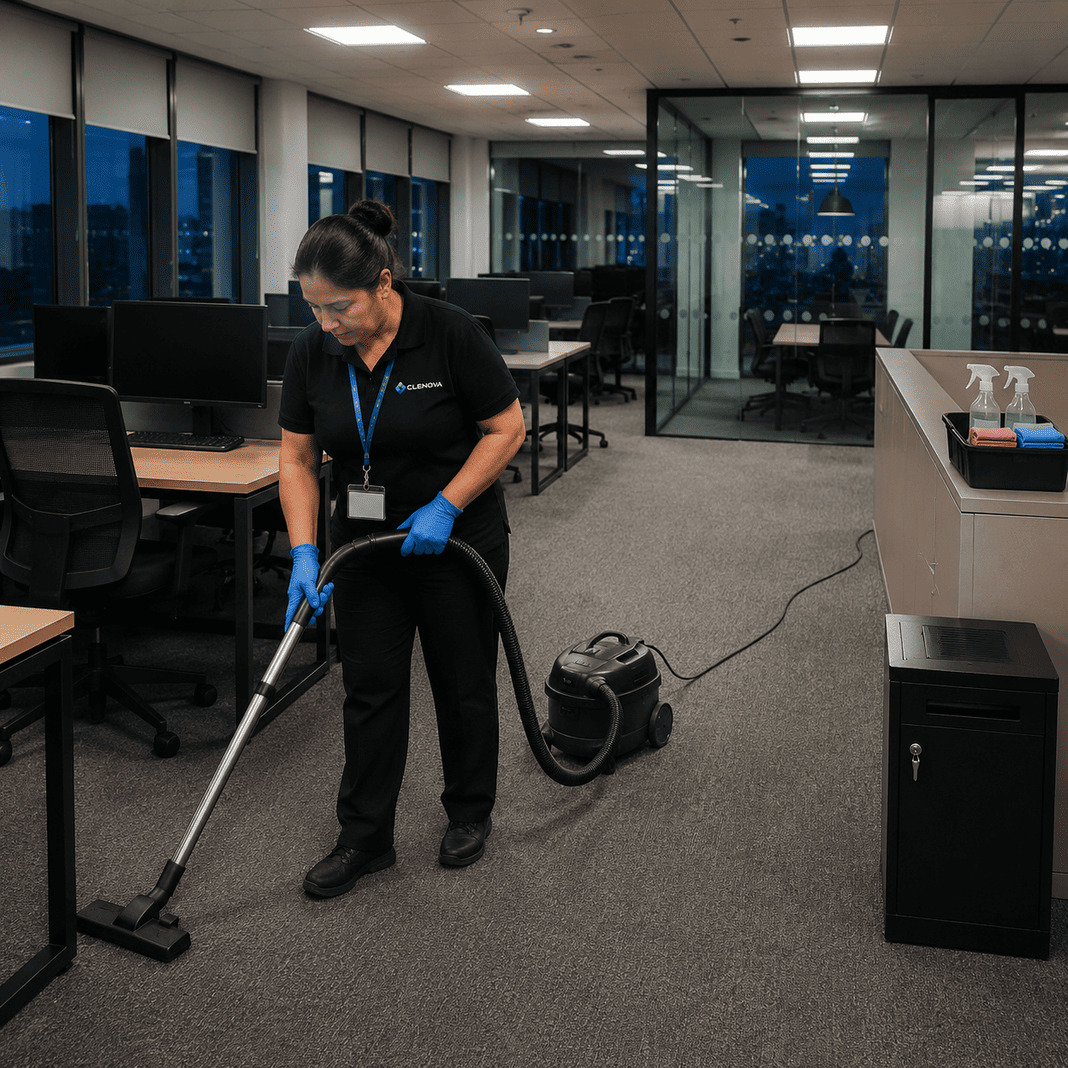
The right long-term schedule is the one we can keep controlled
Workplace use changes. Staff attendance patterns shift, meeting rooms get heavier use, visitor areas have busy days, and small complaints point to parts of the schedule that no longer fit the building. A cleaning schedule chosen once and left untouched becomes stale.
We judge the best office cleaning schedule by whether it can keep working as the site changes. For many workplaces, that means a hybrid office cleaning schedule with daytime upkeep in shared areas and out-of-hours work where access matters. For others, a well-managed early morning or evening model is easier to run because the building layout supports it.
The real decision is not daytime or out-of-hours cleaning. The real decision is whether the cleaning window, task split, access arrangements, cover plan and quality checks are strong enough to keep standards consistent without pulling your team into day-to-day supervision. The clock sets the window; management decides whether the contract works.

Questions we get asked about office cleaning schedules
Do cleaners usually come before staff arrive or after they leave?
Many offices use early morning or evening cleaning because desks, floors and meeting rooms are easier to access when staff are away. We also see daytime cleaning used for shared facilities, especially where washrooms and kitchens need attention during working hours.
Can cleaners work around confidential documents?
Cleaners can work in confidential offices when access rules, desk policies and restricted areas are clearly agreed. We prefer those requirements to be written into the cleaning specification so cleaners know what to clean, what to leave and which areas need authorisation.
Should meeting rooms be cleaned during the day?
Meeting rooms can be checked during the day if they receive heavy use, but fuller cleaning is easier when bookings have finished. A hybrid schedule works well where rooms need quick resets by day and a more complete clean after staff leave.
How do we handle a missed clean in either schedule?
A missed clean needs attendance records, a named escalation route and a cover process. The schedule matters less than whether the contractor can see the gap, assign cover and check that the affected tasks have been put right.
Can a cleaning schedule change after the contract starts?
A cleaning schedule can change when occupancy, access or task needs change. We treat the schedule as part of the managed contract, so the right review looks at where standards are slipping and which cleaning window now fits the site better.
This is general information, not professional advice.