

Do you need contract cleaning or a one-off clean for your workplace?
Our rule of thumb is simple: you should choose contract cleaning when your premises need regular standards kept over time, with agreed tasks, attendance, cover and checks. A one-off clean fits a defined job, such as a deep clean or post-works clean, where the brief has a clear finish.
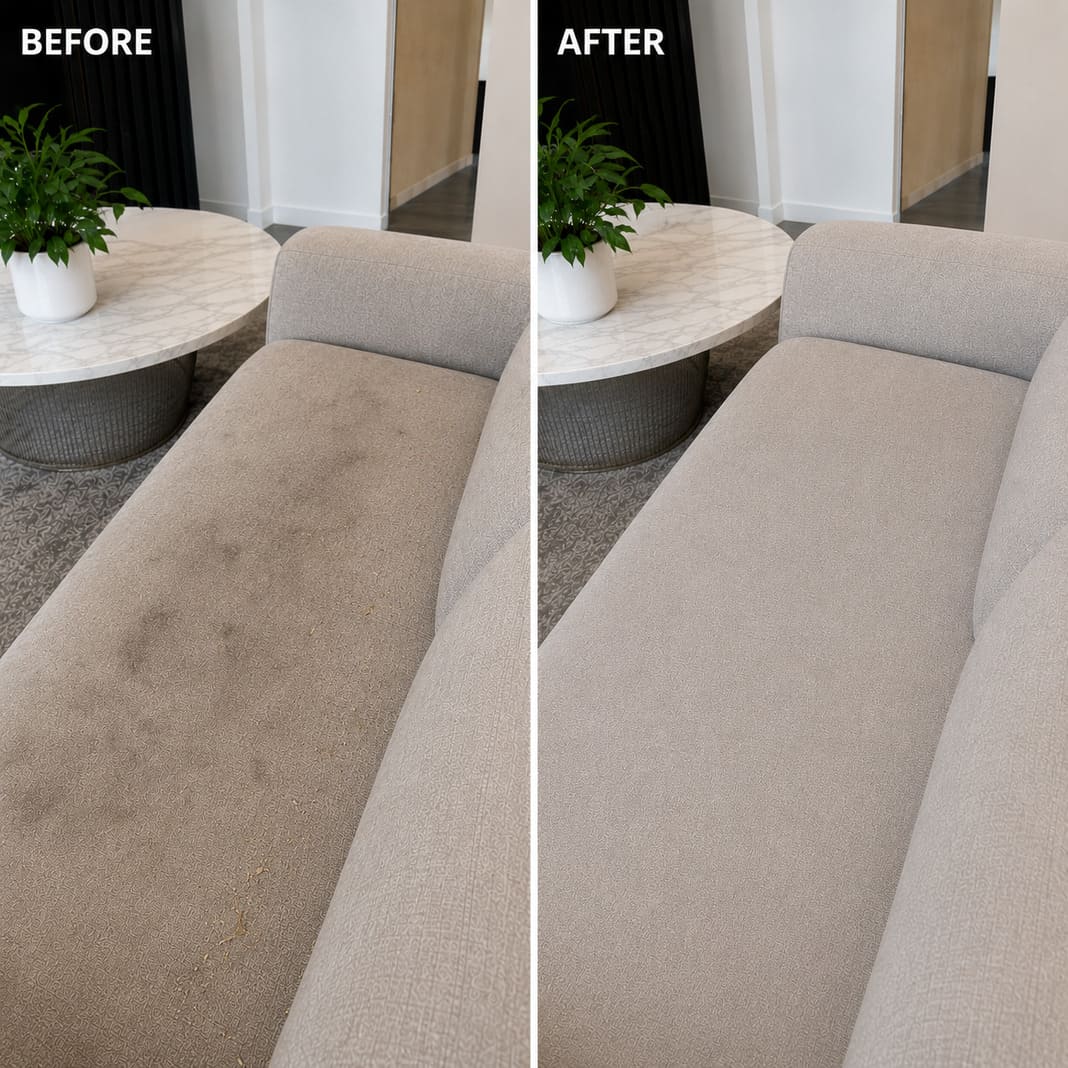
Table of Contents
Contract cleaning is a managed service for regular workplace standards
Contract cleaning means regular commercial cleaning under an agreed scope, schedule and service arrangement. The service is planned around your premises, your opening hours, your access rules and the standards you need kept from one week to the next.
Under a proper commercial cleaning contract, we agree what gets cleaned, how often it happens, who manages the work and how quality is checked. In a London office, that might cover desks, washrooms, kitchens, meeting rooms and shared areas, with different tasks set for different times of the week.
That structure matters because workplace cleaning is easy to overlook until something slips. Bins get missed, washrooms run short, shared kitchens become a daily complaint, or nobody knows whether the contracted time was actually delivered. A managed cleaning service gives those details a home, so you are not chasing the same issue every few days.
For most workplaces across London and Greater London, contract cleaning exists to keep standards steady over time. Regular cleaning then becomes a managed routine with scope, frequency, attendance and quality checks built in from the start.
One-off cleaning works best for a defined commercial job
After refurbishment work, an internal event, or a period when part of the building has been unused, a single cleaning visit can make good sense. One-off cleaning is arranged for a specific condition or task, with a clear brief and a clear finish.
Commercial one-off cleaning can include deep cleaning, post-works cleaning, post-event cleaning, carpet cleaning or a planned specialist task. We still expect a proper brief for that work, including access arrangements, agreed inclusions, timing and the standard needed at completion.
Its limit is built into the name. The clean deals with the job in front of us, then the service ends unless a separate arrangement exists. A one-off commercial clean is useful for a defined project; routine workplace standards need an ongoing arrangement when the premises are used regularly.
Once the job is signed off, nobody is checking the washrooms next week, covering staff absence, or adjusting the cleaning schedule as occupancy changes.

The operational difference is management over time
The practical decision is less about whether you want one visit or many visits, and more about what you need controlled after the cleaner leaves. We compare the two services through continuity, accountability, management time and the cost of service failure.
| Area | Contract cleaning | One-off cleaning |
|---|---|---|
| Purpose | Keeps workplace standards maintained over time | Completes a defined cleaning task |
| Frequency | Set by an agreed cleaning schedule | Set for one job or one project |
| Scope | Built around a cleaning specification and site requirements | Built around a single cleaning brief |
| Management | Includes supervision, communication and follow-up | Focuses on completing the agreed work |
| Quality checks | Standards can be inspected during the service period | Quality is checked against the finished job |
| Cost logic | Value depends on labour, cover, supervision, products and consistency | Price reflects the task, access, time and resources needed |
| Best fit | Offices, managed buildings, schools, clinics, retail and regular workplaces | Deep cleans, post-works cleans, event recovery and specialist tasks |
Labour cost also needs a realistic view. From April 2026, GOV.UK lists the National Living Wage for workers aged 21 and over at £12.71 per hour, so a cleaning proposal that includes supervision, cover and management cannot be judged by the visible cleaning hours alone.
London adds its own practical layer. Out-of-hours access, multi-tenant buildings, keyholding, alarm procedures and changing occupancy patterns all affect how cleaning works in practice. A one-off job can be planned around a fixed access window, but an ongoing cleaning contract has to keep working through absences, timetable changes and site rules.
Where cleaning fails, the cost is rarely just the missed task. You spend time chasing answers, logging complaints, checking whether someone attended, and explaining the same site details again.

A managed cleaning contract makes the service visible
A cleaning contract should make the service clear enough to manage. At Clenova, we treat contract cleaning as a managed service, so the discussion covers attendance, quality checks, cover and communication as well as hours on site.
A proper arrangement should set out the parts of the service that affect reliability day to day:
- Cleaning specification. This describes the areas, tasks and standards, so everyone is working to the same expectation.
- Cleaning schedule, with agreed frequency for routine tasks and any periodic work that belongs in the contract.
- Scope of works. This confirms what is included and what sits outside the regular service, such as specialist tasks that need separate planning.
- Products and equipment, including who supplies them and whether any site-specific method is needed.
- Attendance monitoring, because turning up is the first test of a cleaning contract.
- Cover arrangements for sickness, leave or absence, so the service does not depend on one person being available every time.
- Quality checks and site inspections, with a clear route for recording issues and putting them right.
- Training records, colour-coding policy and compliance documentation where the site needs them.
- Disclosure and Barring Service checks, often shortened to DBS checks, where the site or role requires them.
The British Institute of Cleaning Science, known as BICSc, describes cleaning and hygiene audits as looking at cleaning standards, hygiene, compliance and operational effectiveness. Its audit requirements also refer to documents such as cleaning specifications, schedules, scope of works, colour-coding policies, training records and compliance documentation. That is useful because it shows why good contract cleaning needs visible controls, not vague promises.
Safe product use also belongs in the contract conversation. The Health and Safety Executive links cleaning products and wet work with risks such as skin irritation, allergies, asthma, burns and eye damage where products are not properly selected, handled or controlled. Control of Substances Hazardous to Health, known as COSHH, is the framework used to manage those risks, and the right controls depend on the task.
Good paperwork does not clean a building by itself, but it gives you something to manage against when standards start to drift.
The right option depends on how your premises operates
A workplace that is used every day needs a different cleaning plan from a room being reopened after works. We start by looking at how the space is used, how visible the standards are, who depends on the service, and how much time you already spend dealing with cleaning issues.
Contract cleaning fits ongoing workplace standards
Contract cleaning fits premises where cleanliness has to hold up through normal use. Offices, shared buildings, schools, healthcare settings, retail spaces and managed properties all need routine work to happen without you having to rebuild the plan each time.
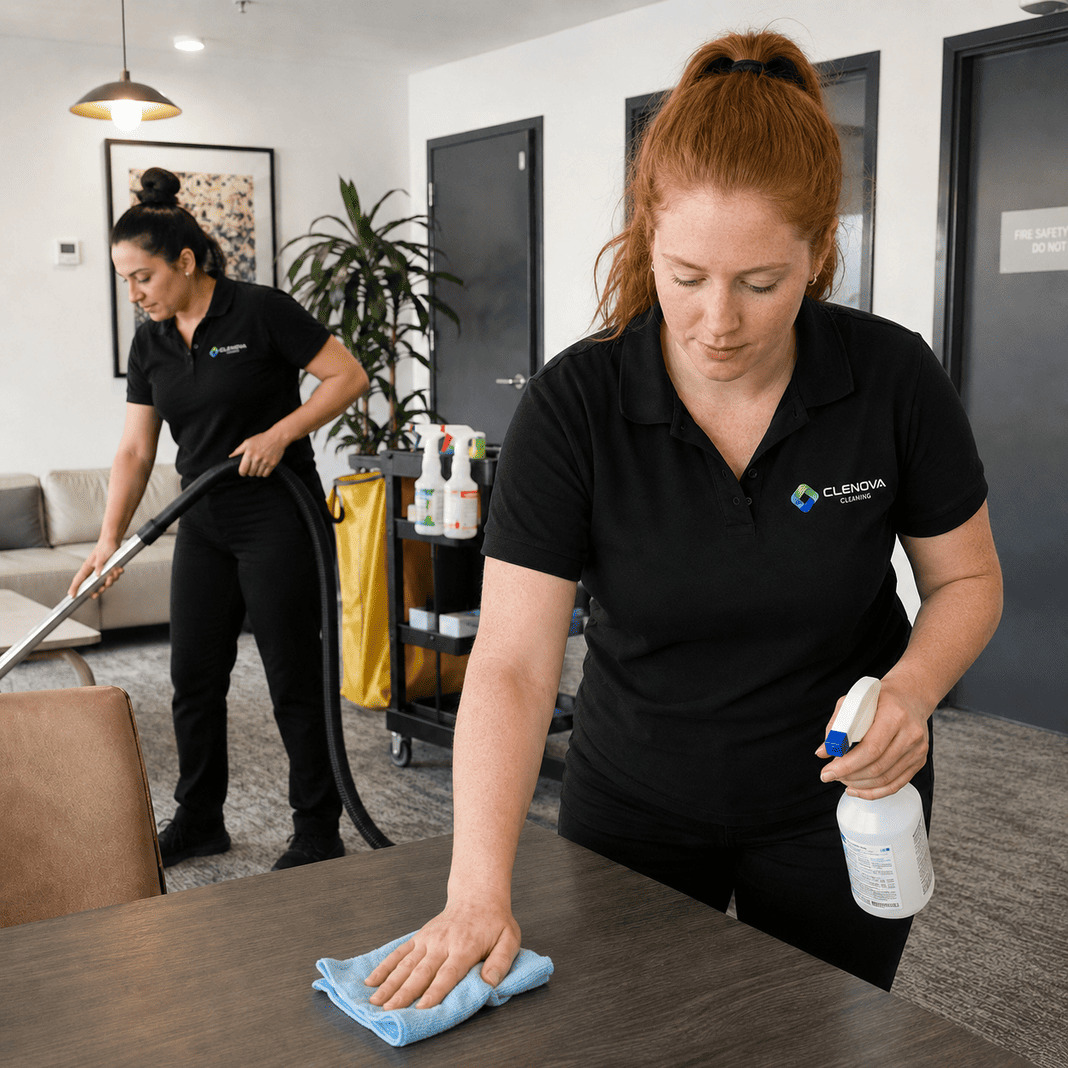
For London workplaces, Clenova’s management-led approach is built around the checks that make contract cleaning easier to trust over time. We use digital time and attendance monitoring to help verify contracted hours, regular quality checks to review standards, and trained cover where needed so absence is managed rather than left as your problem.
A contract also gives you one place to deal with change. If occupancy rises, access times shift, or a particular area starts causing complaints, the cleaning schedule and scope can be reviewed as part of the service arrangement.
One-off cleaning fits defined projects
One-off cleaning fits better when the work has a natural end point. A post-works clean, carpet clean, deep clean or event recovery clean can be planned, completed and checked against the brief without creating an ongoing service.
That model works well when your usual cleaning is already under control or when the task sits outside routine cleaning. It becomes weaker when it is used to patch over repeated problems, because a reset clean cannot manage attendance, cover or routine quality after the visit has finished.
Your decision becomes much clearer once you separate the cleaning task from the management behind it. If the premises need standards kept, checked and corrected over time, you are looking at a contract. If the job has a fixed boundary and a finish point, a one-off clean is the cleaner fit.
Questions we get asked about contract cleaning
How often should an office be professionally cleaned?
Your office cleaning frequency should match how the space is used, how many people use it and which areas carry the most daily demand. We usually look first at washrooms, kitchens, shared desks, reception areas and meeting rooms, then set the schedule around the actual site.
Can a one-off deep clean replace regular office cleaning?
A one-off deep clean can reset an area, but it does not keep daily or weekly standards in place after the visit. If your workplace is used regularly, routine cleaning still needs a managed schedule and someone accountable for attendance and checks.
Who provides cleaning products and equipment in a cleaning contract?
Products and equipment can be supplied by the cleaning company, the client, or agreed between both sides. The important point is that the contract states who is responsible, what is suitable for the site and how products are stored and used safely.
What happens if the regular cleaner does not turn up?
A managed contract should have a cover arrangement for sickness, leave or unexpected absence. We would expect the provider to know about the absence, arrange suitable cover where required and keep you informed without you having to chase repeatedly.
How should you compare commercial cleaning quotes?
You should compare the scope, frequency, supervision, attendance checks, cover, products, equipment and communication route, not just the final price. A cheaper-looking quote can leave out the management that protects the service over time.
This is general information, not professional advice.