
What happens during a commercial cleaning site survey before we quote for your premises?
We use a site survey to turn your workplace into a clear cleaning plan before we price it. We look at how the premises is used, which areas need regular attention, how access works, what safe cleaning requires and how the service will be checked once it starts.
Table of Contents
The survey has a practical purpose
A quote built from square footage or a short form can miss the detail that decides whether the contract works day to day. Two premises can look similar on paper, yet one needs more frequent washroom care, longer lock-up time or clearer cover planning because of how people use it.
During a commercial cleaning site survey, we are building a cleaning specification. That means we look at what needs doing, how often it needs doing, where access affects time, which tasks sit outside daily cleaning and how the agreed hours will be monitored.
At Clenova, we base office cleaning rates on a site survey because the proposal needs to reflect the premises, rather than a template. The point is clarity before the contract begins: realistic hours, agreed tasks, sensible frequency and a management process you can hold us to.
A low figure can look efficient at first. A clear proposal shows whether the work can actually be delivered without missed tasks, vague exclusions or arguments later over what was meant to be included.
Premises scope and usage shape the quote
Two London offices with the same floor area can need different cleaning plans. A quiet office with limited visitors does not create the same demand as a busy site with shared kitchens, frequent meetings and washrooms used by staff and guests throughout the day.
We start by reading the building as a working site, rather than as a floor plan. Desk areas matter, but kitchens, washrooms, receptions and shared touchpoints often drive the real cleaning frequency. Meeting rooms can sit empty for half a day, then need attention after one busy session. A reception area might take a small part of the layout but a larger part of the presentation standard.
Condition changes the quote as well. A well-kept site and a neglected one need different assumptions at the start of a contract, even if the long-term goal is the same. We separate routine daily tasks from periodic work such as internal glass, deep cleaning or floor care, because hiding those items inside a general line creates confusion later.
Cost is shaped by service type, the size and condition of the space, and the cleaning frequency. Once those points are visible, you can see why a workplace cleaning quote should be based on actual use as well as size.
Frequency, access and cover turn a plan into a workable service
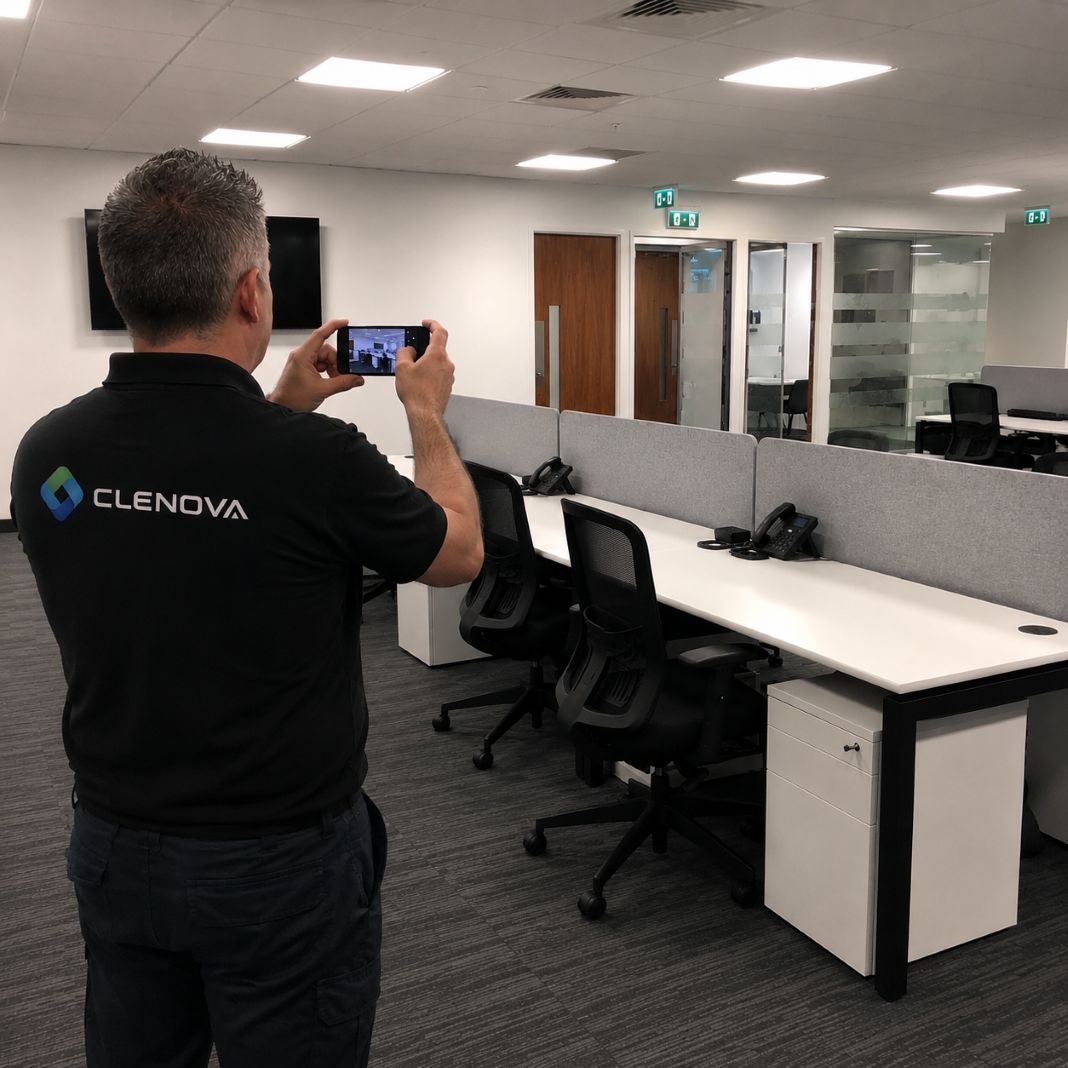
When the cleaning has to happen before staff arrive or after the building closes, the proposed hours need to include the realities of access. A cleaner who cannot enter at the right time, set up properly or lock down the site safely will struggle no matter how neat the specification looks.
Working patterns
Cleaning frequency starts with how the premises runs. Opening hours, staff numbers, visitor use and hygiene needs all affect whether the service belongs daily, several times a week or on a different pattern agreed for the site.
Access is the part that gets overlooked in vague quotes. We check the things that decide whether the team can actually get in and work:
- Keys, and how they are held and handed over.
- Alarm codes and the setting or unsetting routine.
- Lift use and any limits on moving between floors.
- Locked rooms, and which areas are in or out of scope.
- Out-of-hours access and building rules for early or late working.
In Greater London, shared buildings and managed premises can add another layer because cleaners may need to work around reception desks, concierge rules or landlord access arrangements.
We also allow for movement through the building. Time spent collecting equipment, moving between floors or completing a lock-up procedure still belongs to the job. If those minutes are ignored during pricing, the shortfall appears later as rushed cleaning or unfinished areas.
Service continuity
Reliable cleaning is planned before anyone is absent. We discuss what happens when the regular cleaner is on holiday, unavailable or needs supervisory support, because continuity cannot sit as an afterthought inside an ongoing cleaning contract.
At Clenova, we use digital time and attendance monitoring to help verify contracted hours, alongside supervision and quality checks. We aim to keep the same cleaner or team on a site where possible, with trained cover when required. That gives the proposal a management structure, rather than leaving attendance and cover as informal promises.
Safety, products and equipment are checked in practical terms
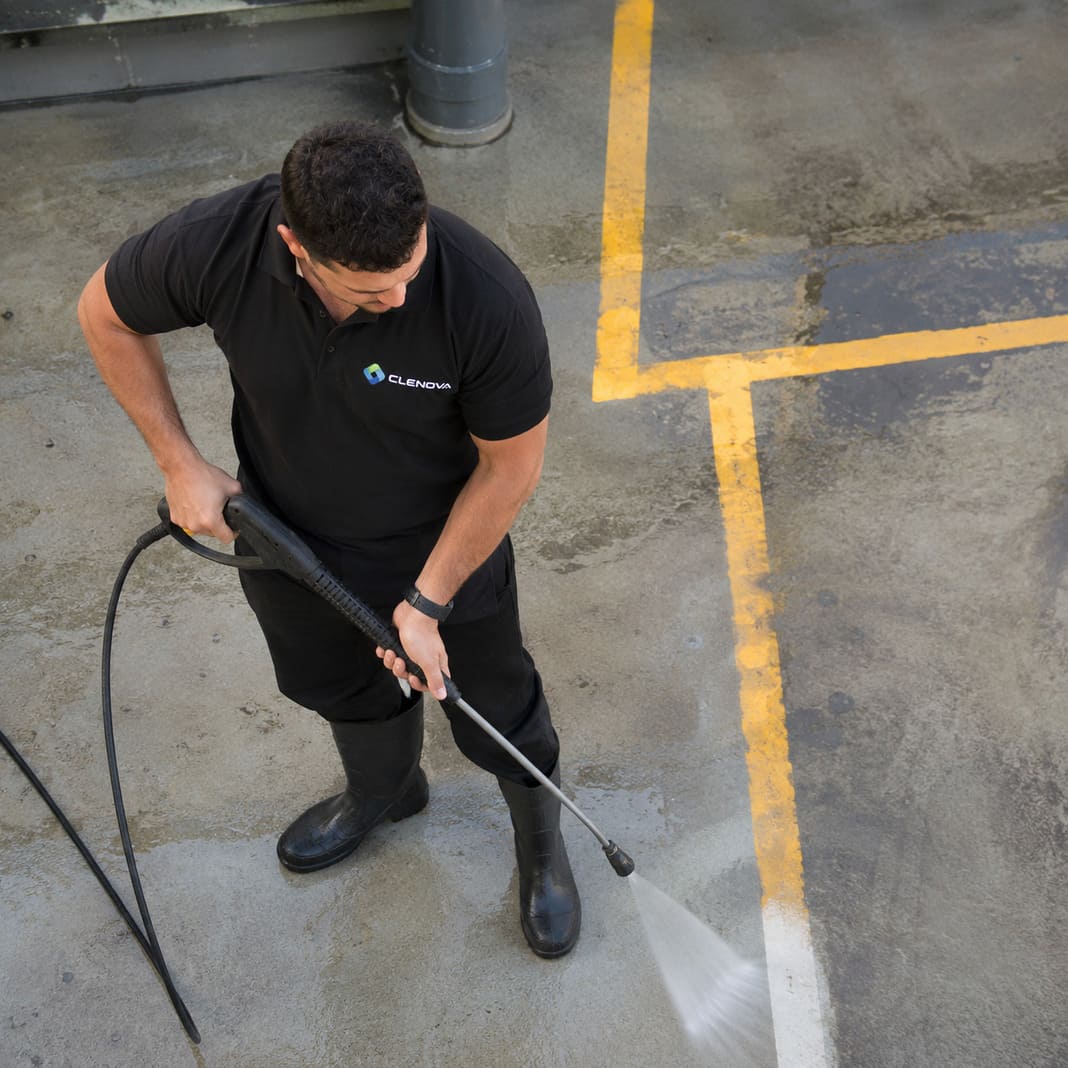
Everyday cleaning tasks can affect safe working. Mopping a smooth floor, running a vacuum cable across a route or using the wrong product for a surface can create avoidable problems if the method is not agreed before the service starts.
During the survey we check the practical things that keep cleaning safe on your site:
- Floor condition and surface types, since a smooth or freshly mopped floor changes the slip risk.
- Spill points, so spills are dealt with quickly rather than left.
- Where products and equipment are stored, keeping walkways and exits clear.
- The right equipment for the premises, used in a way that does not block normal movement.
- How the work happens around staff and visitors who are still on site.
Product choice runs through all of this, because it has to suit both the task and the surface being cleaned.
The Health and Safety Executive, HSE, says employers must assess slip and trip risks and take reasonable precautions to protect employees and others affected by the work. HSE guidance also points to wet cleaned floors, slow spill clean-up and trailing wires as practical hazards connected with cleaning.
Cleaning products need the same grounded approach. COSHH, which stands for Control of Substances Hazardous to Health, covers the proper handling of substances that could cause harm. Product labels and safety data sheets, sometimes shortened to SDS, help identify the harmful substances, and the COSHH assessment then sets the controls needed, including personal protective equipment, or PPE, where the task calls for it.
Good safety planning keeps the service straightforward: the right method, the right timing and the right kit for the premises.
The proposal should be easy to judge
A commercial cleaning proposal should let you compare what is actually included. Price matters, but a number on its own tells you very little if the scope, access assumptions and management process are thin.
The table below shows the difference between a vague quote and a proposal you can test properly.
| Vague quote | Clear proposal |
|---|---|
| Based mainly on total size or a short form | Based on a site walkthrough and how the premises is used |
| Lists general cleaning with limited detail | Sets out the cleaning specification, frequency and main exclusions |
| Leaves kitchens, internal glass or consumables unclear | States what is included and what needs separate agreement |
| Says hours will be provided | Shows how attendance and contracted hours will be monitored |
| Mentions quality in broad terms | Explains supervision, quality checks and how issues are followed up |
| Ignores absence planning | Covers how sickness or holiday cover will be handled where required |
A useful proposal gives you enough detail to compare two quotes fairly. If one price excludes periodic deep cleaning, consumables or high touchpoint cleaning, and another includes them clearly, the cheaper line may not be the better value for your site.
Speed is the wrong test. The better test is whether the quote has been built from the way your premises actually works. A site survey gives you that evidence before the contract begins, which is why the real decision is less about getting a number quickly and more about choosing a service that can be managed properly over time.
Questions we get asked about cleaning site surveys
Do you need exact floor measurements before the survey?
Exact measurements can help, but they are not enough on their own. We still need to see how the space is used, which areas create the most cleaning demand and how access affects the work.
Can the survey take place while the office is open?
A survey can take place while your office is operating, provided we can see the main areas safely and without disrupting your staff. Seeing normal use can help us judge high traffic areas and shared facilities more accurately.
Do commercial cleaners bring their own products and equipment?
The proposal should state whether products, equipment and consumables are included. We check this during the survey because the right arrangement depends on storage, surface types, site rules and the tasks agreed.
Will periodic cleaning be included in the office cleaning quote?
Periodic work should be named clearly if it is included. Items such as internal glass, deep cleaning or floor care need separate wording because they are different from routine daily cleaning.
Can the proposal change if the site’s needs change later?
A cleaning proposal can be reviewed if the way your premises is used changes. Higher occupancy, new opening hours or extra shared areas can all affect the cleaning frequency and scope.
This is general information, not professional advice.