
Do you get more reliable cleaning when cleaners work for the company, not an agency?
Our view is simple: you get more reliable cleaning when the contractor can manage the people doing the work directly. Direct employment matters because it gives one company clearer control over training, attendance, cover and correction. The benefit comes from active supervision, not from the staffing label on its own.
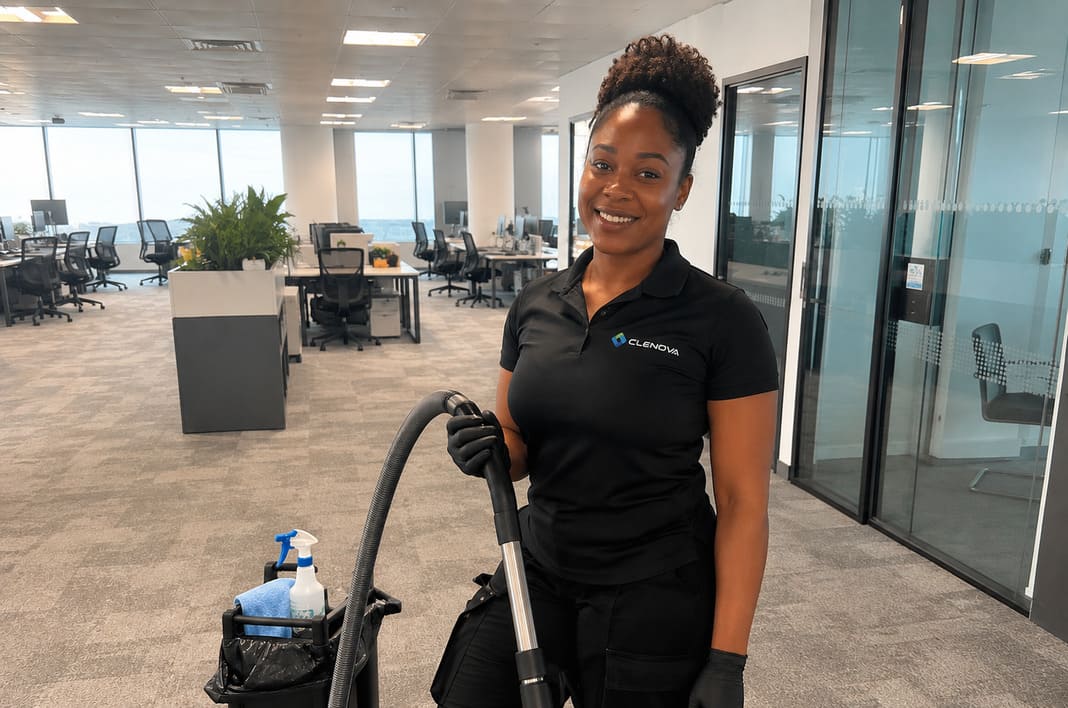
Table of Contents
The phrase “our cleaners work for us” needs a practical test
Plenty of cleaning companies talk about agency staff as if the phrase alone proves quality. We take a more practical view. The useful question for your office, managed building or commercial premises is who controls the work and who answers when standards slip.
Three staffing models are often blurred together, so it helps to separate them before you compare quotes.
| Model | Who manages the cleaner | What it means for you |
|---|---|---|
| Your own in-house cleaner | You employ and manage the person directly | You keep direct control, but you also carry the day-to-day supervision, absence cover and performance follow-up |
| Agency cleaner | The agency supplies labour for an assignment | Agency labour can work well for temporary cover, but the management route can sit away from the cleaning contract |
| Commercial cleaning contractor with directly employed cleaners | The contractor employs, trains and supervises the cleaning team | One provider owns the staffing, supervision, cover and correction under the contract |
Agency cleaners have statutory rights under the Agency Workers Regulations 2010, and employment agencies are regulated through the Fair Work Agency. The point is commercial, not moral. Agency labour has a place, especially for short-term staffing gaps, but an ongoing cleaning contract needs more than someone being sent to site.
Once you separate the models, the real buying question becomes who owns the service when the first problem appears.
Direct employment shortens the accountability chain
Direct employment gives a cleaning company a clearer route to recruit, brief, supervise and correct its own team. Accountability becomes practical when the same company that promises the clean also manages the people carrying it out.
We keep one management route. If attendance slips or a cleaning standard drops, you should not have to work out whether the issue belongs to an agency, a subcontractor or the company named on your contract. A cleaner’s employment status matters because it affects how fast the contractor can intervene and who has the authority to act.
At Clenova, we employ our cleaning operatives directly and connect that model with digital time and attendance monitoring, quality checks and management follow-up. That means contracted hours can be checked, site standards can be reviewed and issues can move through one accountable route.
Direct employment still needs management. A directly employed cleaner without supervision is just another weak contract with a better label. We look for attendance records, inspection notes and a named route for raising concerns because those are the parts that reduce your management burden.
For you, that removes a common source of wasted time: chasing different parties to find out who is actually fixing the service.
Training and quality checks turn staffing into standards
Consistency is created by a repeatable system, not by relying on one familiar person forever. A workplace changes, cleaning specifications change and standards drift if nobody checks the work against what was agreed.
Training sits inside the contract
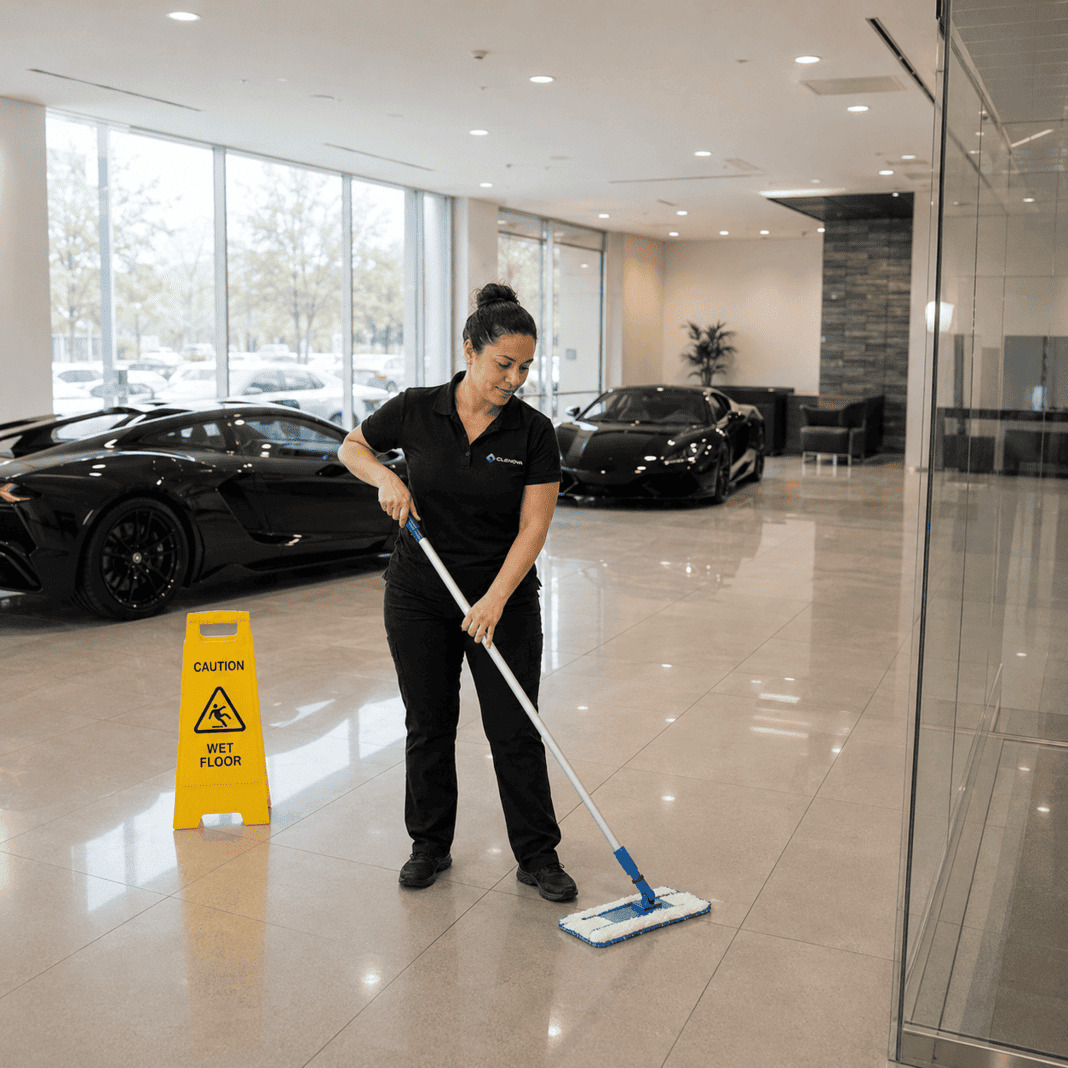
Directly employed cleaning staff can be briefed on your site rules, access arrangements, cleaning specification and safe product use as part of the contract. We train around the premises, not just around a generic cleaning task.
That training can include health and safety, Control of Substances Hazardous to Health, known as COSHH, colour coding, infection control, safe product and equipment use, and site-specific procedures. Right to Work checks and identity verification sit at onboarding level, and Disclosure and Barring Service checks are used where the site requires them.
Quality checks have a named owner
Quality checks need ownership. If a washroom, meeting room or shared kitchen starts falling below the agreed standard, the issue has to be recorded, assigned and followed up.
Supervision, inspections and refresher training give the contract a way to correct drift before it becomes a repeated complaint. A supervisor cannot correct a vague complaint; they can correct a recorded issue against the cleaning specification.
Absence cover is where the staffing model becomes visible
When a regular cleaner is off, the cover process becomes the test of the contract. Holiday, sickness and unforeseen absence are normal operational events, so a commercial cleaning contract needs planned cover before the gap appears.
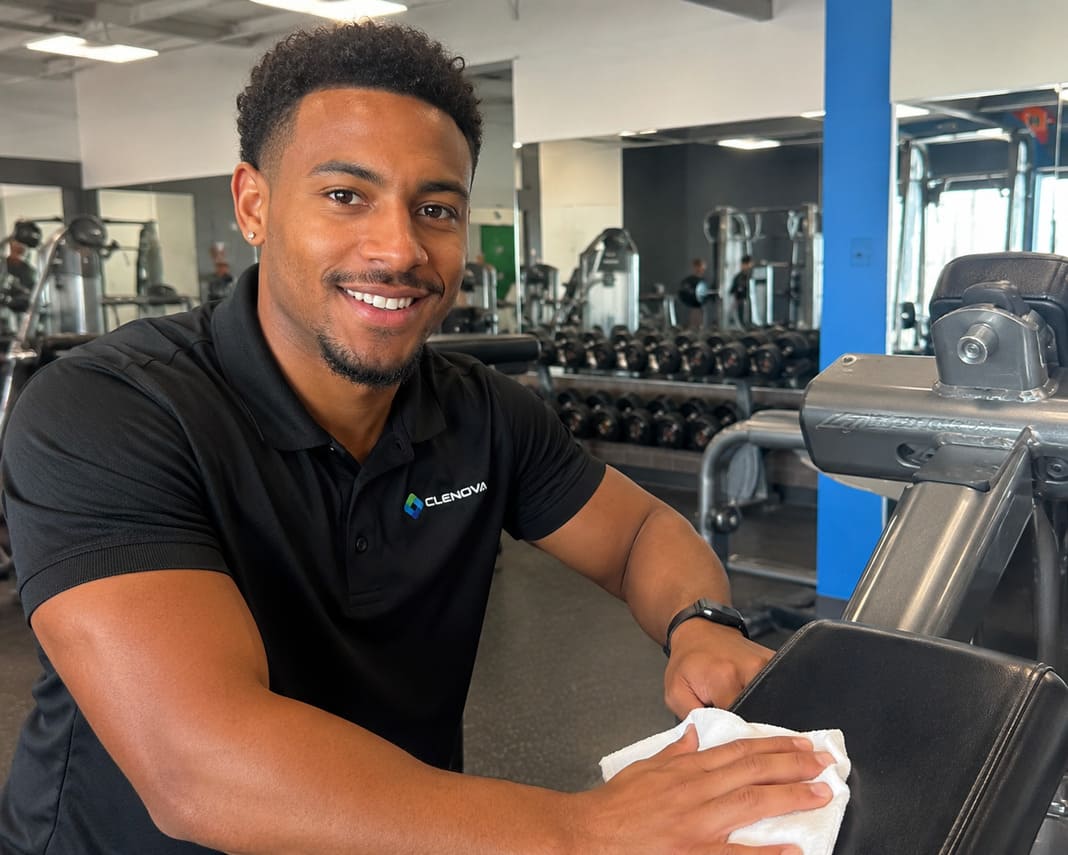
We aim to keep the same cleaner or team on a site wherever possible, with trained cover when required. The useful promise is continuity of service, because a workplace still needs the agreed clean when the familiar person is unavailable.
London and Greater London sites add their own practical demands. Evening cleaning in managed buildings, shared reception arrangements, keys, alarm codes and identification all affect how cover can be deployed. Access details need controlled handling, with authorised staff, clear site notes and management oversight.
At Clenova, we use trained cover operatives and supervisors to support sickness and holiday cover across London contracts. A cover plan has to fit the building as well as the cleaning schedule.
Contract questions that prove who owns the service
Ask one blunt question first: who owns the service from attendance through to correction? The answer tells you far more than a loose claim about agency or non-agency staffing.
- Who employs the cleaners working on our site?
- Who trains them on our cleaning specification, site rules and access arrangements?
- How do you check that contracted hours have been delivered?
- Who provides cover for sickness and holiday, and how are cover cleaners briefed?
- Who carries out quality checks, and how are issues recorded?
- If a concern is raised, who acknowledges it and who decides the corrective action?
These questions keep the discussion grounded in control. A contractor that can answer them clearly is showing you how the contract will run after the first few cleans, when the proposal has stopped doing the work and management has to take over.
Prioritise visible control above the staffing label, because control is what turns a promise about directly employed cleaners into a service you can hold to account.

Questions we get asked about directly employed cleaners
Are agency cleaners allowed in commercial cleaning?
Yes. Agency cleaners are a lawful staffing option, and agencies can be useful for temporary cover. The commercial question is whether the arrangement gives your site clear supervision, cover and follow-up.
Do cleaners need Disclosure and Barring Service checks for every workplace?
No. Disclosure and Barring Service checks are used where the site or role requires them. A normal office contract does not always need the same checks as a sensitive site.
Is hiring your own in-house office cleaner cheaper than using a contractor?
The better value depends on what you are carrying yourself. An in-house cleaner can give direct daily control, but you also need to manage cover, supervision, training and performance issues.
Who is responsible for health and safety if agency workers are used?
Responsibility does not disappear because labour comes through an agency. The hiring organisation still has health and safety duties on site, and the agency has responsibilities connected with the worker’s rights and assignment.
Does a commercial cleaning company always send the same cleaner?
A well-managed contractor aims to keep the same cleaner or team wherever possible. Sensible contracts also allow trained cover when sickness, annual leave or schedule changes make that necessary.
This is general information, not professional advice.