
How do we check that the cleaning hours you pay for are delivered?
Paid cleaning hours are checked by matching the agreed schedule against digital clock-in and clock-out records, then reviewing any late arrival, early finish or missed visit. We also inspect the site separately because time on site proves attendance, while quality checks show whether the work met the scope.
A rota shows what was planned. An invoice shows what has been billed. Neither proves, on its own, that the visit happened as agreed or that the clean matched the contract.
The checks need to run in a chain:
- Agree the service scope. The contract sets the areas, access times, tasks, visit pattern and expected labour time.
- Record attendance. Digital time and attendance monitoring gives us a record of clock-in and clock-out activity for each scheduled visit.
- Review exceptions. Late starts, early finishes, missing records and missed attendance need someone to look at them, rather than leaving them as unused data.
- Inspect the work. Site checks and quality inspections confirm whether the cleaning standard matches the agreed scope.
- Log and correct issues. Missed tasks, short shifts and other problems need recorded follow-up, cover where needed and management ownership.
- Support the invoice. The cleaning hours on an invoice make more sense when they sit behind records, checks and action.
Each part has a different job, and the rest of this article explains how those checks work together.

Table of Contents
A clear schedule makes attendance provable
Agreed cleaning hours only mean something when they are attached to a clear schedule. We need to know which areas are covered, how often they are cleaned, when access is available and what counts as a completed visit.
An early morning office clean in London is a simple example. If the cleaner has access before staff arrive, the schedule needs to state the expected visit time and the work covered during that visit. Without that reference point, a time record becomes harder to judge because no one can compare the hours worked against the task allocation.
At Clenova, we build commercial cleaning contracts across London and Greater London around the site’s actual working pattern. That includes access windows, agreed cleaning hours, task lists and site-specific requirements, so digital attendance monitoring is checked against a proper plan rather than a vague promise.
Clear scopes also make commercial cleaning service level agreements easier to manage. The phrase service level agreement simply means the agreed standard, schedule and response arrangement for the contract. Once those details are in place, we can see whether a scheduled visit was delivered in the way the premises required.
Digital attendance gives the first proof
When a cleaner is scheduled for an evening shift and leaves early, the attendance record gives us the first clue. A clock-in and clock-out record does not solve the issue by itself, but it gives management something concrete to review.
Digital attendance monitoring helps show whether the cleaner attended, when the visit started and when it ended. Those records need to be checked against the cleaning schedule because a time stamp with no context tells you less than it appears to. A short shift in a small office and a short shift in a larger workplace have different consequences because the labour need is different.
Worker monitoring also has to be handled properly. The Information Commissioner’s Office says workplace monitoring must be lawful, fair and transparent, and workers should be told the nature, extent and reasons for it. Timekeeping, access and clocking in or out are recognised forms of workplace monitoring, so we treat attendance records as useful operational evidence, not as a free-for-all.
Responsible cleaning contractor time records answer one question first: did the scheduled attendance happen as expected? They do not prove cleaning quality on their own.
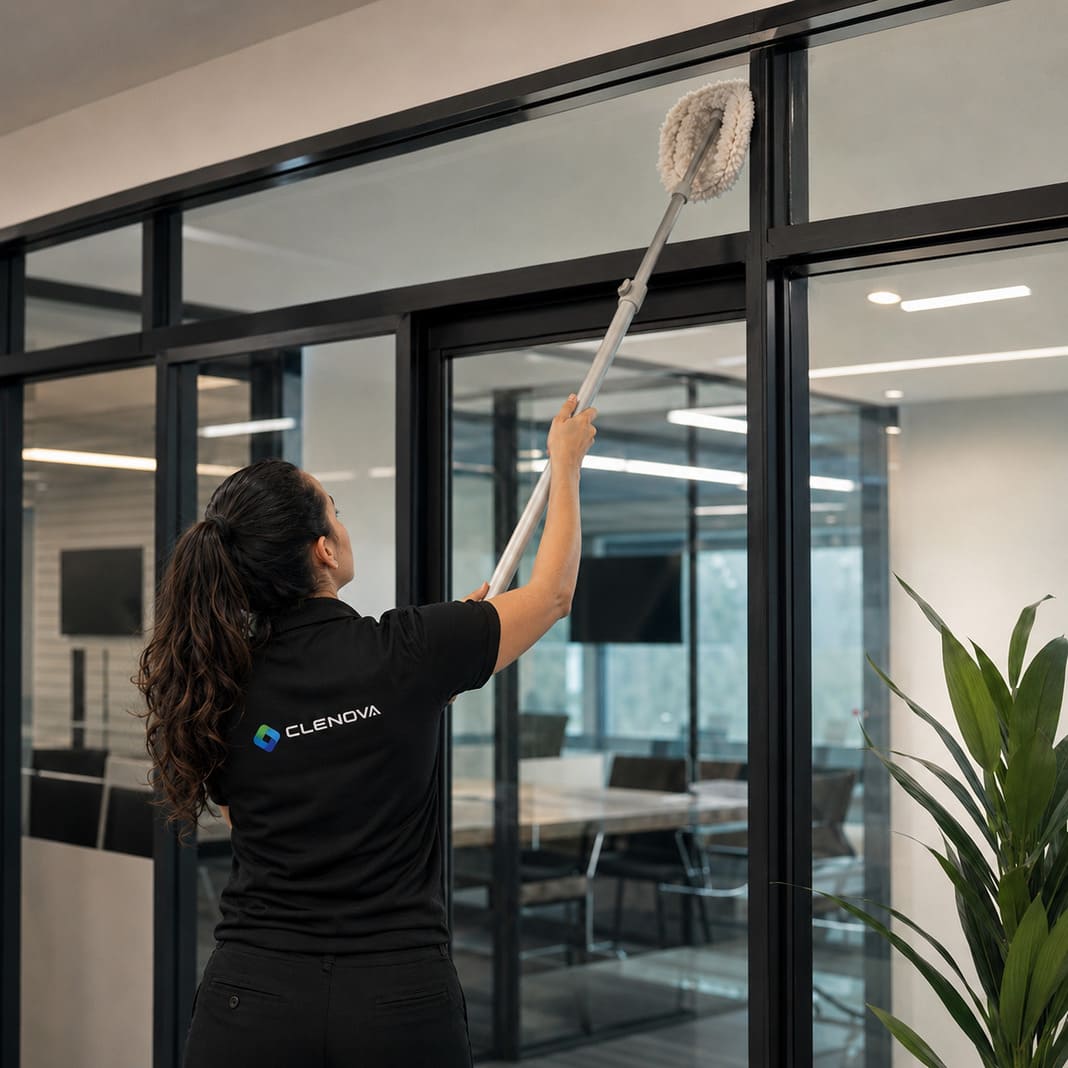
Clean hours and clean results are different
A full shift and a good clean are connected, but they answer different questions. Attendance checks show whether time was worked. Quality inspections show whether the work reached the agreed standard.
| Check | What it proves | What happens next |
|---|---|---|
| Attendance check | The cleaner clocked in, clocked out and attended for a recorded period. | We compare the record with the schedule and review late arrival, early finish or missing records. |
| Quality inspection | The agreed areas and tasks have been checked against the expected cleaning standard. | We record missed tasks or slipping standards, then assign follow-up where needed. |
| Attendance check | The visit happened in timekeeping terms. | It cannot prove that every task was completed properly. |
| Quality inspection | The site condition has been assessed against the scope. | It cannot prove the full visit length unless it is read alongside attendance records. |
Structured quality measurement is a matter of fact, and BS EN 13549:2001, a British and European cleaning services standard, covers basic requirements and recommendations for cleaning quality measuring systems, including inspection, sampling, quality levels, objective methods and corrective action.
Practical inspections keep the discussion specific. Instead of arguing over whether the building “looks fine”, we can look at task completion, missed areas, repeat issues and what action followed. Hours tell us who was there; inspections tell us what their work achieved.
Short shifts need visible follow-up
What happens after the record flags a problem? Attendance data has limited value unless management reviews the exception and acts on it.
Late arrival, early finish and absence
Late arrivals, early finishes and missed visits need to be checked against the rota, site access and any known absence. Sometimes the issue is straightforward, such as a cleaner leaving before the agreed duration. In other cases, access problems or a last-minute absence need the same level of attention because the result for you is still a gap in service.
Good follow-up starts with finding out what happened. We speak to the operative where needed, check the planned visit and look at whether the site was left short. Records are not the service; follow-up is the part that protects the contract.
Cover and corrective action
At Clenova, we use trained cover operatives and supervisors to support sickness and holiday cover. That does not mean disruption can never happen, but it means absence is treated as a managed issue rather than something you have to chase.
Corrective action also needs to be recorded. If a task was missed, the follow-up should say what was missed, who is dealing with it and how the repeat risk will be reduced. Direct access to management matters most at this point because a problem left sitting in an inbox quickly becomes your problem.
Managed cleaning makes invoices easier to trust
An invoice for cleaning hours should sit behind a clear scope, attendance records and quality follow-up. Without those parts, you are left trying to judge value from a billing line and the visible state of the workplace.
A passive contract treats hours as something bought and billed. A managed contract treats those hours as a service obligation, which means attendance is checked, standards are inspected and exceptions are followed up. The difference shows up over time, especially when regular staff are absent, access changes or standards start to drift.
Cleaning bought as a bare block of hours becomes hard to defend once no one owns the gaps. Cleaning run as a managed service has a schedule, records, inspections and correction, so the invoice has something solid behind it. Over time, the managed approach works better because small failures are noticed before they become your job.

Questions we get asked about cleaning hours
Can I ask my cleaning contractor for attendance logs?
Yes, you can ask what attendance records are held and how they are reviewed. A well-managed contract should be able to explain how cleaners clock in and out and how exceptions are handled.
Should cleaners clock in and out on site?
Clocking in and out on site gives a clearer record of attendance than relying on a rota alone. The monitoring method also needs to be fair, transparent and proportionate for workers.
What should be included in a cleaning audit?
A cleaning audit should check the agreed areas, task completion, missed work, repeat issues and any corrective action. Attendance records should be reviewed separately because they answer a different question.
How often should quality checks happen?
The right pattern depends on the site, the contract size and the level of risk in the workplace. Our recommendation is to agree a quality-check routine at the start, then review it if standards change or the site’s needs shift.
What happens if a cleaner misses a shift?
The missed visit should be reviewed against the schedule, the reason should be checked and cover should be considered where the site still needs cleaning. The important point is that someone owns the follow-up rather than leaving you to find the gap.
This is general information, not professional advice.