
What should you expect from the company cleaning your building?
Our property management clients expect us to run the service according to scope and provide reliable planned cover, management quality checks, safe working and follow-up when something slips. For any managed property, the real test is whether the contractor reduces complaints and chase-up work after the contract starts.

Table of Contents
A contractor should own scope, delivery and correction
Property managers should expect more than a rota and a task list. Cleaning contract responsibilities should cover what gets cleaned, how often, who checks the work, how absence is covered, how access is controlled and what happens when standards slip.
Hours on paper are easy to sell. Service control in practice protects the building. If you are still chasing missed cleans, repeating the same complaint and explaining service failures to tenants or residents, the contract is pushing management work back onto you.
Royal Institution of Chartered Surveyors, known as RICS, gives a useful benchmark here. Its commercial property management guidance says property managers should use clear written contracts with scope, services and responsibilities set out properly, because informal arrangements create risk when responsibilities are unclear.
That principle applies directly to a property management cleaning contractor. A vague promise to keep communal areas clean gives you little to inspect. A service specification that names the areas, frequencies, checks and escalation route gives you something concrete to manage.
Accountability also needs a route. You should know who reviews the cleaning schedule, who deals with recurring defects and who can make a decision when the normal arrangement stops working. Without that, the contract may look tidy, yet the day-to-day burden remains with you.
A useful scope makes standards inspectable
A vague cleaning scope creates avoidable management work. A useful scope makes the service easy to check because it links each area of the building to a frequency, standard and responsibility.
Managed properties rarely need the same frequency everywhere. Entrances, lifts, stairs, washrooms, bin stores and back-of-house areas have different use patterns and different complaint triggers. A mixed-use building also brings competing access needs, such as residents entering early, office users arriving later and contractors working out of hours.
Health and Safety Executive guidance on workplace cleanliness says employers must provide clean floors and stairs, clean premises, furniture and fittings, waste containers, regular removal of dirt, refuse and trade waste, prompt spill clearance, and clean internal walls or ceilings. A commercial cleaning scope of work should support those duties in plain operational terms, without turning the contract into a compliance manual.
A useful cleaning specification should cover:
- Areas and frequency. Communal entrances, stairs, lifts, washrooms, kitchens, waste areas and shared corridors need to be named separately where they need different attention.
- Tasks that are easy to inspect. Wording such as “clean as required” creates disputes. Clear wording makes site inspections fairer for both sides.
- Products, equipment and consumables should be agreed at the start, including who provides them and how stock is replenished.
- Site constraints. Access times, tenant restrictions, alarm arrangements and out-of-hours work affect whether the schedule can actually be delivered.
- Review points. Footfall, complaints and building use can change, so the scope needs a sensible way to be reviewed without rewriting the whole contract from scratch.
Once those points are written down, your cleaning schedule for property managers becomes a working tool rather than a document that sits in a file.
Attendance records and cover protect continuity
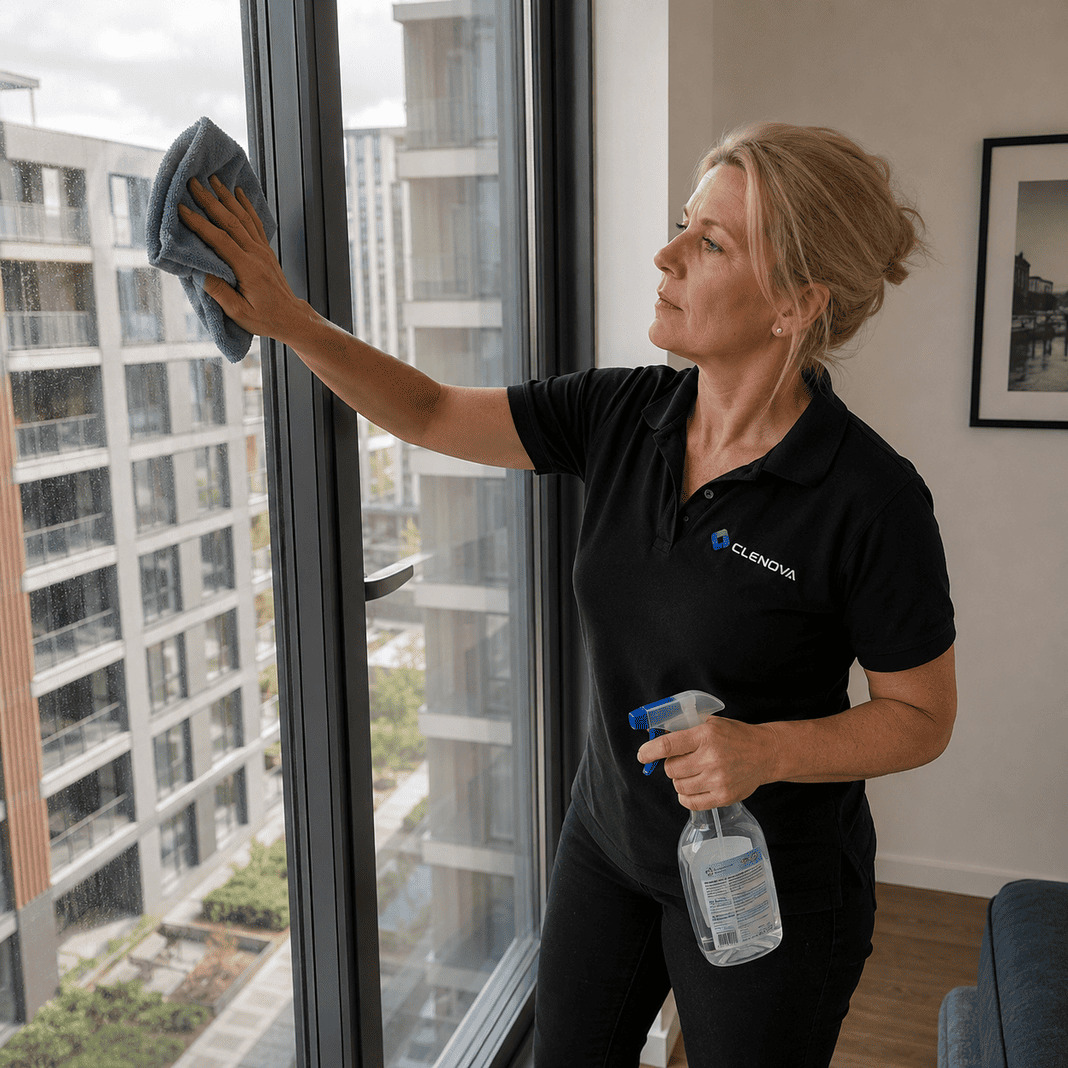
A cleaning specification can be right and the service can still fail. If contracted hours are missed, or the regular cleaner is off and no trained cover arrives, the building does not benefit from the careful wording in the proposal.
Attendance records should confirm contracted hours
Cleaning contractor attendance monitoring matters because property managers should not have to police every visit themselves. You need a way to know whether the agreed service has been delivered, particularly on sites that are cleaned early, late or across several buildings.
At Clenova, we use digital time and attendance monitoring to help verify contracted hours. We do not treat that as a decorative technology claim. We use it because attendance records give property managers a firmer basis for review than memory, assumption or a complaint that arrives days later.
Proof of attendance does not replace supervision. A cleaner can attend and still miss an area, which is why attendance records need to sit beside site inspections and quality checks. Taken together, those controls tell you whether the cleaner arrived, whether the work matched the scope and whether repeated issues are being dealt with.
Cover arrangements should be planned before absence occurs
Sickness, holiday and unexpected absence are ordinary service risks. A contractor should have a cover plan before the first absence happens, because the worst time to work out who knows the site is the morning a cleaner does not attend.
Team consistency still matters. Where possible, the same cleaner or team should stay with a site because familiarity with access, alarm routines and building priorities reduces friction. Cover then needs to come from trained operatives or supervisors who can follow the same schedule, rather than from someone sent in cold with no working knowledge of the property.
For London portfolios, continuity becomes more demanding. A property manager with sites across several boroughs needs rota management that accounts for travel, access windows, mixed-use buildings and out-of-hours cleaning. A contractor who can explain the cover structure clearly is giving you useful evidence of commercial cleaning continuity.
Quality control needs records, not reassurance
Vague quality language looks fine until the same complaint returns. Cleaning quality checks need to compare the actual service against the agreed scope, record the issue, assign the fix and confirm that the same defect has not become a pattern.
Here is the difference between a claim that sounds useful and a control that gives you something to manage.
| Claim in a proposal | Operational control to look for |
|---|---|
| “Regular quality checks” | Inspection notes that compare the site against the agreed cleaning schedule |
| “Responsive service” | A clear route to management when a complaint needs a decision |
| “High standards” | Specific checks for the areas that drive complaints, such as entrances, lifts and washrooms |
| “Issues are resolved” | Corrective action records showing what was found, what was done and what was checked afterwards |
Commercial cleaning inspections should lead to action. If an inspection only produces reassurance, you have no evidence that the defect was closed out. If it records a recurring issue in the same stairwell or bin store, the conversation changes from opinion to service management.
In our contracts, concerns are acknowledged promptly, investigated and followed up through management. Where an issue is raised, we aim to respond within the same working day, but the useful point is the structure behind that response. Someone has to own the issue until it is closed.
Repeated complaints are rarely solved by stronger wording in a contract. They are solved by checking the right thing, recording it properly and making sure the correction actually reaches the site.
Communication, safety and access must match the property
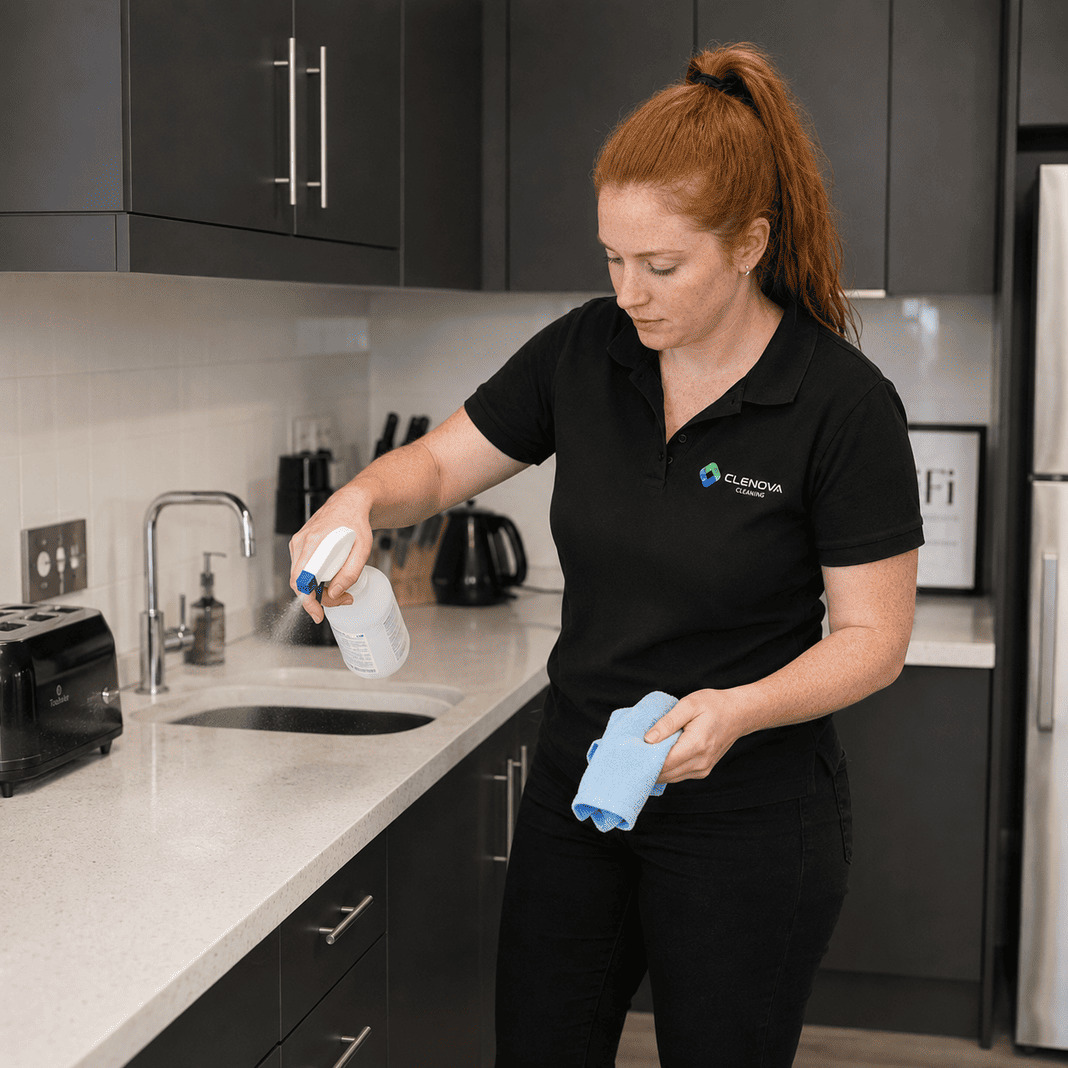
Who has the keys, who receives the issue and who decides the fix are routine contract details, not side points. Across London and Greater London, access and communication are often the difference between a service that runs smoothly and one that creates extra calls for you.
A property manager should know who to speak to when something needs a decision. A generic inbox has its place, but service problems need a management route as well. If a tenant complaint, access failure or repeated defect needs judgement, the contractor should know who owns that decision internally.
Access arrangements deserve the same clarity as cleaning frequency. Mixed-use buildings, managed blocks, offices and sensitive premises all create different working conditions. Out-of-hours cleaning may involve keys, alarm codes, concierge instructions, security desks or tenant restrictions, so the contractor needs a controlled way to pass the right information to authorised staff.
Where required, we can hold client keys and alarm details under controlled procedures. Keys are stored using coded references rather than client names or addresses, and access is restricted to authorised management personnel. That detail matters because key-holding is a trust issue as much as an operational one.
Safe working documents should also be available where relevant. The Health and Safety Executive makes clear that the Control of Substances Hazardous to Health Regulations, known as COSHH, require businesses to control risks from substances or processes that might harm health, and cleaning chemicals fall within that kind of risk management. For you, the practical expectation is simple: the contractor should have risk assessments, method statements and COSHH information where the work calls for them.
Disclosure and Barring Service checks, often called DBS checks, should be discussed where the site or role requires them. Sensitive sites may need extra checks or clearance, but blanket claims about every operative are less useful than a precise match between the site risk and the people assigned to it.
Value depends on the service model behind the price
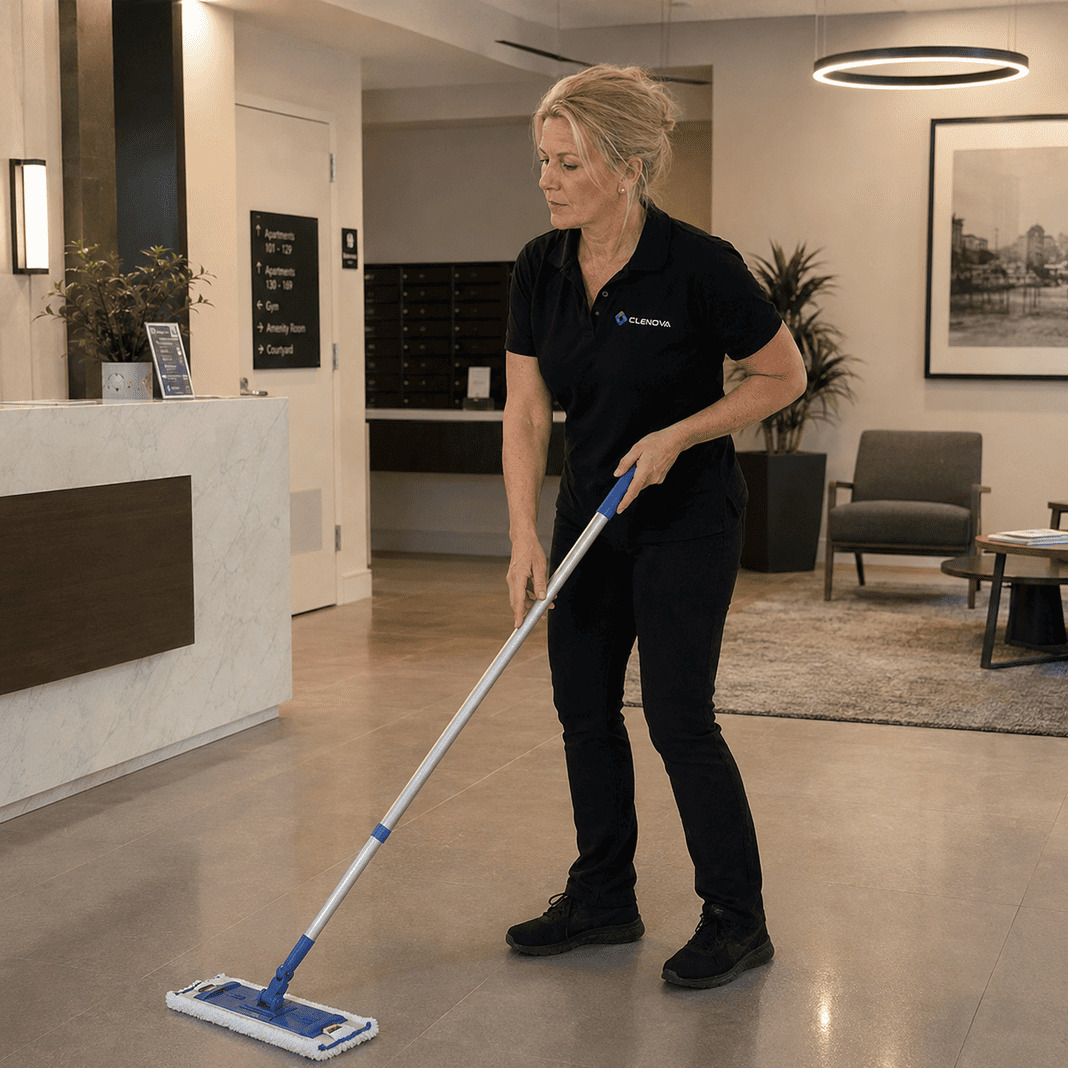
Price only makes sense once the service model is visible. A low figure can look attractive until you notice that attendance proof, supervision, cover, inspection time and management follow-up have been left vague.
A cheap cleaning contract and a managed cleaning contract can look similar in the first proposal meeting. The difference shows later, when a cleaner is absent, a washroom complaint repeats, a tenant questions service charge value or you need evidence that contracted hours were delivered.
At Clenova, we look at labour, supervision, cover and quality checks as part of the contract structure. That is the practical way to judge commercial cleaning contract value: not by asking whether a task list exists, but by checking whether the contractor has built in the controls that stop small defects becoming your weekly admin.
Specialist cleaning support, such as carpet cleaning, floor care, window cleaning or deep cleaning, can strengthen an ongoing contract when the site needs it. Those services should sit around daily reliability, because a planned deep clean does not compensate for weak attendance on ordinary contracted visits.
A better proposal makes the choice easier. You can compare scope, attendance records, cover arrangements, inspection habits and corrective follow-up in plain terms. The decision stops feeling like a judgement call between similar promises and becomes a check of who has actually taken responsibility for the service.
Questions We Get Asked By Property Managers About Cleaning
Who should provide cleaning products and equipment in a commercial cleaning contract?
The contract should state who provides products, equipment and consumables. Assumptions about supplies create avoidable gaps, especially in washrooms, kitchens and shared areas.
How often should communal areas be cleaned in a managed building?
Communal area cleaning frequency should reflect use, complaint risk, access times and the type of space. Entrances, lifts, stairs, washrooms and bin stores may need different frequencies within the same property.
Should a contractor provide risk assessments and method statements?
A contractor should provide risk assessments and method statements where the work requires them. These documents show how the cleaning will be carried out safely, particularly where chemicals, equipment, access limits or out-of-hours work are involved.
Are Disclosure and Barring Service checks needed for every cleaner?
Disclosure and Barring Service checks are needed where the site or role requires them. The right question is whether the checks match the premises, such as education, healthcare or sensitive sites.
Can specialist cleaning be included in an ongoing contract?
Specialist cleaning can sit within an ongoing contract where the property needs planned support. Carpet cleaning, floor care, window cleaning and deep cleaning work best when they support the daily service plan rather than distract from it.
This is general information, not professional advice.