
Which cleaning model works best for a workplace?
Most London workplaces get better reliability from a managed contract cleaning company, unless they already have the time and structure to supervise cleaners directly. The real choice depends on management capacity, absence cover, quality checks and how much disruption your team can absorb when standards slip.

Table of Contents
The two cleaning models
In-house cleaning means you hire a cleaner directly and carry the employment, rota, training, products, equipment, supervision and quality checks yourself. The cleaner works for your business, so you have close control over how tasks are done, but your team also handles the admin around the work.
Contract cleaning means an office cleaning contractor delivers an agreed cleaning specification, with labour, supervision and service management wrapped around it. The physical tasks may look similar, such as desks, floors, washrooms, bins, kitchens and touchpoints, but responsibility sits in a different place. A good contractor gives you a scope of work, a rota, cover arrangements, a route for issues and someone accountable for keeping the service on track.
At Clenova, we see this as a management structure decision before we see it as a staffing label. A directly employed cleaner and an outsourced cleaning company can both clean the same building. The difference is who checks attendance, covers absence, trains people, manages supplies and corrects problems after the first few weeks.
Cost beyond the hourly rate
Cost comparisons go wrong when you compare a cleaner’s wage with a contractor’s charge and stop there. Direct employment brings payroll, holiday, sickness, recruitment, training, supervision, products, equipment and management time into the calculation.
GOV.UK states that from 1 April 2026 the National Living Wage for workers aged 21 and over is £12.71 per hour, and almost all workers are legally entitled to 5.6 weeks of paid holiday each year. That does not make in-house cleaning the wrong choice, but it does mean the visible hourly wage is only the start of the cost.
A fair comparison looks at what each model includes.
| Cost area | In-house cleaner | Contract cleaning company |
|---|---|---|
| Visible labour cost | You see the wage clearly, but payroll and employment costs sit behind it. | You see a contract charge that may include cleaning time and service management. |
| Employment admin | Your business handles PAYE, holiday, sickness and employee records. | The contractor manages its own staff and employment processes. |
| Cover | Your team must arrange cover when the cleaner is away. | Cover procedures should be built into the contract. |
| Products and equipment | Your business buys, stores and replaces them unless agreed otherwise. | Responsibility should be stated clearly in the cleaning specification. |
| Supervision | Your manager or facilities team checks the work and follows up issues. | Supervision and quality checks should sit with the contractor. |
| Flexibility | Changes depend on your employee’s hours, role and availability. | Changes depend on the contract scope, staffing plan and agreed frequency. |
A cheap commercial cleaning contract can still fail if the scope is vague. We price through labour, supervision and cover because those are the parts that keep a recurring cleaning contract working after the novelty has worn off.
Management behind the clean
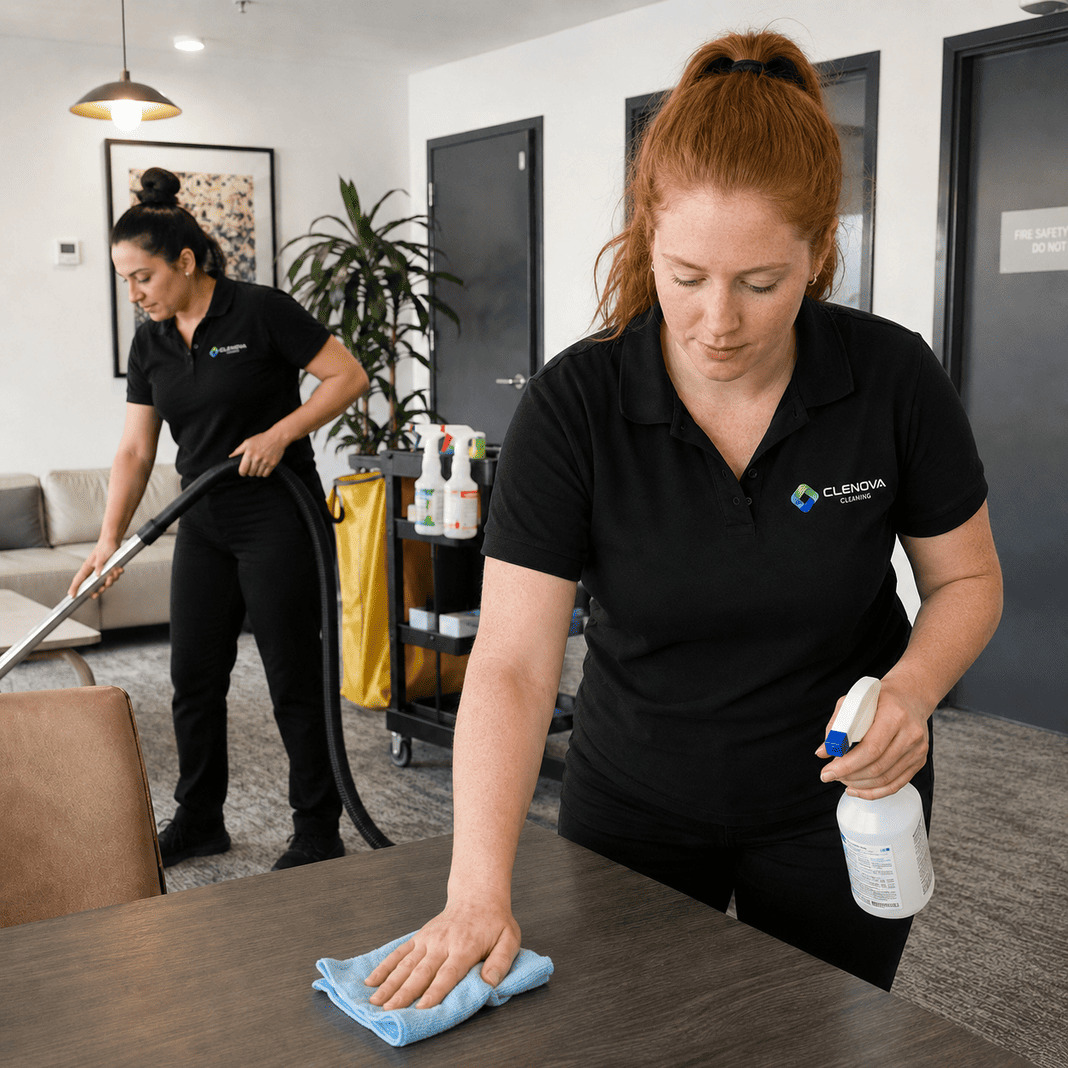
Reliable cleaning comes from a system around the cleaner. The cleaner matters, but so do attendance checks, cover planning, site inspections, training records, supplies control and a named route for corrective action.
Before choosing an in-house cleaner or cleaning company, ask for evidence of how the service will be managed:
- Cleaning specification. The scope should state what is cleaned, how often it is cleaned and which areas need special attention.
- Attendance records. You need a way to confirm that contracted hours are being delivered, not assumed.
- Cover procedure. Sickness, holiday and no-shows need a plan before they happen.
- Inspection routine. Quality inspections or site audits should check standards against the agreed scope.
- Training records. Staff should understand the site, the tasks, safe working and any role-specific requirements.
- Escalation contact. Your team should know who deals with issues and how corrective action is followed up.
- Supplies responsibility. Products, consumables and equipment should not sit in a grey area.
At Clenova, we use digital time and attendance monitoring, regular quality checks and trained cover operatives to support service continuity across London contracts. We also keep direct management access in the service, because a missed bin or a repeated washroom issue needs ownership, not a ticket that disappears into a queue.
Safety and compliance do not vanish under either model. The Health and Safety Executive is clear that COSHH duties cover risk assessment, exposure control and staff information, instruction and training where hazardous substances are used. Staff-transfer questions under TUPE can also arise when cleaning is outsourced, re-contracted or brought back in-house, so that point needs checking for your specific situation.
The right model for your site
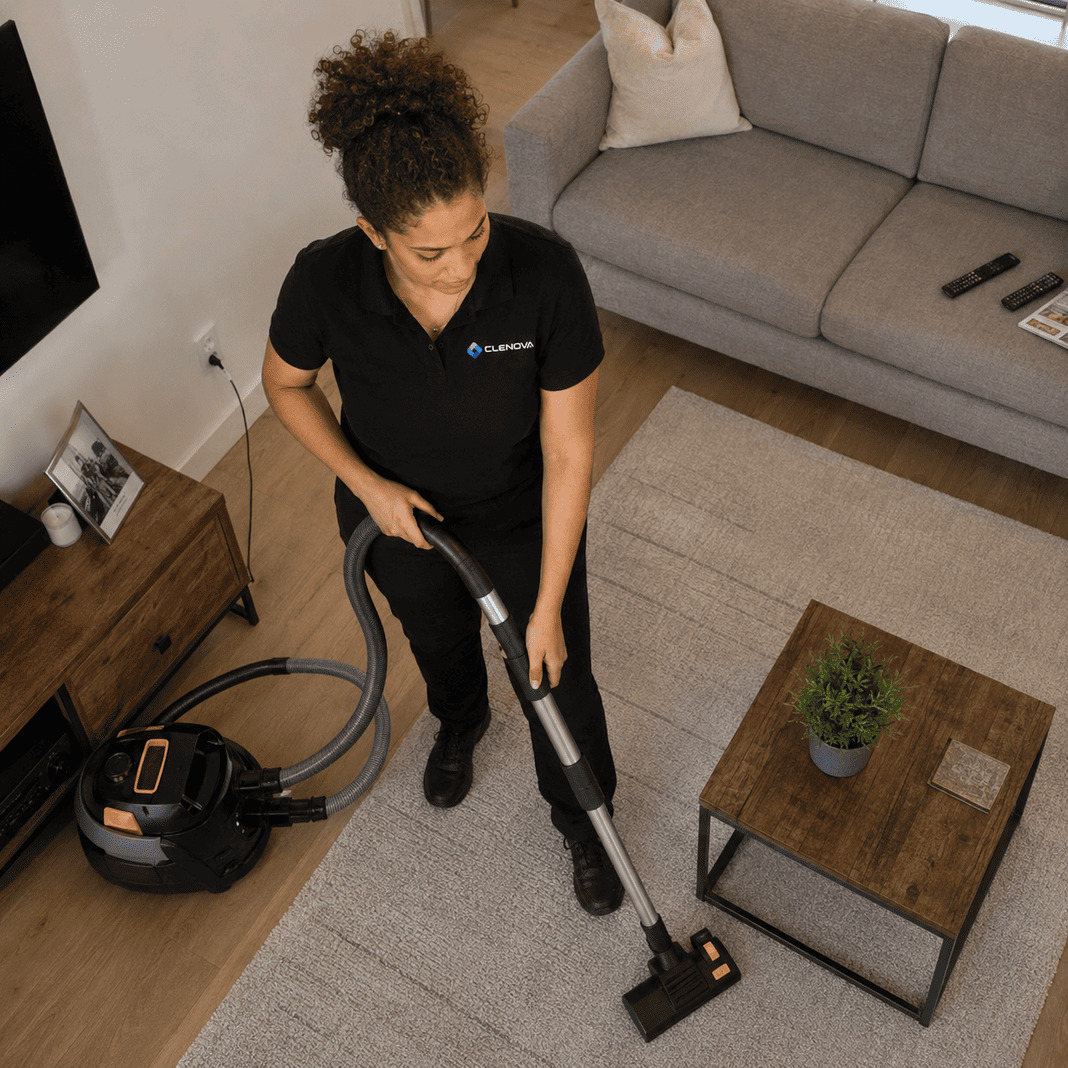
Your best model depends on how much cleaning the premises need, how much control you want and how much management time your team can spare. Size matters, but management capacity matters more.
In-house cleaning fit
In-house cleaning can suit larger workplaces with an internal facilities manager, a steady daily presence requirement and the ability to supervise the cleaner properly. High-control sites may also prefer direct employment where access, routines and internal procedures need very close handling.
Direct control has a price in time. Someone still needs to recruit, induct, train, manage holiday, arrange sickness cover, check standards, buy supplies and deal with performance issues. If your team already has that structure, in-house cleaning can be a sensible model.
Contract cleaning fit
Contract cleaning suits offices, managed buildings and commercial premises that need regular cleaning without turning cleaning supervision into another daily job. Many London and Greater London workplaces want a clear specification, dependable cover, inspections and a contractor who owns the follow-up when something slips.
A well-run contract does not remove every responsibility from your side. You still need clear access arrangements, sensible communication and a defined scope. The difference is that the contractor carries the day-to-day cleaning operation, so your team is not left rebuilding the rota every time someone is absent.
Hybrid cleaning fit
Hybrid cleaning works where you need daily internal support but still want specialist help for deep cleaning, floor care, windows or planned project work. A day porter or in-house cleaner may handle visible daytime tasks, while a contractor manages periodic work that needs extra labour, equipment or supervision.
Security-conscious sites should not assume one model is safer by default. The better test is how access is controlled, who is vetted for the role, whether DBS checks are required for that site and how clearly responsibilities are recorded.
Accountability decides the choice
The better question is whether the cleaner is on your payroll. The better question is whether the cleaning service has enough management around it to stay reliable when ordinary working life gets in the way.
In-house cleaning asks you to build that structure yourself. A contract cleaning company should arrive with the structure already in place: a cleaning specification, attendance monitoring, cover arrangements, inspections, management access and corrective action when standards fall. If those pieces are missing, the contract is only a labour arrangement with a nicer title.
For most busy London workplaces, the strongest model is the one that makes accountability visible. Cleaners do the work, but management keeps the work consistent.
Frequently asked questions
Can a cleaning company keep the same cleaner on our site?
A contract cleaning company can keep the same cleaner or team where possible, with cover when required. You should still ask how cover is handled, because continuity and absence planning need to work together.
Do cleaning companies provide their own products and equipment?
Some contracts include products and equipment, and some place part of that responsibility with the client. The cleaning specification should state this clearly so nobody assumes the other party is supplying what the site needs.
Does TUPE apply if we outsource our cleaning?
TUPE can apply when cleaning is moved from in-house to a contractor, transferred to a new contractor or brought back in-house. The position depends on the specific service arrangement, so it should be checked before the change is made.
How should a small London office compare cleaning quotes?
Compare the scope, frequency, cover procedure, supervision, supplies and escalation route, and do not focus on price alone. A lower quote can be good value only if it includes the management needed to keep the service steady.
Are DBS checks needed for commercial cleaners?
DBS checks depend on the role and the site. Some premises require them because of the environment or access level, but they are not a blanket requirement for every commercial cleaner.
This is general information, not professional advice.