
What does sports and leisure centre cleaning in London involve for your site?
Sports and leisure centre cleaning means we keep public areas, activity spaces, changing rooms, washrooms, shared equipment and staff areas clean, usable and checked according to how the building is used. The routine must fit footfall, opening hours, wet areas, classes and equipment use, rather than copy an office cleaning plan.
During a morning class changeover, changing rooms are in use, gym equipment turns over quickly, reception still needs to function and staff cannot have cleaners blocking key routes. Later, the same site might have a busy evening gym session, a sports hall booking and showers running hard at the same time.
That is why sports and leisure centre cleaning is an operational routine. It covers presentation, hygiene cleaning, washroom servicing, touchpoint cleaning, floor care, waste removal and agreed checks during the week. A gym, poolside area, school sports facility and multi-use leisure centre all need different patterns because people use them differently.
Sport England advises that equipment used as part of physical activity should be cleaned frequently with suitable products, such as disinfectant wipes. The key word there is frequently, because the right routine depends on the activity, the venue and the way users move through the space.
A task list tells you what a cleaner might do. A managed routine tells you what is cleaned, when it is done, who is responsible and how the work is checked. The rest of this guide separates those parts so you can judge a leisure cleaning contract properly.
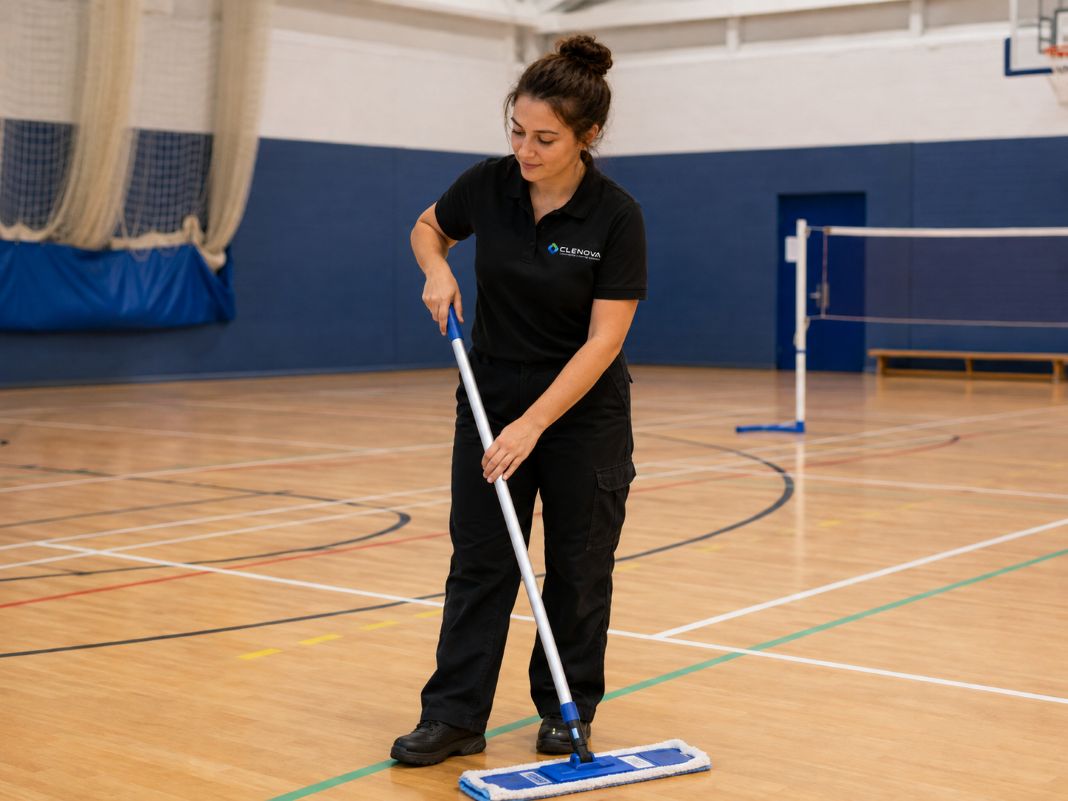
Table of Contents
Different zones create different cleaning demands
Leisure sites work best when the cleaning scope is split by zone. Reception, activity areas and changing rooms place very different demands on the cleaning team, so one generic checklist misses too much.
Reception and circulation areas
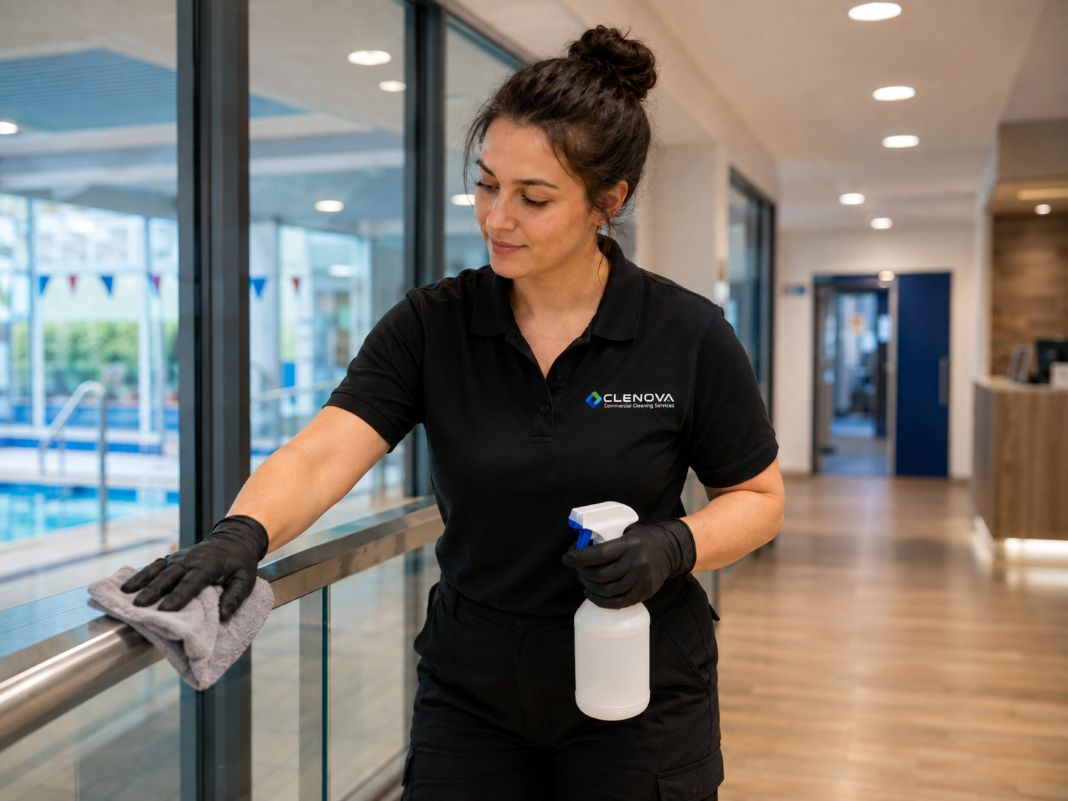
Reception desks, entry points, corridors and waiting areas need regular visible care because they stay public throughout opening hours. We look at bins, touchpoints, floors, glazing within the agreed scope and the route users take when they move between activities.
Short checks during trading hours often matter here. A floor mark at reception or an overflowing bin near a turnstile becomes obvious quickly, even if the deeper cleaning happens outside public hours.
Gyms, studios and sports halls
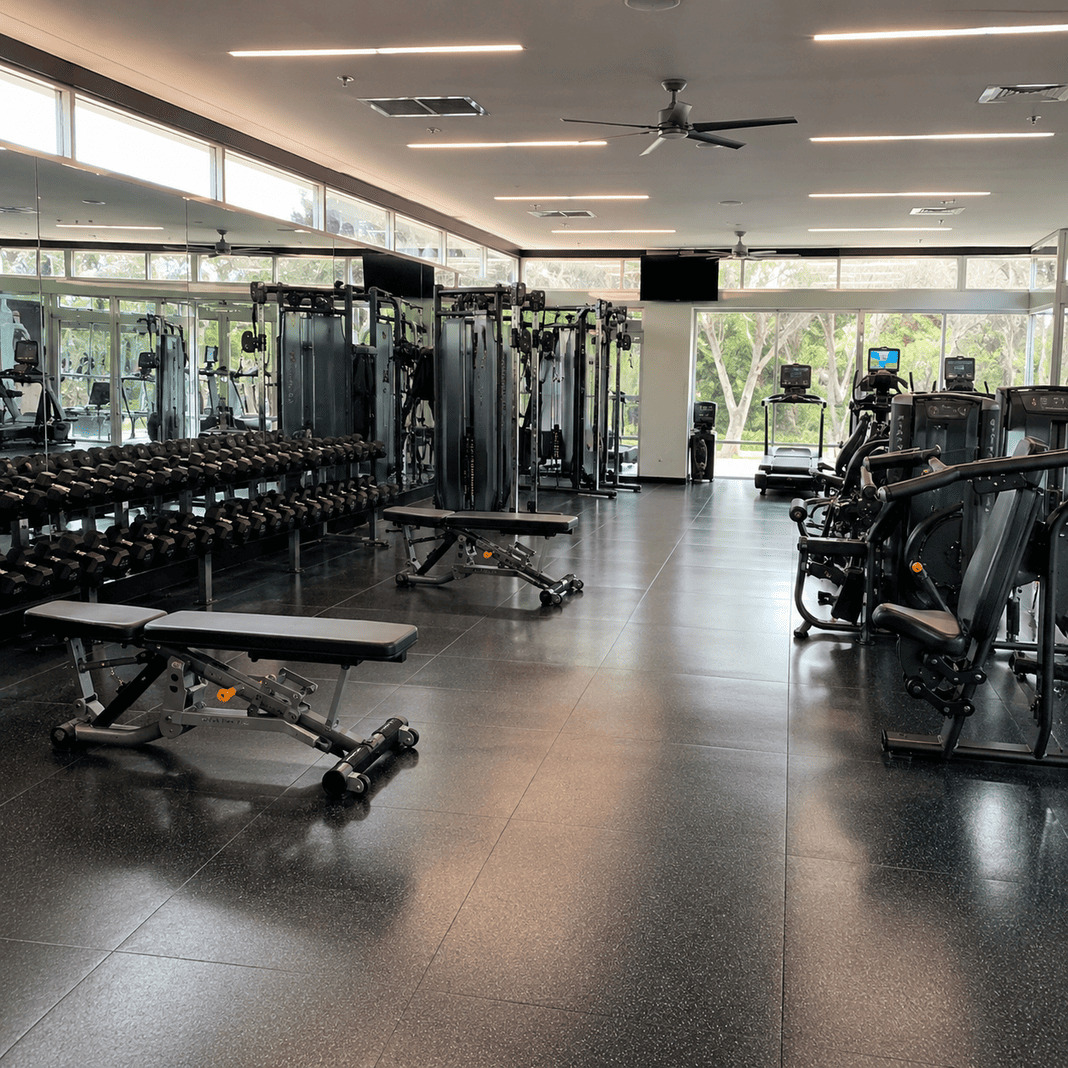
Gyms and studios have heavy hand contact. Machines, free weights, mats, benches, mirrors, studio floors and waste points all need a routine that matches how the space is used.
Sports halls bring a different issue, namely floor condition and access timing. Cleaning must fit around bookings, school use or club sessions, and the method has to suit the floor type and the agreed maintenance plan. We separate these spaces because the wrong routine creates friction for staff and users.
Changing rooms, showers and toilets
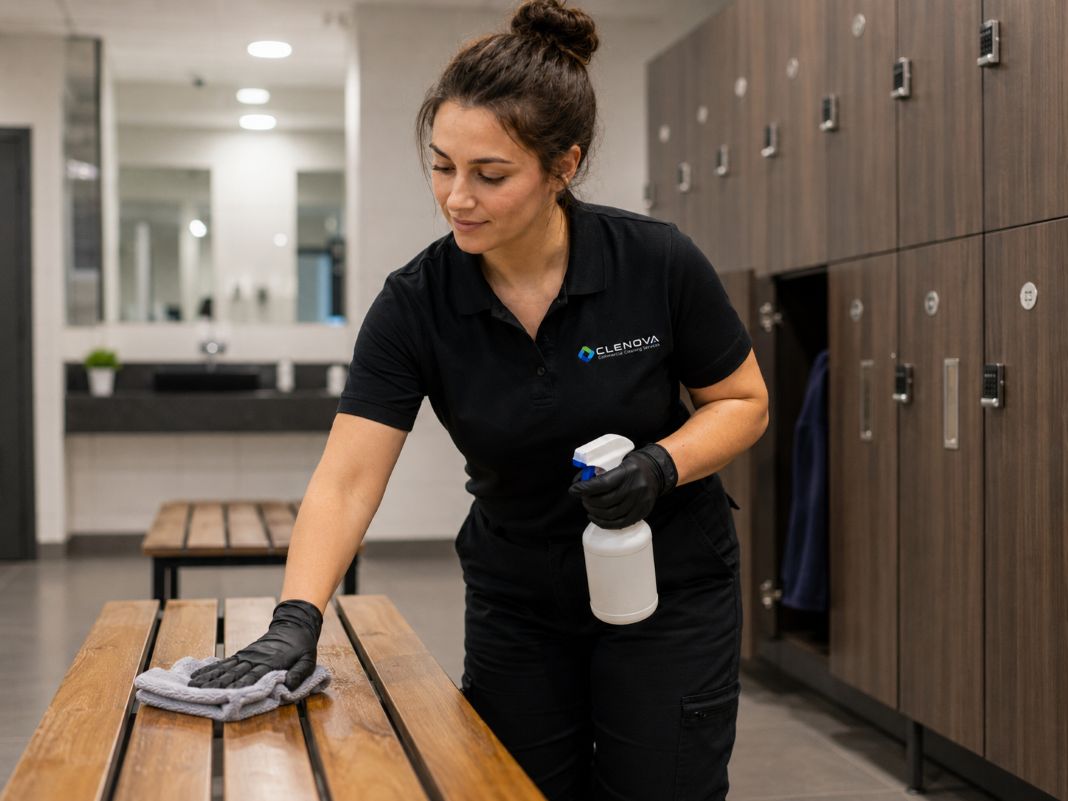
Changing rooms, showers and toilets need tighter control because moisture, footfall and washroom use change the cleaning load across the day. Washroom supplies, including hand soap and paper products where included in the contract, must sit inside the routine rather than being treated as an extra thought.
Sport England advises regular cleaning of changing rooms and showers, and its hygiene guide recommends displaying a cleaning schedule in a public area. That public schedule does not replace supervision, but it gives users and managers a visible record of the routine.
Wet areas and shared equipment deserve their own closer look because they carry the biggest difference between standard commercial cleaning and commercial leisure cleaning.
Wet areas, shared equipment and products need clear control
The busiest risks are not always the most visible areas. Wet floors, shared kit and cleaning products are ordinary parts of leisure centre cleaning, but they need a defined plan because staff, users and contractors all affect the outcome.
Here is the practical split we use when we review a sports facility cleaning scope.
| Area or task | What regular cleaning covers | What needs extra control |
|---|---|---|
| Changing rooms and showers | Cleaning agreed surfaces, floors, benches, toilets and washroom touchpoints | Checks around busy periods, washroom restocking and a visible schedule where used |
| Shared gym and sports equipment | Cleaning agreed contact surfaces with the right product for the surface | Venue rules for user wipe-down, periodic washing of shared kit and clear responsibility for mats or loose equipment |
| Poolside areas | Cleaning agreed public surfaces around pool use | Clear boundaries between surface cleaning, pool operation and water treatment duties |
| Periodic deep cleaning | Planned heavier work beyond the daily routine | Access windows, floor care, washroom detail work and disruption planning |
| Cleaning products | Correct product use by trained staff | Safe storage, dilution where relevant, safety data sheets and site-specific instructions |
Shared equipment works best when the venue policy and the contractor scope line up. Users may be asked to wipe equipment after use, staff may monitor the area, and cleaners may have set duties at agreed points. Those duties need to be written down, because vague responsibility leaves gaps.
Pool and spa areas need careful wording in any contract. Surface cleaning around a pool is not the same as operating the pool, managing lifeguarding duties or treating pool water. The Health and Safety Executive says pool operators must comply with general duties under the Health and Safety at Work etc Act 1974, and it also says regulators regard Pool Water Treatment Advisory Group guidance as the standard to be achieved in an effectively managed swimming pool.
Cleaning chemicals need the same plain control. The Control of Substances Hazardous to Health Regulations 2002, as amended, known as COSHH, require employers to assess risks from hazardous substances, prevent or control exposure, and give staff information, instruction and training about risks and precautions. At Clenova, we treat product use and site-specific routines as part of the cleaning plan, so operatives know what they are using and where it belongs.
Good hygiene relies on repeated control. No contractor should present a public leisure site as sterile.
Day-to-day management holds the routine together
What keeps the standard steady after the first few weeks? The answer is active management: the schedule must fit the site, attendance must be checked, cover must be planned and issues must be followed up.
A leisure centre cleaning contract usually needs a mix of opening-hours checks, quieter-window cleaning and out-of-hours work. The exact pattern depends on your opening hours, activity mix, wet areas and user flow, so we build the routine around the premises rather than forcing the premises around the cleaner.
A well-run contract follows a simple management sequence:
- Set the cleaning scope by zone. The scope should separate reception, gym areas, studios, sports halls, washrooms, changing rooms and staff-only spaces, because each area has a different standard and timing.
- Agree the schedule around real use. Peak periods, class changeovers, school sessions and evening use shape when checks and heavier tasks make sense.
- Verify attendance. Contracted hours have value only if they are delivered. At Clenova, we use digital time and attendance monitoring to help verify that the agreed cover is actually in place.
- Plan cover before absence becomes your problem. Sickness and holidays are normal staffing events, so trained cover operatives or supervisors need to be available where required.
- Record checks and corrective action. Site inspections, quality checks and follow-up notes make standards easier to discuss because the issue is tied to a place, a task and an action.
Communication matters here, but it needs structure. If a shower area has slipped during a busy window, the useful response is not a long email chain. The useful response is acknowledgement, a check of what happened, action with the operative or supervisor where needed, and a clear update. We aim to respond within the same working day when concerns are raised, without presenting every issue as if it can be solved instantly.
Inspection records do not need to become paperwork for its own sake. They give you a way to see whether the contract is being managed, especially across repeated high-use areas where standards can fall in small steps.
A London leisure cleaning contract should make responsibilities visible
When reviewing proposals for a London or Greater London site, you need to see how the contractor has understood the building, as well as whether the price fits a cleaning budget. A useful proposal reflects the opening hours, footfall patterns, wet areas, equipment, access arrangements, washroom supplies, periodic work and reporting lines.
Price and value sit inside those details. A lower figure may leave out supervision, cover arrangements, consumables or planned deep cleaning, which means the cost reappears later as staff time, user complaints or extra work orders. A higher figure still needs to justify itself through a clear scope and a management structure you can check.
Contract changeover, keyholding, alarm access and staff continuity are routine points for commercial leisure cleaning. They should be handled calmly, with proper access procedures and clear responsibility. You do not need theatre around that process; you need a provider that treats the handover as part of the service.
Once the zones, schedule, attendance controls, cover plan, product responsibilities and quality checks are visible, the decision changes. Vague promises lose their pull, and you can check whether the proposed routine fits the building you actually run.
Questions we get asked about leisure centre cleaning
How often should changing rooms and showers be cleaned?
There is no single frequency that fits every leisure centre. The right routine depends on opening hours, wet-area use, footfall and whether checks are needed during public opening.
Do leisure centres need cleaners during opening hours?
Many leisure sites benefit from some opening-hours checks, especially in washrooms, changing rooms and public circulation areas. Heavier cleaning is often planned for quieter periods or outside public use.
Who is responsible for cleaning shared sports equipment?
Responsibility should be written into the venue policy and cleaning scope. Users, site staff and cleaners may all play a part, but the contract needs to say what the cleaning team is expected to clean and when.
What is the difference between regular cleaning and deep cleaning in a gym?
Regular cleaning covers the repeated tasks that keep the gym usable through the week. Deep cleaning is planned heavier work, such as more detailed floor care, equipment-area cleaning or washroom detail work, carried out at agreed intervals.
What records should a leisure centre cleaning contract include?
Useful records include the cleaning schedule, attendance records, inspection notes, corrective actions, product information and COSHH assessments where cleaning products create a risk. These records help you see whether the service is being managed, as well as promised.
This is general information, not professional advice.