
Why does the summer break matter for school deep cleaning?
Summer matters because it gives schools a controlled access window for periodic and non-routine work that cannot be fitted properly around teaching. Pupils being away helps, but access, sequencing, supervision and final sign-off decide whether the school is actually ready before pupils return.
Most schools assume the value is simply having the building empty. In practice the building is rarely empty, and the time is shorter than it looks. What the break really offers is the chance to take rooms out of use for long enough to do work that would be impossible in a two-hour evening slot.
It also comes with a fixed deadline that nobody can move. A clean that has not been inspected and signed off before the first INSET day leaves the premises team dealing with the gaps in the week they have least capacity. That is why the summer programme is a planning job before it is a cleaning job.

Table of Contents
The difference between daily cleaning and deep cleaning
Daily school cleaning protects the working baseline during term time. School deep cleaning deals with built-up work, areas needing longer access and tasks that need planning before equipment, products and staff arrive on site.
DfE guidance separates day-to-day term-time cleaning from periodic or non-routine cleaning, including a whole-school deep clean during the summer holidays. That difference matters because a summer cleaning programme has a different job from the normal evening or early-morning routine.
| Term-time daily cleaning | Holiday deep cleaning |
|---|---|
| Works around teaching, clubs and normal site use | Uses longer access blocks when rooms can be taken out of use |
| Maintains the daily standard across occupied areas | Resets areas that need deeper or periodic work |
| Follows the routine school cleaning schedule | Sits inside the annual plan for periodic cleaning in schools |
| Relies on short access windows and familiar tasks | Needs sequencing, supervision and final inspection |
UKHSA says a proper cleaning contract for children and young people’s settings should include daily, weekly and periodic cleaning schedules. Those schedules should set out what has to be done, how often it happens and who carries it out.
That last point is where many holiday cleans go wrong. A vague line saying “deep clean the school” gives nobody enough detail to price, staff, supervise or inspect the job properly. We separate routine cleaning from deeper periodic work by looking at the annual pattern. Then we agree which areas need attention during the school holiday deep clean, and which standards must be maintained once pupils return.
Summer access needs active planning
A school can look closed from the outside and still be busy inside. Summer clubs may be using the hall, contractors may be working on maintenance, staff may need access for results days, and governors or trust teams may have meetings booked before reopening.
Access dates and site use
London schools need their own access plan because term dates vary by local council. Academies, foundation schools, free schools and voluntary aided schools may also set calendars that differ from council-published dates. Across Greater London, that makes assumption the enemy of a good plan.
Before the break, our planning focus is simple: which rooms are free, which rooms are restricted and who can approve changes if the timetable moves. A summer clean can quickly lose usable working time if cleaners arrive to find floors still being repaired or furniture still stacked in the wrong area.
At Clenova, we treat access, timing and supervision as part of the cleaning plan, not as admin around it. That means the cleaning sequence has to fit the site calendar, because a floor clean booked before building work has finished is wasted effort.
Safeguarding and site control
Access planning also covers the controlled parts of the job. Keys, alarms, secure areas and authorised site contacts should be agreed before operatives attend, especially where the site has lettings or other contractors present.
DBS checks must be completed to the appropriate level for staff involved in the cleaning service. Products and chemicals also need proper labelling and storage under COSHH rules, so they are not left unsecured during a busy holiday period.
Handled properly, these arrangements are routine site planning. They give the school team fewer loose ends to manage during a short break.
The school areas to specify clearly
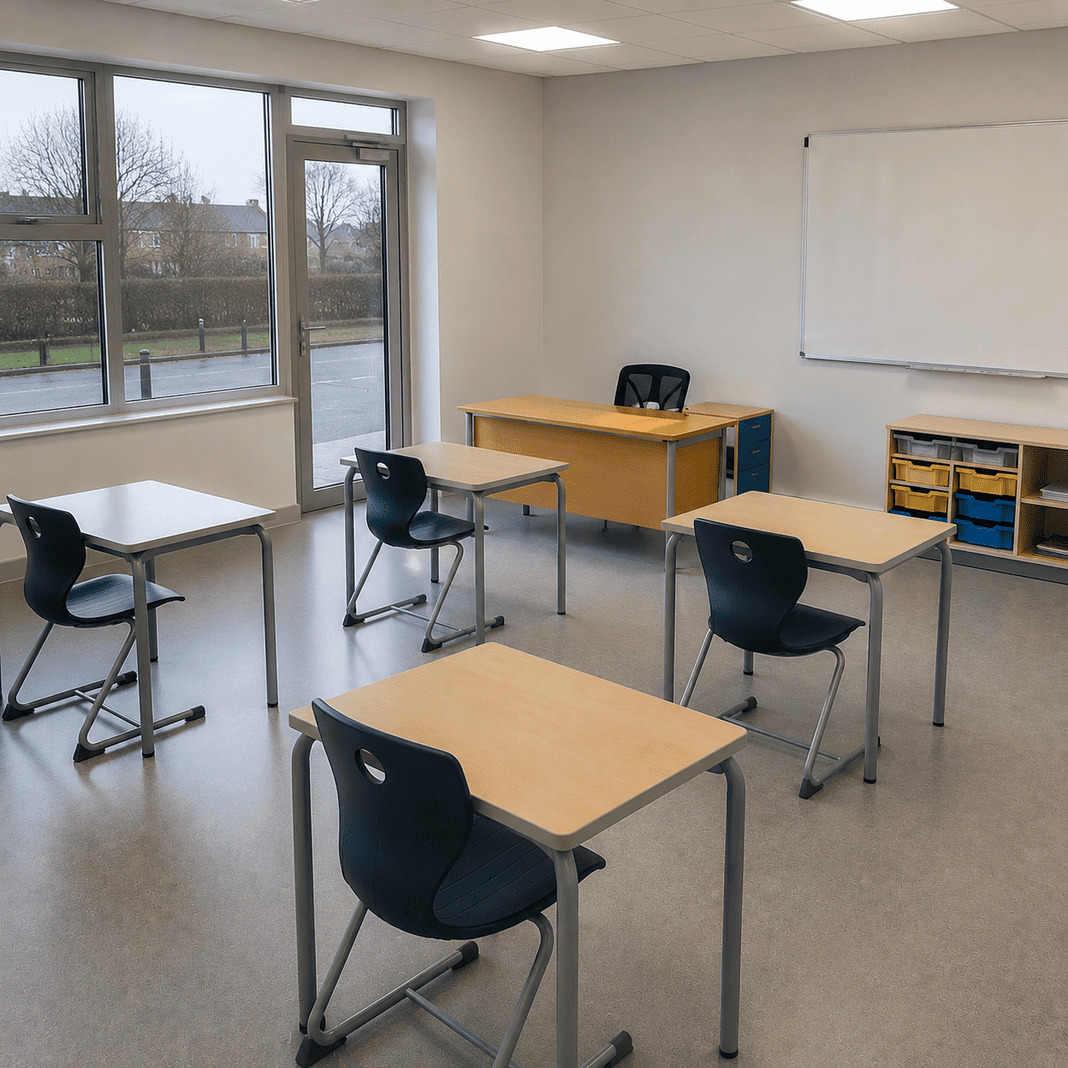
Vague scope is the main reason holiday deep cleaning for schools disappoints. Floors and carpets are easy to notice, but a strong specification also deals with high-use hygiene areas, touchpoints and spaces that need planned access.
We usually want the scope to name areas and priorities in plain terms, such as:
- Classrooms and corridors. Furniture movement, floor work, touchpoints and built-up marks that daily cleaning cannot fully address.
- Washrooms and changing areas. Sanitary surfaces, taps, toilet flushes, partitions, dispensers and areas with heavier use.
- Dining areas and kitchens. Surfaces linked to food use, agreed boundaries and timing around any catering access.
- Offices and staff areas. Desks, shared touchpoints, floors and areas that may remain partly occupied during the break.
- Sports, halls and specialist rooms. Equipment access, floor suitability and any areas that need school approval before cleaning starts.
High-touch surfaces still matter during a summer reset. Door handles, taps, toilet flushes and communal touch areas should not be pushed behind visible presentation tasks, because pupils and staff use them constantly once the building reopens.
Colour-coded cleaning equipment is good practice for separating areas such as toilets, washrooms, kitchens, classrooms and offices. The point is practical control, not paperwork. Equipment used in one type of area should not drift into another because nobody agreed the system.
Products, equipment, exclusions and snag reporting should also be settled before work begins. A clean that cannot be inspected against a clear scope becomes a debate at the end of the holiday, which is exactly when school teams have the least spare time.
Handover protects September standards
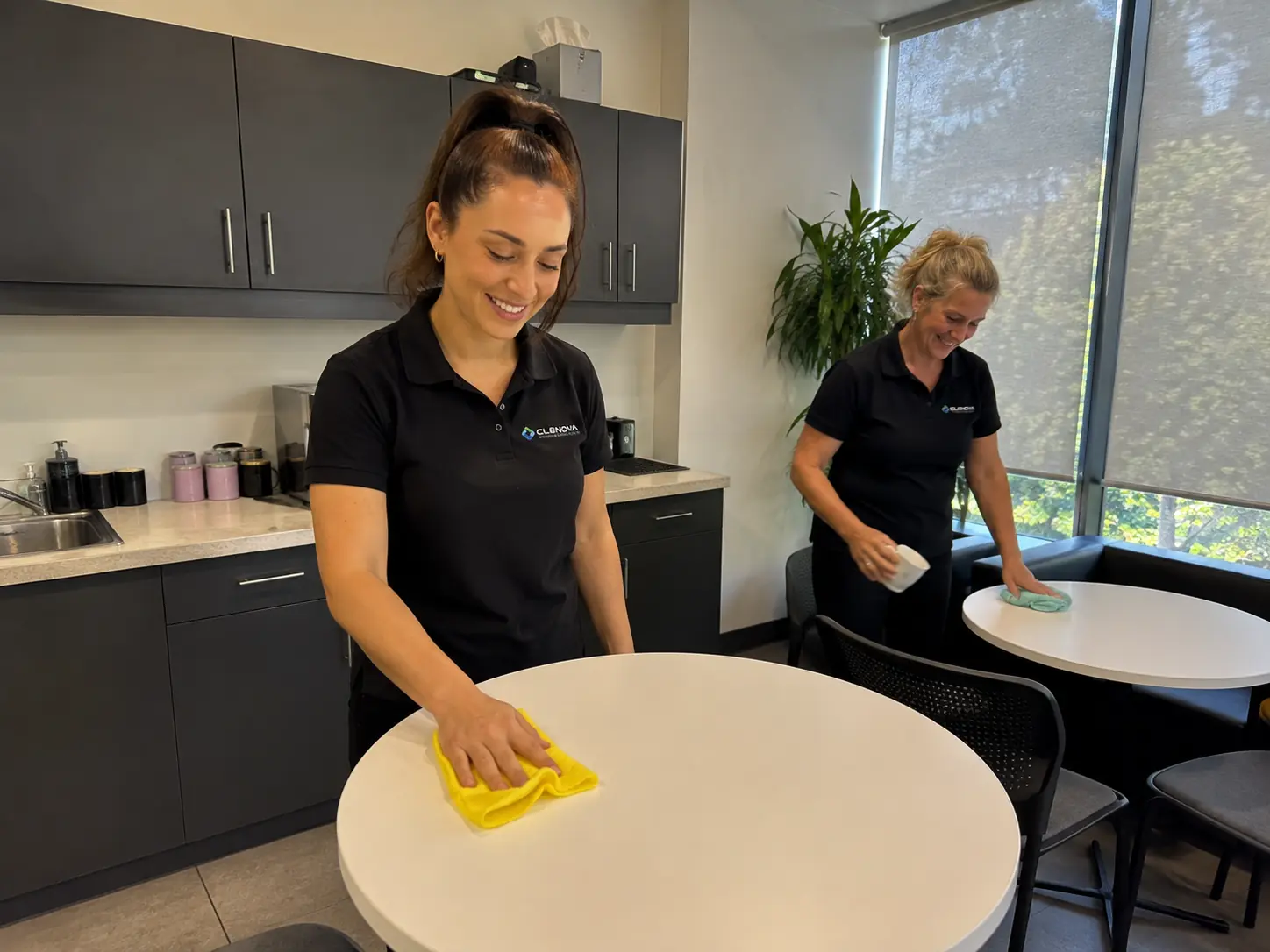
A holiday deep clean is not complete when the operatives leave the site. The work is complete when it has been checked, snags have been recorded and the standard can be carried back into the term-time cleaning routine.
Final inspection matters because it catches the gap between a task being attempted and an area being ready for use. We look for evidence that attendance was managed, supervision happened and any missed items have a route back to correction.
UKHSA advises schools to nominate someone to monitor cleaning standards and to have a system for reporting issues. DfE also asks schools to think about how they will measure and maintain quality standards, including inspections, timekeeping and absence management.
At Clenova, we use management access, digital time and attendance monitoring and quality checks to keep school cleaning accountable. Those controls are useful during a summer clean, but their bigger value appears after September, when daily standards need to hold without the premises team chasing every issue.
School cleaning decisions are leaning more on evidence of control: attendance records, inspection notes, named responsibility and clear handover. A long task list matters less than proof that the programme can be managed from the last week of the summer break into the first full week of term.
Questions school teams ask us about holiday deep cleaning
How early should a London school agree its holiday cleaning dates?
A London school should agree access dates as soon as its own term calendar, INSET days and summer site use are clear. We would not rely on borough dates alone, because some school types set different calendars.
Can a summer deep clean run at the same time as building or maintenance work?
A summer deep clean can run alongside other site work if the sequence is planned properly. Cleaning should follow the work that creates dust, disruption or floor access issues, otherwise parts of the clean may need repeating.
Do school cleaners need DBS checks?
DBS checks must be completed to the appropriate level for staff involved in the cleaning service. The right level depends on the role and site arrangements, so the safe wording is never a blanket claim that every cleaner has the same check.
Who supplies the products and equipment for a school deep clean?
The cleaning specification should state who supplies products and equipment before the holiday starts. That avoids confusion over specialist floor care, washroom products, storage and any items the school does not want used on site.
How should a school judge value after the summer clean?
Value shows in the handover as much as the clean itself. Attendance records, inspection checks, snag follow-up and a term-time plan tell you whether the contractor has managed the programme properly.