What should private clinic cleaning in London include?
Private clinic cleaning in London should include a room-specific scope, agreed frequencies, named touch points, safe products, COSHH records, trained cleaners, attendance checks, quality inspections, cover arrangements and clear escalation. The contract also needs written limits around treatment rooms, waste, sharps, medicines and clinical equipment.
A common mistake is treating private clinic cleaning as an office-cleaning schedule with disinfectant added. That produces a long checklist, but it does not prove the right work is happening in the right places, at the right time, by people who know the boundaries.
For private clinic cleaning in London, we look for a specification that covers four things:
- Areas and surfaces. Reception, waiting areas, consultation rooms, treatment rooms, washrooms, staff spaces, kitchens, corridors and admin areas.
- Frequency and method. What gets cleaned daily, what gets cleaned at other agreed intervals, and which products or methods apply.
- Evidence and control. Schedules, attendance records, checks, issue records and follow-up.
- Boundaries. What the cleaning contractor handles, what the clinical team handles, and what needs a separate waste or specialist process.
Care Quality Commission Regulation 15 makes the provider responsible for clean and suitable premises in CQC-regulated settings, even where cleaning duties are delegated to a contractor. We take that point seriously because outsourcing the work does not remove your accountability.
A proper specification gives you a service you can manage and evidence. The task list matters, but the real value sits in the way the contract defines responsibility.
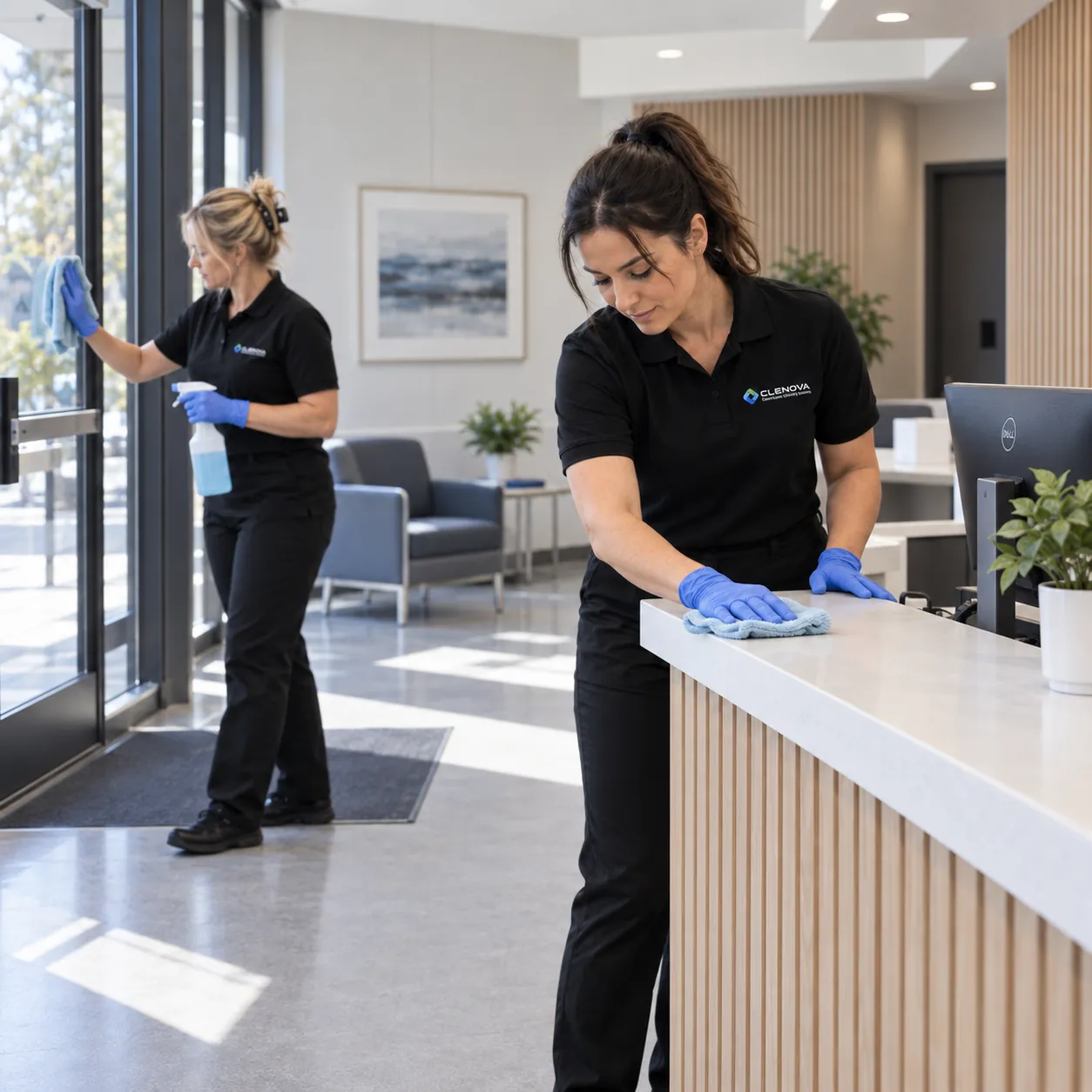
Table of Contents
Room names are not enough
A clinic cleaning schedule should be based on what happens in each space, not just what the room is called. Reception, waiting rooms, consulting rooms, treatment rooms and admin spaces carry different risks and need different routines.
NHS England’s National Standards of Healthcare Cleanliness 2025 make a useful point here. Cleaning type and frequency depend on the activities carried out and the infection risk, and frequencies need review if room use changes. Private clinics do not need to pretend they are NHS trusts, but the principle is sound.
Flat schedules hide weak thinking. A waiting area needs named attention to shared contact points such as door handles, taps, dispensers, switches and chair arms. A treatment room needs a different discussion because the work done there changes what cleaners can safely include. Admin areas still need care, but they should not set the standard for the whole clinic.
London clinics also change use across the day. A consulting room may be low-risk for one session and used differently in another. We would rather see that reflected in the scope than find a generic line saying “all rooms cleaned daily” with no detail behind it.
Naming the touch points is the easiest test. If the schedule lists the contact points, the contractor has thought about the site. If it hides them under “general cleaning”, you are being asked to assume too much.
Treatment rooms need firm boundaries
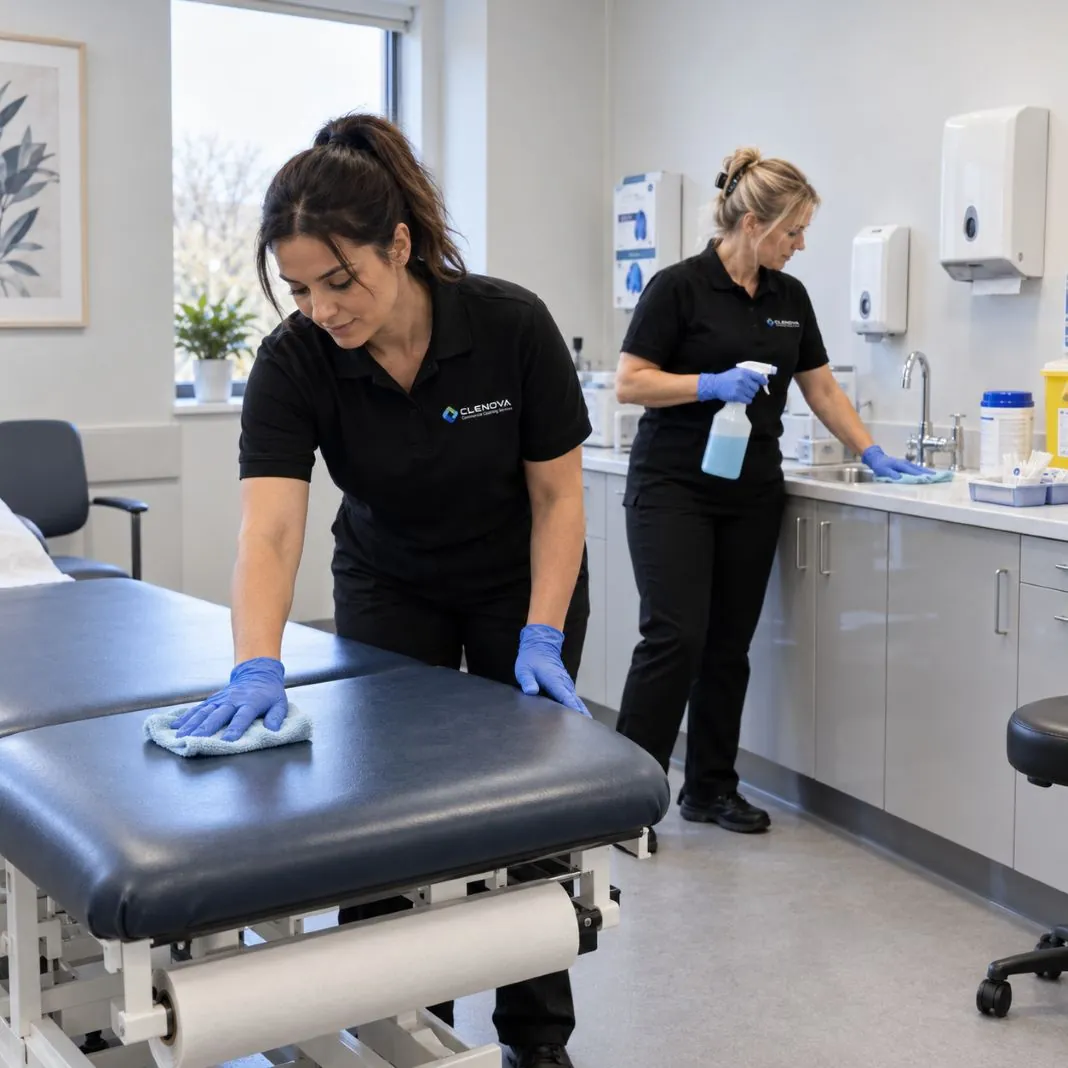
A treatment room may need floors, chairs, touch points and agreed non-clinical surfaces cleaned, but that does not make instruments, sharps or medicines part of the same job. Firm boundaries protect your clinic because every person on site knows what they must touch and what they must leave alone.
Routine cleaning covers agreed non-clinical work
Routine treatment-room cleaning can sensibly include floors, external surfaces, chairs, door handles, switches, sinks, taps and other agreed contact points. The exact scope depends on the procedures carried out, how the room is used and when cleaning can take place around appointments.
We prefer the schedule to name the surfaces clearly. “Treatment room clean” sounds neat, but it is too broad unless the contract says what the cleaner does before, during or after clinical sessions. A cleaner should never be left to make clinical judgements because a sentence in the scope is vague.
Separate clinical scope protects the clinic
Medical instruments, medicines, sharps, medical device decontamination and instrument sterilisation should not be assumed inside routine commercial cleaning. Those duties need the right clinical control or separately arranged specialist processes.
Healthcare waste and sharps also need defined responsibility. The NHS England infection prevention manual sets out that healthcare waste, including sharps, must be segregated into the correct container or sharps box at the point of use. For a clinic manager, the practical lesson is simple. Write waste duties into the contract where they apply, and keep anything outside routine cleaning plainly outside it.
Boundaries do not reduce the service. They stop drift, prevent confusion and make the contract easier to supervise.
Products and training need evidence
Strong-sounding product language means very little without method, training and documentation. In a clinic, safe cleaning is a controlled routine, not a product label.
COSHH is the practical anchor here. HSE guidance is clear that employers must plan, manage and monitor the use of substances that may create a health risk, including cleaning chemicals and disinfectants. For you, that means a contractor should be able to show how products are used, stored and controlled on your premises.
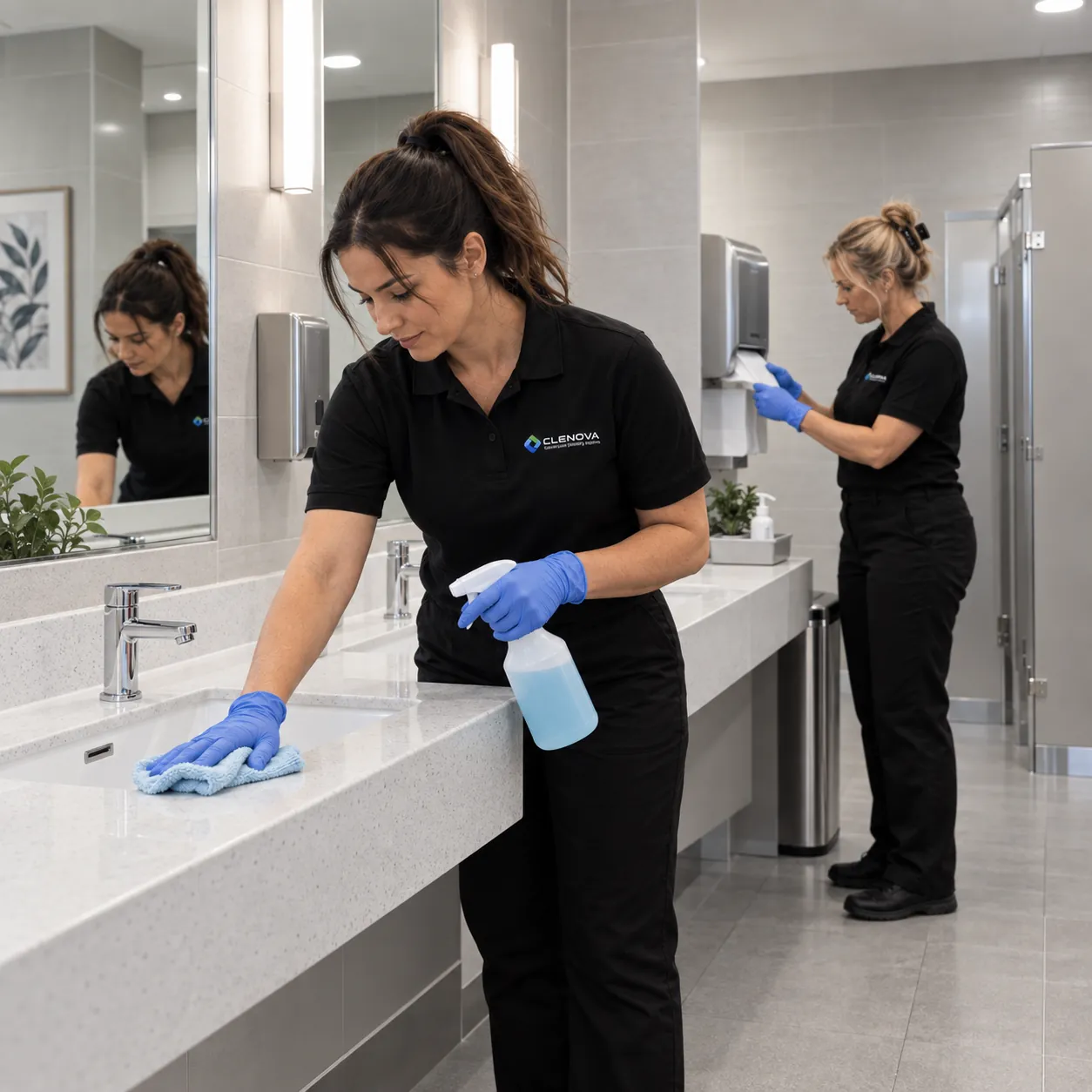
Colour-coded cleaning materials also deserve plain treatment. They reduce the risk of cross-contamination between different area types when cleaners actually follow the system. NHS England’s healthcare cleanliness standards use red for bathrooms and washrooms, blue for general areas, green for catering and patient food service areas, and yellow for isolation areas.
At Clenova, we link product use, COSHH records, colour coding and site-specific instructions to the way the cleaner is trained for that clinic. Training also needs to cover health and safety, infection control routines, safe equipment use and the site’s own access rules. DBS checks may be relevant depending on the role and contract, but they should never be thrown in as a blanket claim.
Ask for evidence you can actually use. A folder nobody follows is paperwork. A cleaner who knows the room, the products and the limits is evidence on site.
Evidence beats inspection-day cleaning
Can the contract show what happened last Tuesday? A managed clinic cleaning contract should leave a trail that shows attendance, checks, issues and follow-up over time.
Schedules come first because they define the promise. They should show what is done, where it happens, how often it is done and who is responsible for checking it. Without that, your cleaning audit becomes a conversation about impressions rather than facts.
Attendance records matter because a clean that did not happen cannot be rescued by a neat specification. Digital time and attendance monitoring gives you a way to check that contracted hours are being delivered, especially where cleaners work outside appointment times.
Quality checks then test the work, not just the presence of a cleaner. Inspection records, issue notes and corrective action records show whether shortfalls are being noticed and addressed. The Care Quality Commission’s Regulation 15 guidance refers to appropriate cleaning methods and agents, cleaning schedules, monitoring, prompt action on shortfalls and staff training, which is exactly the kind of evidence a clinic manager should expect to see organised.
Good evidence is calm and boring in the best sense. It tells you what happened, what was checked and what changed when something fell short.
Missed cleans are the real London risk
The main difference between office cleaning and private clinic cleaning is managed continuity. Stronger products do not compensate for missed attendance, unclear access, no cover or a slow response when standards slip.
Appointment-led clinics cannot treat cleaning as background housekeeping. Access may need to work around early starts, evening sessions, locked treatment rooms, alarms and patients moving through the building. Across all London boroughs and Greater London, we see the same procurement point repeat itself. The contract needs to handle absence before a cleaner is off sick, not after the clinic notices the gap.
At Clenova, we use digital time and attendance monitoring, regular quality checks, trained cover arrangements and direct access to management because clinic cleaning is a managed service. Those controls do not replace the cleaner’s work. They stop the service depending on one person turning up without support.
The misconception worth dropping is this. A private clinic clean is an office clean with stronger chemicals. It is not. The work only holds up when the scope, evidence, attendance and boundaries are managed together.
Questions clinic managers ask us about private clinic cleaning
Do cleaners need DBS checks to work in a private clinic?
DBS checks may be needed depending on the site, role and contract requirements. We would treat that as a site-specific requirement rather than a universal claim about every cleaner.
Can clinic cleaning be done outside appointment hours?
Yes, many clinics prefer cleaning before or after patient sessions so the service fits around room use and access. The contract still needs clear arrangements for keys, alarms, restricted areas and any rooms that should not be entered.
Who supplies the cleaning products and equipment?
The contract should state who supplies products and equipment, which products are approved for use on site, and how they are stored. Product choice should match the clinic’s cleaning schedule and COSHH controls.
Should a clinic use the same cleaner every time?
Team consistency helps because cleaners learn the layout, access rules and room boundaries. Cover still needs to be planned because sickness, annual leave and other absences are normal parts of running any cleaning contract.
How detailed should a private clinic cleaning proposal be?
A useful proposal should go beyond a price and a list of rooms. It should set out the scope, frequency, responsibilities, attendance checks, quality monitoring, cover arrangements and any limits around treatment rooms or waste.