
How often should your gym or health club be cleaned?
We treat daily cleaning as the starting point. Your gym also needs after-use wipe-downs for shared kit, daily contractor cleaning for core areas, peak-time checks where members queue or shower, weekly detailed work and planned specialist cleaning for floors and soft surfaces.
The reason one number never works is that a gym is not one space. A cardio floor, a studio, a changing room and a reception desk face very different pressure, and they face it at different times of day. A schedule built around a single closing-time visit treats them all the same.
So the useful question is not how often the building gets cleaned. It is which areas need attention after every use, which need a daily visit, which need checking while members are still on site, and which need periodic specialist work. The rest of this article sets out how we would split those layers.
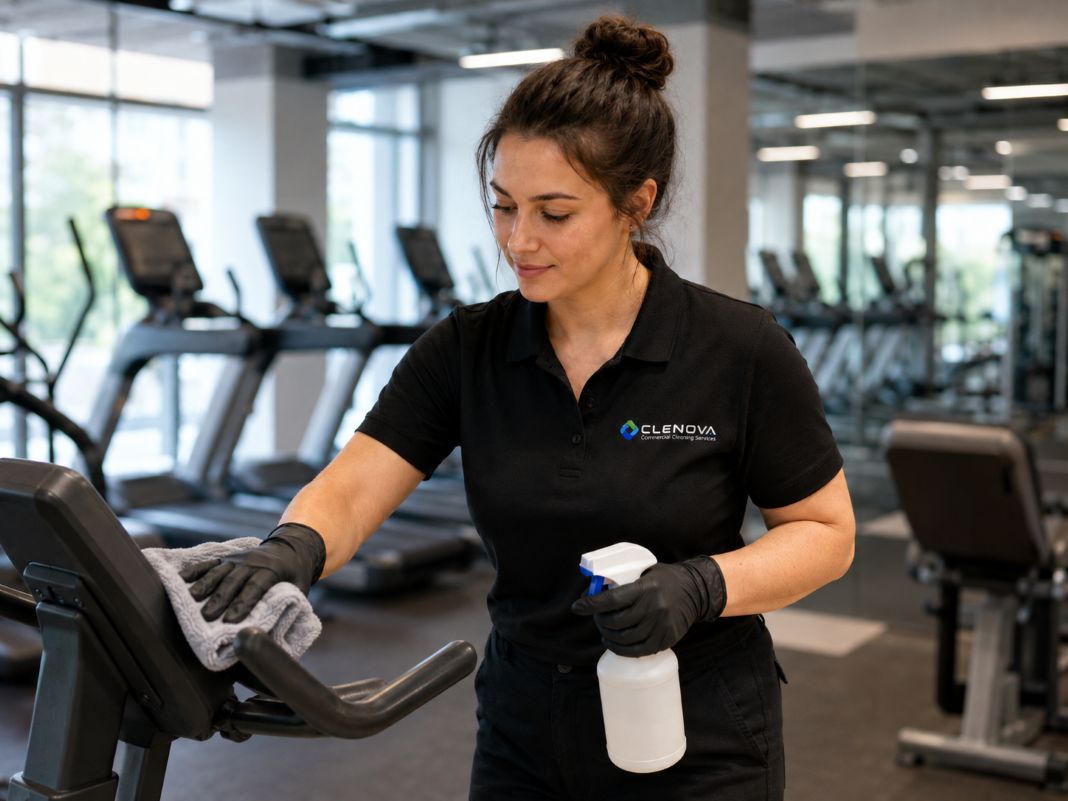
Table of Contents
Daily cleaning is the floor, not the whole schedule
A gym cleaning frequency built around one end-of-day clean leaves too many gaps. We want a written health club cleaning schedule that says what is cleaned, when it is cleaned and how the work is checked.
Older UK sports infection prevention guidance from Health Protection Agency North West gives a useful sport-specific benchmark. Its example schedule lists daily cleaning for areas such as gym equipment, mats, changing-room floors, showers, toilets, reception areas, saunas and steam rooms. That guidance is good practice, not a fixed legal timetable for every London gym.
HSE guidance focuses on clean workplaces, welfare facilities and safe floors. It does not give a single universal interval for how often to clean a gym, so the schedule has to reflect how your site is used.
A practical gym schedule separates the work into clear layers:
- After-use wipe-downs. Members wipe shared equipment before and after use where wipe stations are provided, especially benches, handles and mats.
- Daily contractor cleaning. Professional gym cleaning covers agreed core areas, including washrooms, changing rooms, gym equipment contact points and reception areas.
- Peak-time checks. Staff or cleaners check high-use areas during busy trading periods, such as after group classes or evening rushes.
- Weekly detailed work. Planned tasks cover areas that need more time than a daily clean allows, such as edges, storage points and build-up around fixed kit.
- Periodic specialist cleaning. Floor care, carpet work, upholstery cleaning and other specialist tasks sit in a planned programme rather than being squeezed into routine visits.
“Cleaned daily” sounds tidy on a contract, but it does not tell you whether the studio mats are dealt with after classes or whether the toilets are checked during peak use. The schedule must state the area, the frequency and the method.
Which gym areas carry the most risk?
A cardio console, a bench and a storage cupboard should never sit in the same cleaning category. Gym equipment cleaning has to follow the way members touch and share the space.
Member wipe-downs matter, and Sport England also advises that equipment in sport and physical activity settings is cleaned often with suitable products. Even so, member action is a support measure. Professional cleaning still needs its own schedule, its own supplies and its own checks.
Here is a practical way to split gym floor cleaning responsibility.
| Area type | Typical frequency layer | Usual responsibility |
|---|---|---|
| Cardio consoles, handles, seats and benches | After-use wipe-downs plus scheduled daily cleaning | Members use wipe stations, then contractor cleaning covers the agreed routine |
| Free weights and resistance machines | Regular member wipe-downs, daily cleaning and extra checks during busy periods | Members, site staff and contractor share separate roles |
| Exercise mats and shared studio kit | Cleaning after use, with daily contractor cleaning built in | Class staff or site team manage between-session use, contractor covers scheduled cleaning |
| Storage cupboards, low-contact edges and non-public corners | Planned routine cleaning, with less frequent detailed work | Contractor cleaning under the written scope |
Detergent wipes or spray and disposable paper towels need to be available if members are expected to wipe equipment properly. If supplies run out during the day, the wipe-down policy stops working, even if the cleaning contract looks fine on paper.
Surface choice also matters. Some kit does not tolerate harsh products, so the method has to suit the manufacturer’s instructions and the condition of the equipment. Good gym floor cleaning is a controlled routine, not a stronger spray applied everywhere.
Wet areas need checks as well as cleaning
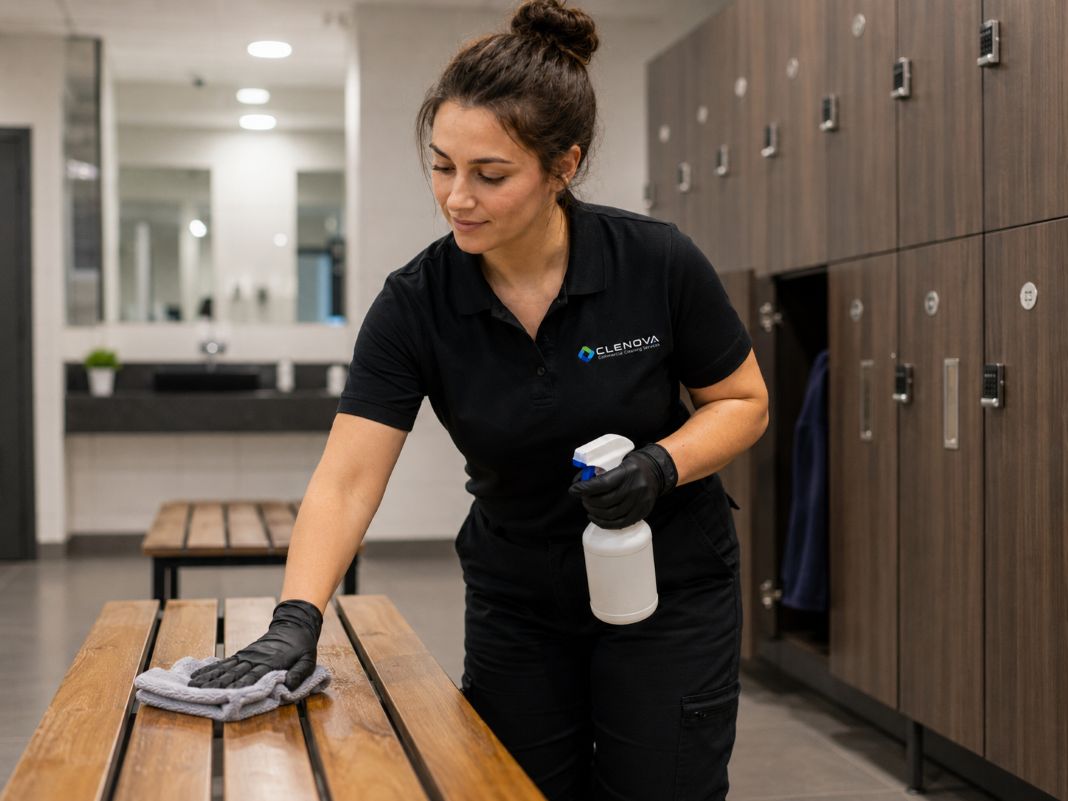
Changing rooms and washrooms fail quickly because several risks sit in one area: moisture, bins, toilets, showers, footfall and member turnover. Busy gyms across London and Greater London need checks that match the trading pattern, especially where morning and evening peaks put pressure on the same facilities.
Toilets and changing rooms
Toilets, basins, lockers, changing-room floors, bins and consumables need a frequency that follows use. Daily cleaning gives the structure, but visible contamination, empty soap dispensers or full bins require action during the day.
The Health Protection Agency North West example schedule lists toilet areas and changing-room floors as daily items, with toilets also dealt with when visibly contaminated. That is the right way to think about gym washroom cleaning. The daily clean sets the baseline, and in-day checks keep the space usable.
Changing-room odour is rarely solved by product choice alone. We look at waste removal, wet flooring, ventilation concerns where the site raises them, and whether checks happen when the room is actually under pressure.
Showers and wet floors
Showers, saunas, steam rooms and smooth flooring need planned timing because wet cleaning can create another risk if it is done badly. More mopping is not better unless timing and method are controlled.
HSE guidance is clear that cleaning can create slip and trip hazards, especially where floors remain wet while people are moving through the area. In practice, we plan wet-area cleaning around access, drying time and the right product for the surface, so cleaning supports safe use of the space.
A washroom schedule that looks strong at closing time can still disappoint members at peak hours. Shower areas need visible checks, and the person doing them needs to know what to report when a floor, drain area or dispenser needs follow-up.
Who is responsible for what?
Who is actually responsible for the bench after a member finishes using it? The answer has to be written down, because member wipe-downs, staff checks and contractor cleaning do different jobs.
Members can wipe shared equipment before and after use when stations are stocked and easy to use. Site staff can carry out walk-rounds, restock towels or raise issues during trading hours. The cleaning contractor completes the scheduled professional cleaning set out in the contract.
At Clenova, we separate those responsibilities in the schedule so the contract does not hide gaps between the front desk, the fitness team and the cleaners. Benches, mats, spray bottles, paper towels, toilets and changing-room checks all need an owner.
Hand hygiene also belongs in the plan. Sport England advises sport and physical activity providers to support hand washing, make handwashing facilities available and use hygiene messages, including the practical point that hand washing should last at least 20 seconds. That does not replace cleaning, but it supports the same operating standard.
A shared system works when supplies, tasks and follow-up are clear in writing.
Can you prove the schedule was followed?
A gym cleaning schedule has value only when the agreed rounds happen. Attendance, inspections and cover arrangements decide whether the timetable survives a busy week, a staff absence or a change in class patterns.
Digital time and attendance monitoring helps confirm that contracted hours are delivered. Site inspections and quality checks show whether the work meets the agreed scope. Cleaning records also support a managed approach to slips and trips, because HSE guidance includes clear responsibility for areas and records of cleaning and maintenance work.
At Clenova, we use management-led oversight, attendance monitoring, quality checks and trained cover to keep gym cleaning schedules realistic across London health clubs. Missed rounds show up fast in toilets, studios and changing rooms, so the management behind the clean matters as much as the frequency on the rota.
Contract scrutiny is moving the same way. Broad “daily clean” wording carries less weight than it used to, and what earns trust now is evidence that the agreed work happened, was checked, and was put right when it slipped. Proof will replace promises.
Questions we get asked about gym cleaning schedules
Should members wipe gym equipment before or after use?
Members should wipe shared equipment before and after use where wipe stations are provided. That supports hygiene between users, but it does not replace scheduled contractor cleaning.
Do gym mats need different treatment from benches and machines?
Exercise mats sit closer to after-use cleaning because members have prolonged contact with them during classes or floor work. They still need to sit inside the daily cleaning schedule so the routine is checked properly.
How do cleaning records help with member complaints?
Cleaning records show whether a check or clean was completed at the agreed time. They make it easier to separate a missed round from a new issue that appeared after the last check.
Who should restock wipe stations and paper towels?
The contract should state who checks and restocks wipe stations, paper towels and spray supplies. If that duty is vague, member wipe-downs become unreliable during busy periods.
Does a 24-hour gym need a different cleaning plan?
Longer opening hours change the cleaning plan because fewer quiet periods are available. We usually split the schedule around trading patterns, access windows and peak use, instead of relying on one late clean.