
What should your venue cleaning cover before opening and after closing?
Relying on the closing team to give the venue a quick clean is the weak point. We split hospitality cleaning into a pre-service readiness check and a post-service reset, with clear responsibility for washrooms, safe floors, waste, touch points, attendance and sign-off before the next trading session.
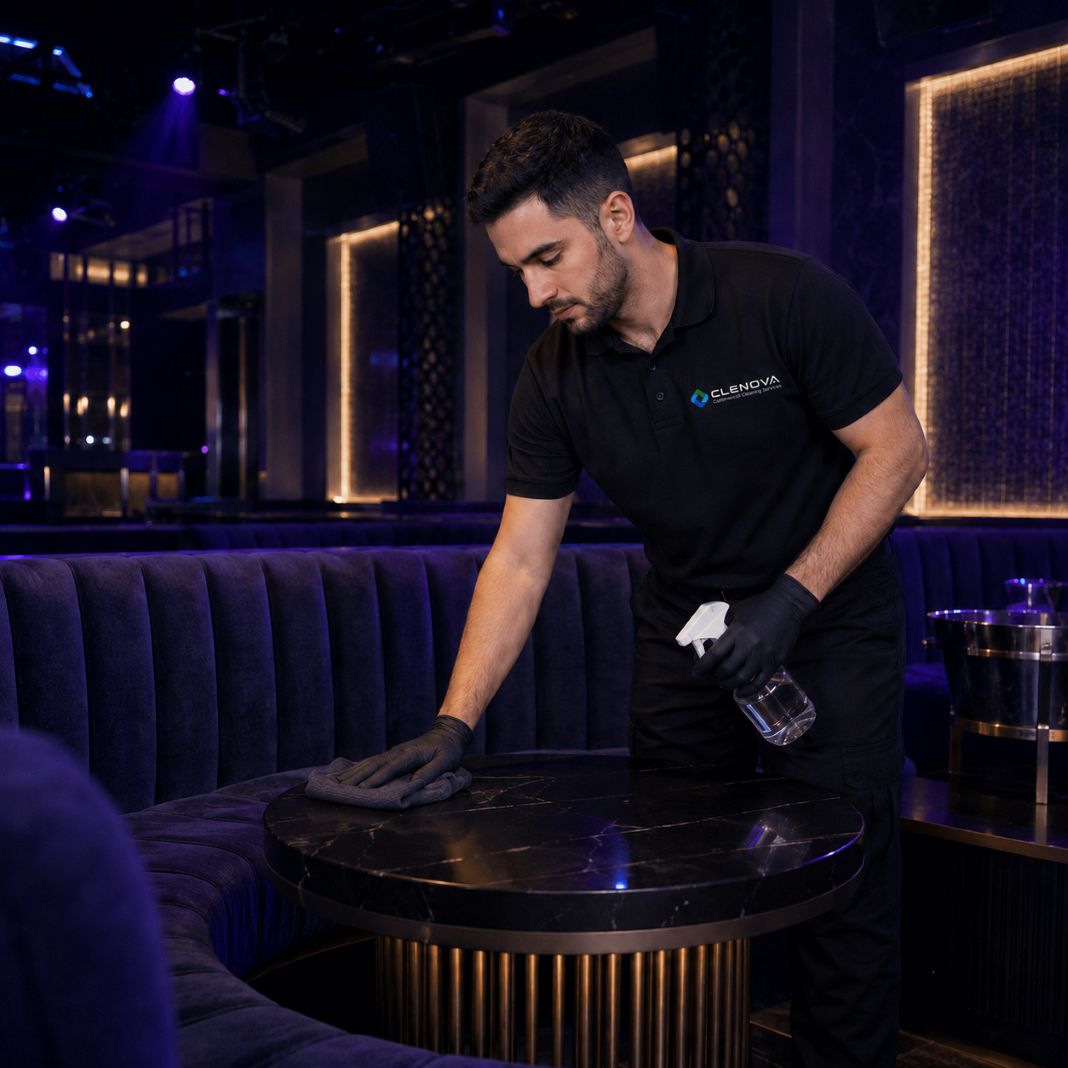
Table of Contents
Cleaning works best in three service windows
A workable cleaning plan starts with timing. The task should fit the service window, because cleaning before opening has a different job from cleaning after closing, and anything handled during trading has to stay narrow.
London venues also have practical limits that shape the plan. Late finishes, early openings, mixed-use streets, restricted access, locked premises, keys and alarms all affect what can be done and when. We build the schedule around the next trading session, because that is what the manager will judge when the doors open.
Before-service readiness prepares the venue for trading
Before-service cleaning should confirm that public areas, washrooms and staff-use areas are ready before customers arrive. This window is not the time to recover every missed closing task from the night before. If the venue opens with sticky flooring behind the bar, overflowing washroom bins or unchecked touch points, the problem is usually in the close-down routine.
For food-serving venues, GOV.UK says a cleaning schedule and cleaning record should cover what needs cleaning or disinfecting, how often it is done and which products are used. That does not need to turn your pub cleaning checklist into a folder no one reads, but the routine has to be clear enough for staff and cleaners to follow.
During-service support stays narrow and practical
During-service cleaning should deal with immediate issues that affect safety or presentation. Spills, washroom checks and visible waste are the usual pressure points. Bar staff are already serving, managing customers and closing bills, so the tasks kept in-house during trading need to be realistic.
A nightclub cleaning London contract, for instance, will not expect a full floor reset while customers are still moving through the venue. The sensible split is immediate spill control during trading, then proper floor cleaning after close when the area can be managed safely.
After-service reset protects the next opening
After-service cleaning clears the effects of trading. Drink spills, heavy footfall, washroom use and waste build-up all need a structured reset, especially after a late service.
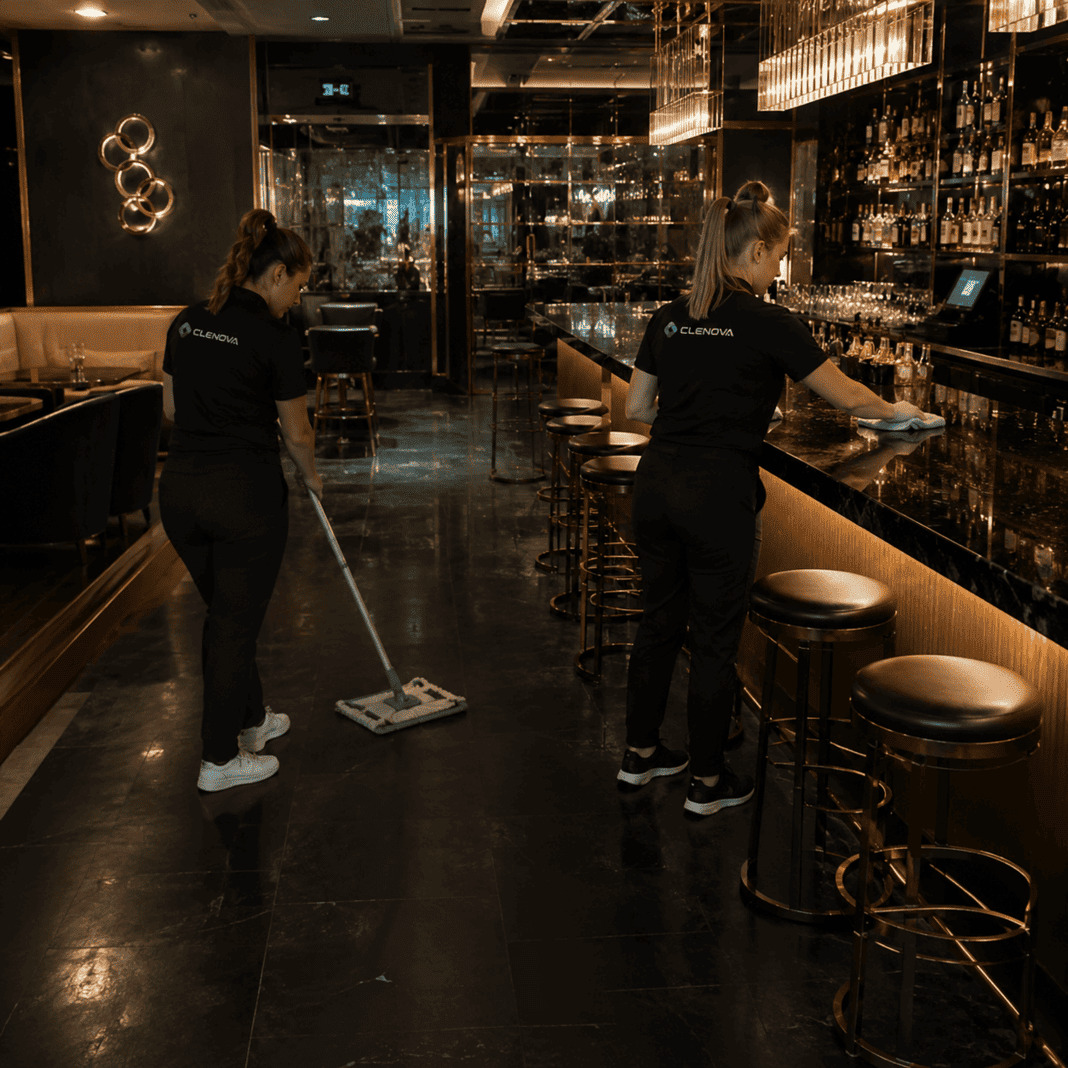
Once the venue is locked, the cleaning team can handle work that cannot be done well during trading, such as bar area cleaning, washroom reset, floor cleaning and waste area work. The main test is simple: the next manager should not walk in to a list of avoidable problems before the first customer arrives.
Each venue zone needs its own cleaning standard
Two venues can both need daily cleaning and still have very different pressure points. A pub with food service, mixed seating and early lunches needs a different specification from a late-night bar with a heavy bar trade and a small back-of-house area.
A useful hospitality venue cleaning plan separates the space by use:
- Entrance and customer areas: These areas need visible readiness before opening and floor control after trading. Tables, seating, door areas and hand-contact points need checking because customers notice them quickly.
- Bar area: Bar tops, under-counter areas, floor edges and spill points need close attention. Sticky floors behind a bar usually point to repeated missed detail, not one bad night.
- Customer seating and dancefloors need cleaning that matches footfall and surface type. A nightclub floor has a different load from a small pub lounge, so the method and timing should follow the venue.
- Washrooms: Pub toilet cleaning exposes weak contracts fast. Routine checks deal with consumables and visible issues, while periodic detail work deals with build-up in harder-to-reach places.
- Back-of-house and staff areas should not disappear from the scope. Staff corridors, storage points and service routes affect how the venue runs before and after service.
- Waste areas: Bins, waste storage points and close-down waste handling need clear ownership. Food waste should not be left to build up because it creates avoidable problems for the next service.
- Food-service spaces need the clearest records. In relevant food settings, work surfaces, chopping boards, utensils, dishes, cooking equipment, dish cloths, tea towels and touch points such as door handles, bins, light switches and electronic devices need regular cleaning. Product choice also matters, and disinfectant labels used in food areas should show British Standard labels BS EN 1276 or BS EN 13697.
Periodic deep cleaning belongs in the plan when use, risk and surfaces call for it. It should not be thrown in as a vague promise or treated as a daily requirement for every venue.
Staff duties and contractor duties need a written boundary
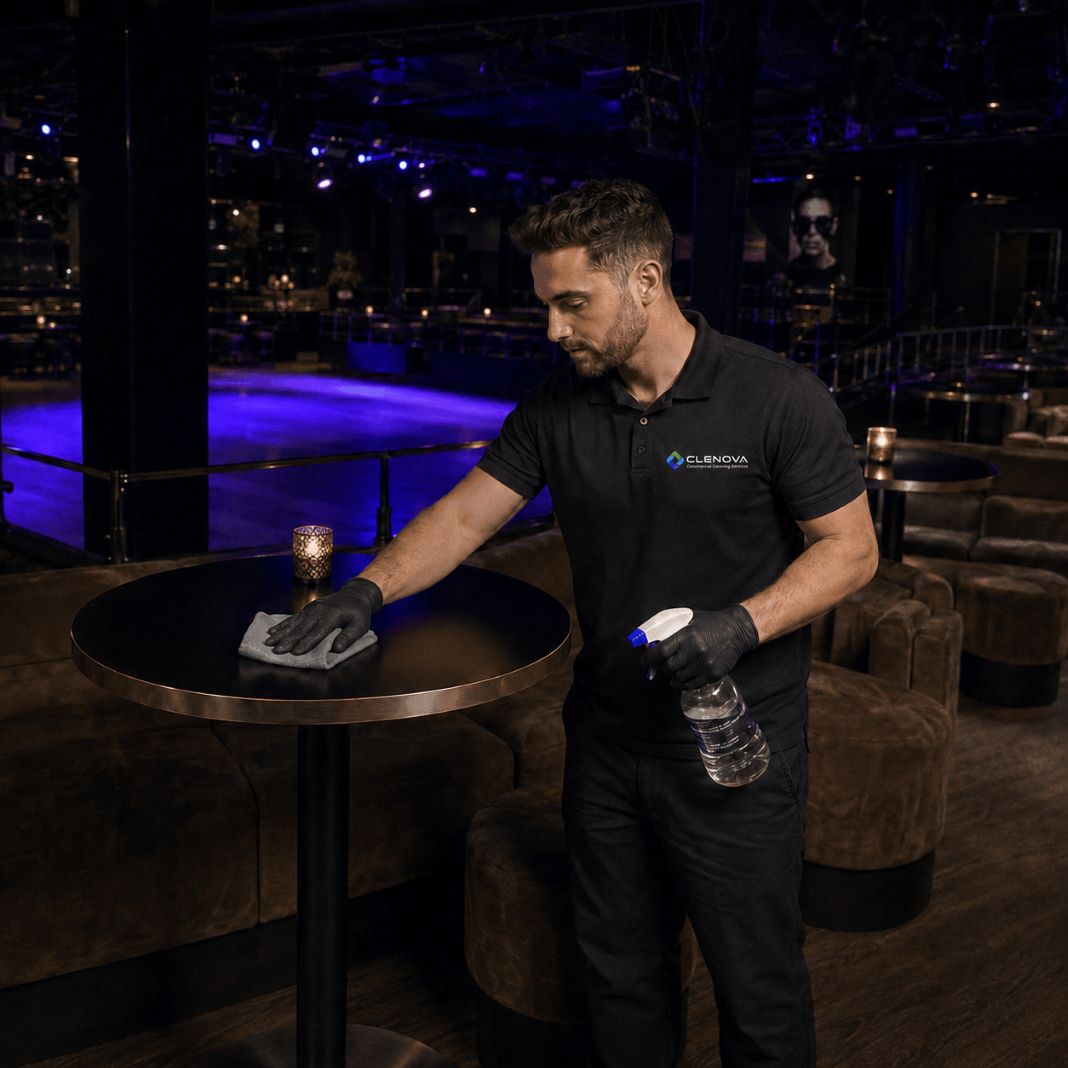
After a hard service, a tired bar team can close tills, deal with stock and handle immediate spills, but a full venue reset is a different kind of work. The issue is rarely willingness. The issue is unclear ownership.
At Clenova, we prefer to define the split before a contract starts, so your team knows what stays with them and our team knows what must be completed, checked and followed up.
| Usually venue staff | Usually cleaning contractor |
|---|---|
| Immediate spill response during trading | Full floor cleaning after close |
| Basic bar close-down tasks linked to service | Washroom reset and detail cleaning |
| Removing obvious waste from active service areas | Cleaning waste storage points within scope |
| Flagging faults, blocked access or unusual issues | Recording completed tasks and missed access |
| Keeping customer routes safe while trading | Supervisor checks and follow-up on standards |
Exact responsibility depends on trading hours, food service, venue layout and access. A compact bar with no food service will not need the same division as a large pub with multiple washrooms and early opening times, but both need the boundary written down.

Safety, waste and records belong inside the routine
When cleaning happens around staff movement, deliveries or close-down routines, the method matters. Cleaning should reduce slip risk, not create a new one with wet floors, trailing machine cables or unclear access routes.
The Health and Safety Executive states that slips and trips remain the single most common cause of major injury in UK workplaces. It also makes a practical point that every venue manager should recognise. Signs warn people about wet floors, but barriers, locked doors or cleaning in sections stop people walking into the area.
Waste now needs the same practical discipline. Workplace recycling rules in England came into force on 31 March 2025, and in-scope workplaces must separate dry recyclable materials, food waste and non-recyclable waste before collection. For London pubs, bars and nightclubs, that makes waste handling part of the cleaning specification, not a bin-room afterthought.
Records should be kept simple enough to use and clear enough to prove what happened. A cleaning record that shows the area, the task, the timing and the product gives managers something concrete to check when standards slip or questions are raised.
Management behind the clean keeps standards steady
A cleaning task only stays reliable when someone manages attendance, checks completion and corrects misses. Late-night and early-morning work is easy to overlook until a sticky floor, a washroom complaint or a missed bin round becomes a pattern.
A good bar cleaning contract London venues can rely on should define access times, products, equipment, cover arrangements, inspection expectations and how issues are followed up. The written scope matters, but the management behind it is what keeps the scope alive after the first few weeks.
At Clenova, we use digital time and attendance monitoring to help verify contracted hours, regular quality checks to monitor standards and trained cover operatives or supervisors to support continuity across London and Greater London. Those controls suit hospitality because venues do not have spare time in the morning to work out whether the clean happened properly.
Over the next 12 to 24 months, documented routines, separate waste handling and reliable attendance will carry more weight in hospitality cleaning decisions. A venue that treats cleaning as part of service readiness will be easier to open, easier to manage and less exposed to small failures becoming regular ones.
Questions we get asked about hospitality venue cleaning
Can cleaners attend before opening or after closing in London venues?
Yes, provided access, keys, alarms and timing are agreed in the cleaning specification. We look at the trading pattern first, then set the service window around when the venue can be cleaned without disrupting staff or customers.
Should bar staff clean the whole venue after closing?
Bar staff can handle immediate close-down tasks and spills linked to service, but full floor cleaning, washroom reset and documented completion are better placed in a managed cleaning contract. The split should be written down so tasks do not drift between teams.
How do we stop sticky floors behind the bar?
Sticky floors behind the bar usually need better daily method, clearer access and periodic detail work around edges and under-counter areas. We look for repeated spill points first, because treating the whole floor the same can miss the spots causing the problem.
What cleaning records does a food-serving pub need?
A food-serving pub needs records that show what was cleaned or disinfected, how often it was done and which products were used. The record should be simple enough for the team to keep up to date during normal operations.
Do waste rules affect pub, bar and nightclub cleaning?
Yes, if the venue is in scope under workplace recycling rules in England. Cleaning and close-down routines now need to support separate dry recyclable materials, food waste and non-recyclable waste before collection.
This is general information, not professional advice.